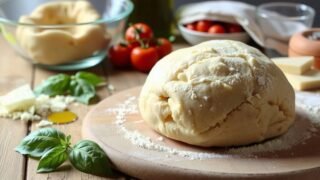
To create the perfect pizza dough, start by choosing the right flour—try bread flour for chewiness or 00 flour for a soft, crispy crust. Use active dry yeast or instant yeast depending on your preference. Make sure to knead the dough for that smooth texture and let it rise for a light crust. Avoid common mistakes like rushing the process, and you’ll be on your way to pizza perfection. Stick around for more tips on mastering your dough!
Key Takeaways
- Choose the right flour type, such as bread flour for chewiness or 00 flour for a crispy Neapolitan-style crust.
- Understand yeast types: active dry requires proofing, while instant can be added directly; sourdough adds flavor.
- Proper kneading and rising are crucial for developing optimal dough texture and flavor.
- Avoid common mistakes like insufficient hydration, poor gluten development, and rushing the fermentation process.
- Store dough appropriately, ensuring it’s well-wrapped to preserve quality, and defrost it slowly for the best results.
Choosing the Right Flour for Your Pizza Dough

When it comes to making the perfect pizza dough, choosing the right flour is essential, especially if you want that ideal balance of chewiness and crispiness. The primary pizza flour types you’ll encounter are all-purpose, bread flour, and 00 flour. All-purpose flour offers a decent protein content, making it a versatile option, but if you’re craving that classic pizzeria texture, bread flour is your friend. With a higher protein content, it gives your pizza a delightful chew.
For an authentic Neapolitan-style pizza, go for 00 flour. Its fine texture and protein content create that soft, yet crispy crust you dream of. By selecting the right flour, you’re setting a solid foundation for your pizza-making journey. So, don’t rush this decision—experiment with different flours and discover which one satisfies your taste buds and dough goals!
Essential Ingredients for Making Pizza Dough
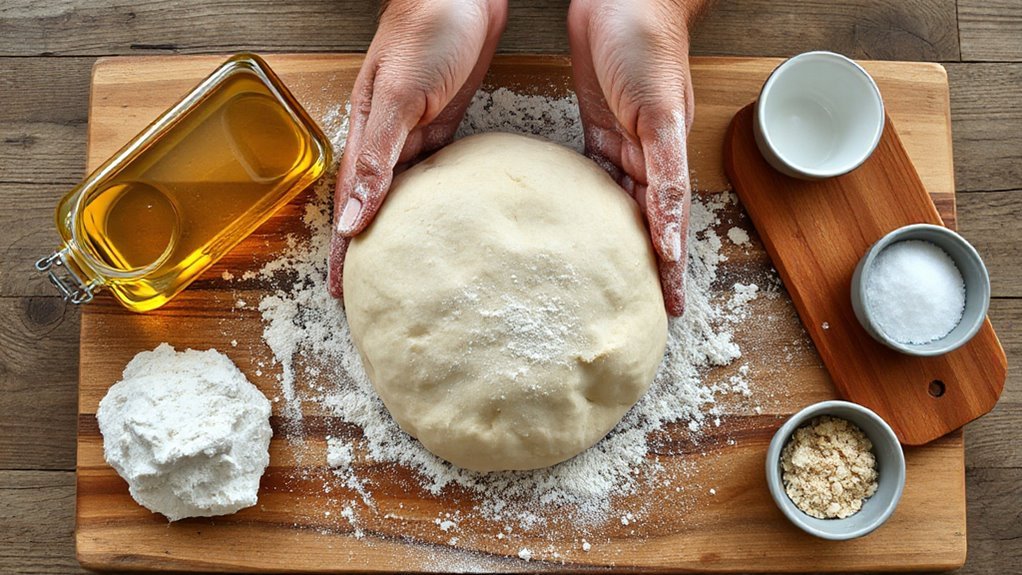
When you’re making pizza dough, the right ingredients are key to achieving that perfect crust. You’ll want to explore different types of flour and understand how yeast variations can affect your dough’s rise and flavor. Let’s break down these essentials so you can whip up a delicious pizza at home!
Flour Types Overview
Choosing the right flour is essential to crafting the perfect pizza dough. Not all flours are created equal, and understanding their gluten content and origins can make a big difference in your pizza. Here’s a quick overview:
- All-Purpose Flour: Versatile and easy to find, it has a moderate gluten content, making it suitable for various pizza styles.
- Bread Flour: Higher gluten content means chewier crusts. It’s perfect for Neapolitan-style pizzas that need a sturdy base.
- 00 Flour: This finely milled Italian flour has low gluten, creating a light, crispy crust. It’s often used for traditional pizzas.
Yeast Variations Explained
Have you ever wondered how the type of yeast you use can transform your pizza dough? Each variation has its unique charm. Active dry yeast needs a little proofing, while instant yeast goes straight into the mix. Fresh yeast offers a rich flavor but has a shorter shelf life. If you’re exploring yeast alternatives, consider a sourdough starter for that tangy twist or nutritional yeast for a nutty flavor boost. And hey, if you’re avoiding gluten, gluten-free yeast options are out there, ensuring everyone enjoys pizza night! Remember, yeast fermentation plays a key role in texture and taste, so choose wisely and enjoy the journey of pizza making. Your dough will thank you!
Step-by-Step Guide to Kneading Pizza Dough

Kneading pizza dough might sound intimidating, but it’s a simple and satisfying process that can elevate your homemade pizza. You’re not just mixing flour and water; you’re awakening the gluten! Here’s a quick step-by-step guide:
- Start Mixing: Combine your ingredients until they form a shaggy dough.
- Knead Away: Turn the dough out onto a floured surface. Push it down and away with your palms, then fold it over itself. Repeat this for about 8-10 minutes.
- Check Texture: You’ll know you’re on the right track when the dough becomes smooth and elastic—this is a dough texture indicator of success!
Feel free to experiment with alternative kneading techniques, like folding or the stretch-and-fold method. Trust your instincts; you’ll soon find the perfect rhythm for that delicious crust! Enjoy the freedom of crafting your own pizza masterpiece!
Why Letting Your Dough Rise Matters?

After you’ve kneaded that dough into a smooth ball, letting it rise is where the magic really happens. This rising time isn’t just a waiting game; it’s the key to achieving that perfect dough texture. During this fermentation process, the yeast comes alive, creating air pockets that make your crust light and fluffy.
Without allowing your dough to rise, you’ll end up with a dense, chewy crust that lacks character. Think of it as giving your dough the freedom to evolve! As it ferments, flavors develop, making your pizza taste better than ever. You’re not just baking; you’re crafting a culinary masterpiece.
Tips for Perfectly Shaping Your Pizza Crust
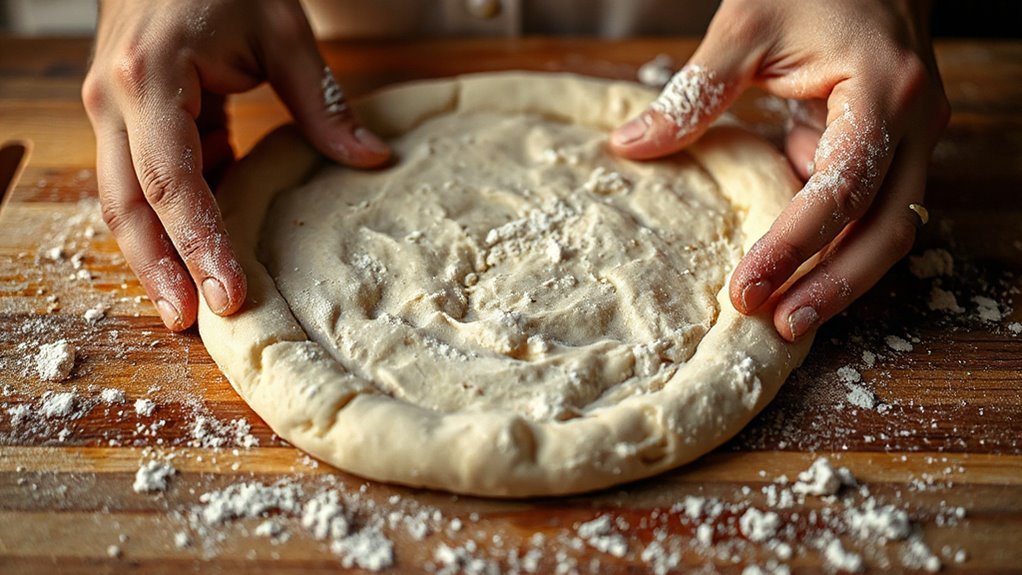
While you might be enthusiastic to dive straight into shaping your pizza, taking your time can make all the difference. Using the right texture techniques and shaping strategies will elevate your pizza crust from good to amazing. Here are three tips to guide you:
- Gentle Hands: Treat your dough like a delicate treasure. Press and stretch gently to maintain air bubbles for a lighter texture.
- Use a Rolling Pin Sparingly: If you do use one, keep it light and only for certain areas. You want to maintain control of the dough’s shape and structure.
- Rotate as You Shape: Turn your dough frequently as you stretch it out. This guarantees an even thickness and helps prevent any overly thick or thin spots.
How to Achieve the Perfect Pizza Crust When Baking
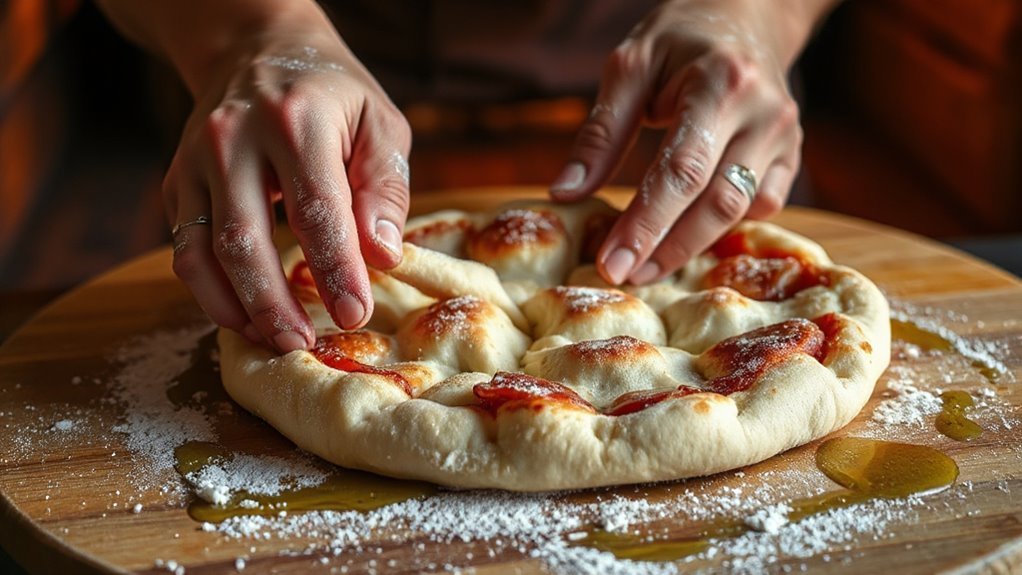
To achieve that perfect pizza crust, it’s all about the right ingredients and temperature. You’ll want to use quality dough ingredients and know the ideal baking temperature for your oven. A little attention to these details can take your pizza from good to great!
Essential Dough Ingredients
Creating the perfect pizza crust starts with understanding the essential dough ingredients. The right mix will give you that delightful chew and fantastic flavor. Here’s what you need to focus on:
- Flour: Strong flour with high protein content boosts gluten development, helping with structure.
- Water: Balancing dough hydration is key. A wetter dough can enhance flavor development and chewiness.
- Yeast: Fresh yeast helps your dough rise, creating air pockets for a light and crispy crust.
Ideal Baking Temperature
Once your dough is made and ready to go, getting the baking temperature right is key to achieving that perfect pizza crust. Baking at a high temperature offers several benefits, like that delightful chewy texture and charred flavor.
| Temperature (°F) | Benefits |
|---|---|
| 475-500 | Ideal for home ovens |
| 600-700 | Mimics a wood-fired oven |
| 800+ | Exceptional crust, quick bake |
To really nail those optimal baking methods, preheat your oven or pizza stone thoroughly. Use a pizza peel for easy transfer, and keep an eye on your masterpiece, as baking times will vary. Enjoy the process—freedom in your kitchen leads to the best pizza!
Common Pizza Dough Mistakes and How to Avoid Them
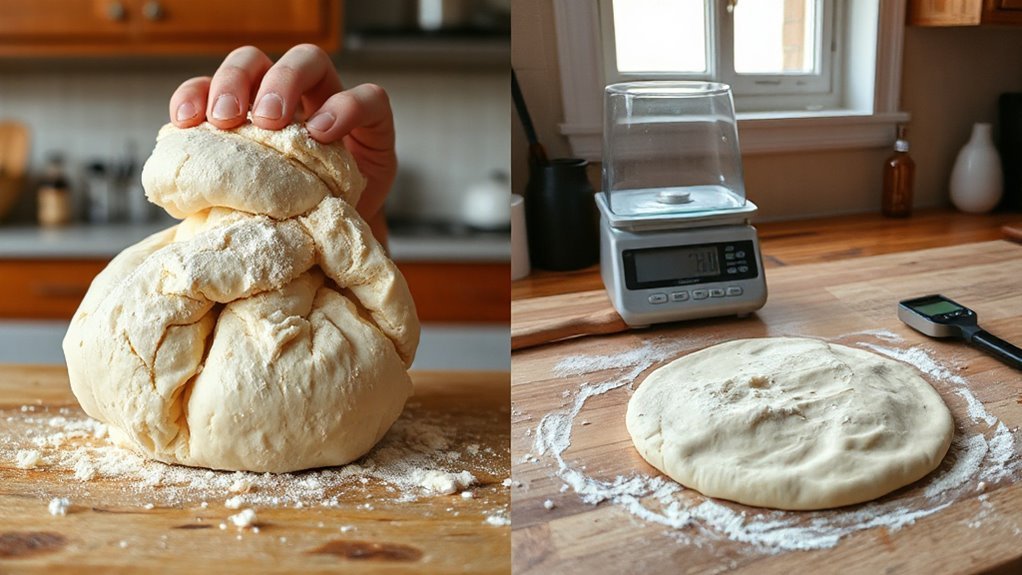
While making pizza dough can be a fun and rewarding experience, it’s easy to stumble into some common pitfalls that can ruin your masterpiece. Here are three mistakes to watch out for:
- Ignoring Dough Hydration: Not adjusting your water ratio can lead to a dry or overly sticky dough. Proper hydration is essential for a tender crust.
- Insufficient Kneading: Rushing through the kneading process can prevent gluten from developing properly. Give it the time it needs to become smooth and elastic.
- Skipping Fermentation: Don’t try to rush your dough’s development by skipping fermentation. Letting it rise at room temperature enhances flavor and texture.
Popular Pizza Dough Variations to Try

If you’re looking to take your pizza game to the next level, exploring different pizza dough variations can open up a whole new world of flavors and textures. One exciting option is the sourdough crust. It lends a tangy flavor and chewy texture that’s hard to beat. Plus, if you’ve already got a sourdough starter hanging around, it’s a fantastic way to use it up!
For those seeking gluten-free options, you’re in luck! Many flours, like almond or cauliflower, can serve as great bases for a crispy and delicious crust. Don’t shy away from experimenting with other ingredients, such as herbs or spices, to customize your dough.
Whether you’re opting for a classic sourdough or a creative gluten-free twist, these variations will keep your pizza nights fresh and fun. So roll up your sleeves and get ready to enjoy some delicious adventures in dough!
How to Store and Freeze Pizza Dough?

Storing and freezing pizza dough is a simple way to keep your pizza nights hassle-free and enjoyable. With the right refrigeration techniques, you can guarantee your dough stays fresh and ready to use. Here’s how to do it:
- Wrap it Up: After kneading your dough, shape it into a ball and wrap it tightly in plastic wrap. This helps with dough preservation by preventing air exposure.
- Refrigerate or Freeze: If you plan to use it soon, store it in the fridge for up to three days. For longer storage, place the wrapped dough in the freezer, where it can last for up to three months.
- Defrost Properly: When you’re ready to use your dough, transfer it to the fridge the night before to defrost slowly, maintaining its taste and texture.
Now you can effortlessly prepare your favorite pizza whenever the craving strikes!
Frequently Asked Questions
Can I Use Whole Wheat Flour for Pizza Dough?
Absolutely, you can use whole wheat flour for pizza dough! It offers some great whole wheat benefits, like adding fiber and nutrients. Just keep in mind that it might change the dough texture a bit—your crust might be denser than with all-purpose flour. To get a balance, try mixing whole wheat with some all-purpose flour. You’ll enjoy a healthier pizza while still getting a tasty result. Give it a shot!
What’s the Ideal Temperature for Yeast Activation?
For yeast activation, think of it as waking a sleeping giant. The ideal temperature range is between 100°F to 110°F (37°C to 43°C). If you use active dry yeast, keep it within this range to guarantee it thrives. Instant yeast’s a little more forgiving, but warmth helps it dance to life! Too hot, and you’ll kill it; too cold, and it won’t wake up. So, keep it cozy and watch the magic happen!
How Long Can I Store Pizza Dough in the Fridge?
You can store pizza dough in the fridge for about three to five days. For long-term storage, wrap your dough tightly in plastic wrap or place it in an airtight container, and it’ll stay fresh in the freezer for up to three months. Just remember, the longer it sits, the more flavor it develops, but freshness might decrease slightly. When you’re ready, let it thaw in the fridge overnight before using it!
Can I Use a Stand Mixer for Kneading Pizza Dough?
Absolutely, you can use a stand mixer for kneading pizza dough! One of the big advantages is that it saves you time and effort. By using the dough hook attachment, you can mix and knead your ingredients thoroughly, ensuring a consistent texture. Just keep an eye on the dough; you want it elastic but not overworked. This technique lets you enjoy more freedom—spend less time kneading and more time tasting delicious pizza!
How Do I Know When My Dough Has Risen Enough?
You’ll know your dough has risen enough when it’s doubled in size and feels light and airy. Look for rise indicators like the dough’s smooth texture and bubbles on the surface. If you poke it gently, it should slowly spring back but leave a small indentation. Trust your instincts; if it looks and feels inviting, it’s ready for the next step. Enjoy the process and feel free to experiment!
Conclusion
Now that you’ve got the ultimate pizza dough guide at your fingertips, you’re ready to take your pizza game to the next level. Imagine tossing that dough like a pro in a bustling pizzeria, the aroma wafting through the air as you craft your perfect pie. Remember, practice makes perfect, so don’t be afraid to experiment with ingredients and techniques. Get your apron on and let’s create some delicious memories in your kitchen!