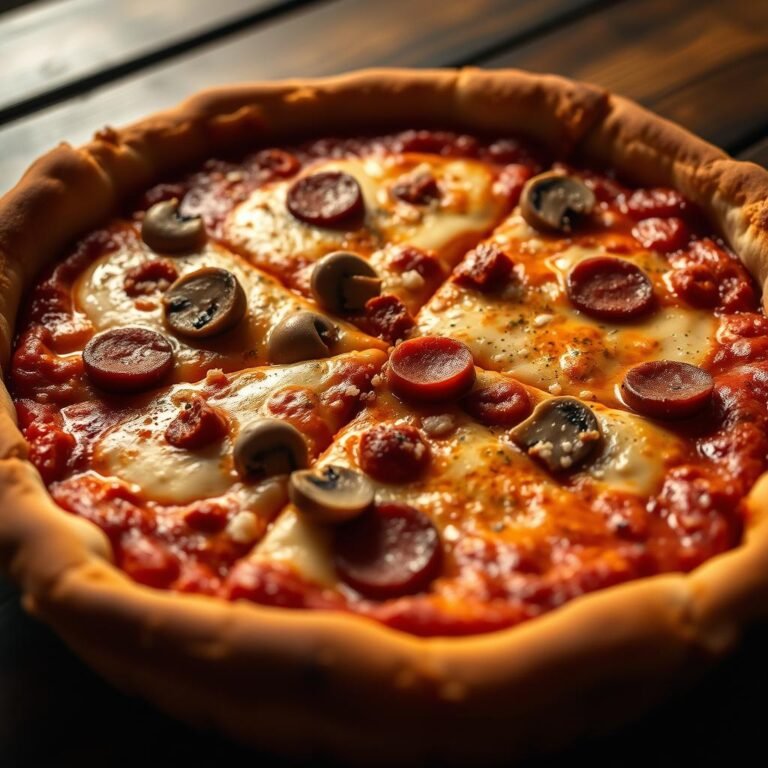
Get ready to build a classic pie that balances savory meats, fresh veggies, and melty cheese. You control the dough thickness, the sauce tang, and the bake so each slice hits your ideal texture.
Start smart: layer a tangy tomato sauce, shredded mozzarella, and an even spread of pepperoni, sausage or ham, plus green peppers, onions, mushrooms, and black olives.
High-heat baking on a preheated stone or cast-iron gives a crisp crust and bubbly top in minutes. At 500°F plan about 15–18 minutes; hotter ovens finish faster.
Home versions shine because you pick ingredient quality and balance every bite. Small prep steps—shredding cheese, slicing peppers, browning meat—keep your station efficient and your pie perfect.
Key Takeaways
- You’ll control dough, sauce, and bake for the crust you want.
- Even layering prevents a soggy center and boosts melt.
- High-heat baking gives pizzeria-style crisp and color.
- Simple prep shortens assembly time and improves results.
- Choose classic meats and vegetables for authentic flavor.
Why You’ll Love This Homemade Supreme Pizza
When you build a pie yourself, you pick every component—dough, sauce, cheese—and set the bake to suit you. That control means brighter flavor, fresher ingredients, and a crust that matches your mood.
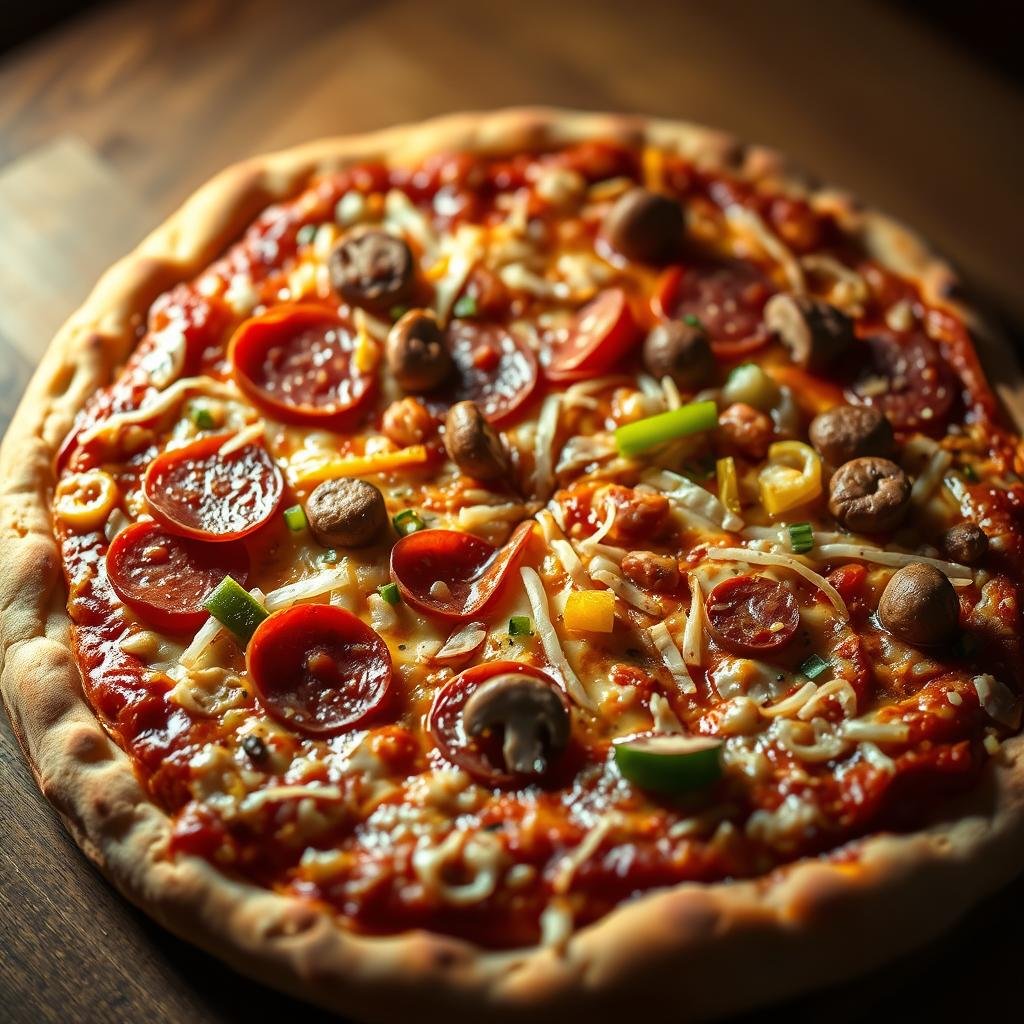
Bold flavor, balanced toppings, and weeknight-easy
You get big taste from a simple red sauce and a classic mix of pepperoni, sausage, onions, peppers, mushrooms, and olives. A sprinkle of parmesan lifts savory notes without extra fuss.
Control the ingredients, the crust, and the doneness
Swap store-bought dough or a jarred sauce when you need speed. Par-bake thicker crusts, skip it for thin ones, and bake on a preheated stone—500°F for 15–18 minutes or your oven’s highest setting for 8–10 minutes.
- You choose quality meats and crisp veggies for fresher results.
- Prep ahead—shred cheese, slice vegetables, brown sausage—to save time.
- Store leftovers safely and enjoy quick lunches or late-night snacks.
Try this once and you’ll build confidence fast—this supreme pizza recipe makes homemade pizza a reliable, weeknight favorite.
Ingredients & Shopping List for a Loaded Supreme
A focused grocery run helps you pick the right meats, vegetables, and cheeses for a perfectly balanced pie.

Meats: Grab pepperoni for classic spice, cooked and crumbled Italian sausage or browned ground beef for savory depth, and chopped ham if you like a hint of smoke. Pre-cook sausage or ground beef so they’re ready to scatter.
Veggies: Choose a crisp green bell pepper, sliced mushrooms, and a red or yellow onion for sweetness. Add sliced black olives for briny contrast. Drain and pat ingredients dry to avoid a soggy crust.
Cheeses: Use shredded mozzarella cheese for melt and stretch, and finish with a light sprinkle of parmesan for savory lift. Buying whole blocks of mozzarella and shredding fresh improves texture.
Dough & sauce: Pick up pizza dough—store-bought for speed or homemade if you have time—and a jar of pizza sauce, or make your own. Keep a little extra dough on hand for edge shaping.
| Category | Suggested Amount | Notes |
|---|---|---|
| Meats | 8–10 oz total | Mix pepperoni, sausage, ham, or ground beef; pre-cook as needed |
| Veggies | 6–8 oz total | Slice peppers, onions; drain olives, dry mushrooms |
| Cheese & dairy | 10–12 oz mozzarella + 1–2 tbsp parmesan | Shred fresh mozzarella for best melt |
| Dough & sauce | 1 12-inch dough ball + 1/2–3/4 cup sauce | Par-bake thicker dough if needed; use quality sauce |
Plan about 12–16 ounces of combined toppings for a 12-inch pie to keep the crust crisp and the flavor balanced.
Quick tip: Follow this shopping list and you’ll have every key ingredient to make a standout supreme pizza that bakes evenly and tastes like a pro-made slice. This compact ingredients guide also works well for a simple weeknight pizza recipe.
Supreme Pizza Recipe: Loaded with Toppings
Set up a tidy station so every step—shredding, slicing, and cooking—flows without rush. This makes assembly faster and helps the crust stay crisp when it hits the oven.
Prep your station
Cook and crumble sausage or ground beef until browned, then drain. Slice peppers, mushrooms, and onions thinly so they warm through. Shred mozzarella and grate parmesan for melt and savory lift.
Roll, sauce, and layer like a pro
Lightly oil and flour your board so the dough rolls smoothly. Roll the pizza dough to your desired thickness; thin dough crisps faster. Spoon a thin, even layer of sauce, then anchor toppings with a base of mozzarella and a sprinkle of parmesan.
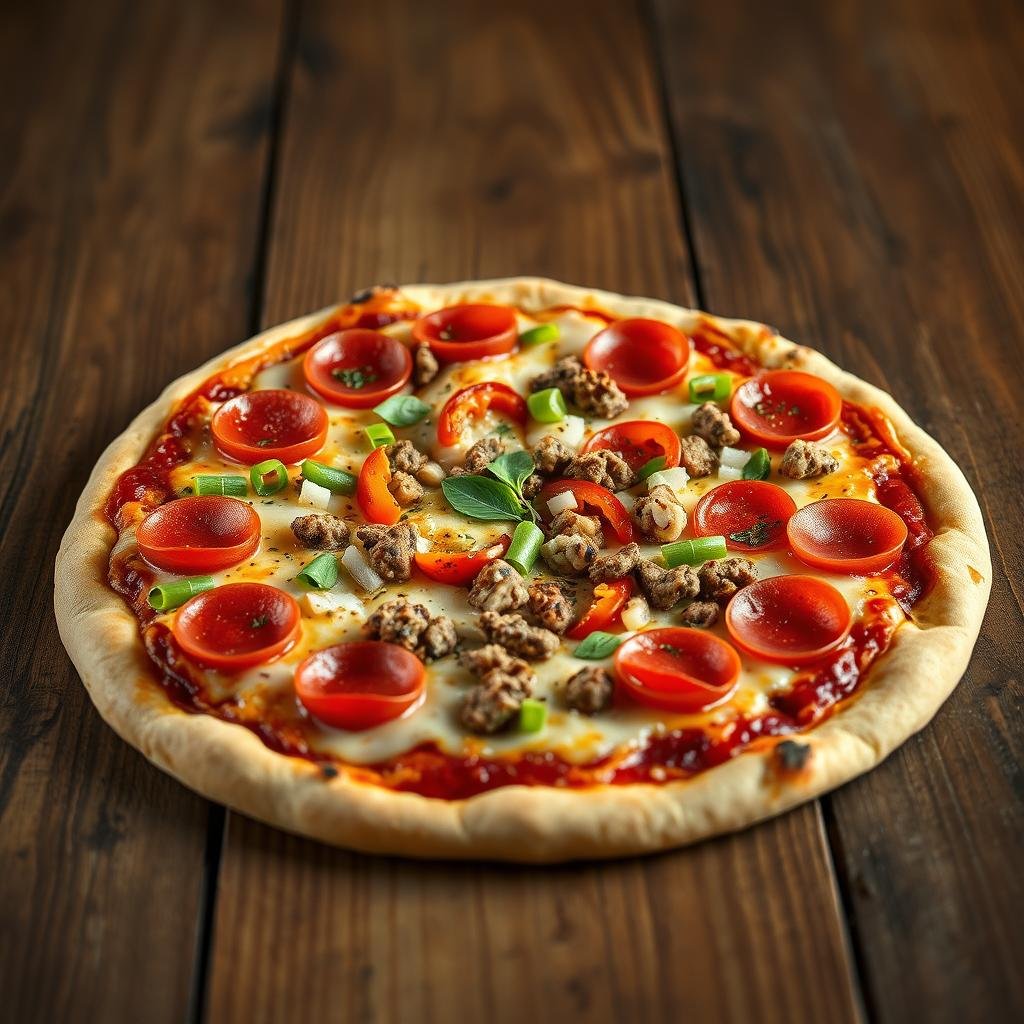
Bake to bubbly perfection
Top evenly with pepperoni, sausage or ground beef, mushrooms, peppers, onions, and black olives. Add a light final layer of cheese to promote golden bubbling.
- Bake hot on a preheated stone or in a cast-iron skillet for best bottom heat; a baking sheet works with slightly longer time.
- At 500°F, plan 15–18 minutes. On the oven’s highest setting on a preheated stone, aim for 8–10 minutes.
- Target doneness when cheese is golden and bubbly and the crust underside is browned. Let rest 2 minutes before slicing.
Tools & Oven Setup for Pizzeria-Style Results
The secret to restaurant-quality slices is a scorching chamber and a properly heated cooking surface. Get your oven very hot and pick the right surface for the crisp bottom you want.
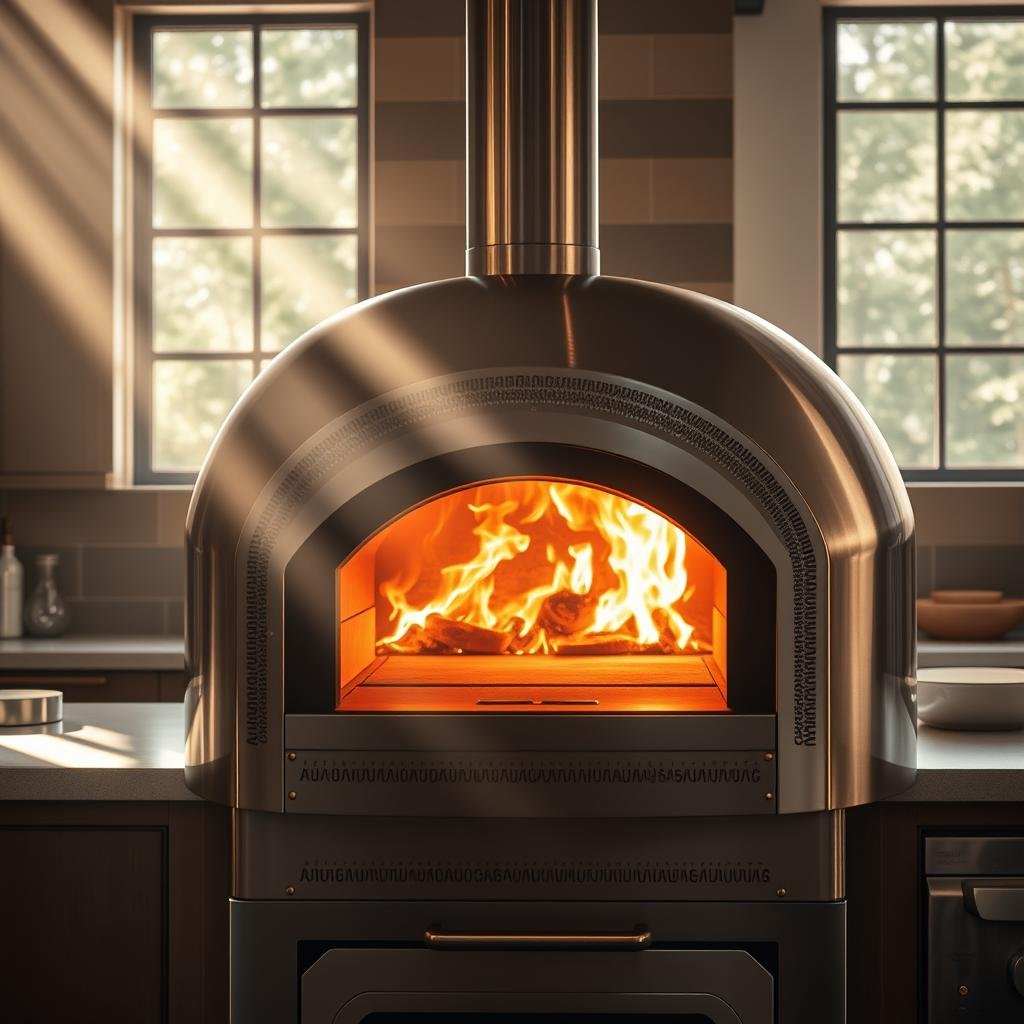
Choose the right surface
Stone gives the truest bottom heat; heat it at the highest setting for about 30 minutes. A hot cast-iron pan performs similarly when preheated in the oven.
A baking sheet works as a fallback. If you use a sheet, place it lower in the oven to help brown the crust.
Preheat strategy and safe transfers
- Always preheat oven fully; a screaming-hot chamber creates rapid oven-spring and melty cheese.
- Use a lightly floured or cornmeal-dusted peel to slide dough onto the hot stone or pan.
- No peel? Build on parchment and slide the whole sheet onto the heat source.
“Heat the surface well and your crust will reward you with crisp, golden slices.”
| Surface | Heat Time | Best for |
|---|---|---|
| Pizza stone | 30 min at highest | Crisp bottom, quick oven-spring |
| Cast-iron pan | 20–30 min preheat | Similar crisp, easy handling |
| Baking sheet | 10–20 min (preheat if possible) | Convenience; place lower rack for browning |
Quick tips: rotate halfway to avoid hot spots, par-bake thicker dough if needed, and let the stone cool in the oven to prevent shock.
Toppings Strategy & Layering Order
A smart layering plan stops soggy spots and helps each ingredient shine. Follow a simple sequence so your crust bakes crisp and flavors stay distinct.
Smart sequencing for even bakes
Start thin, build purposefully, finish light. This order locks moisture away from the base and lets cheese brown attractively on top.
- Thin sauce first: spread a light layer so you get tomato punch without soggy spots.
- Base cheese: add mozzarella as a melty “net” that holds toppings in place.
- Meats next: arrange pepperoni, cooked sausage or ham so rendered fat flavors the cheese instead of soaking the crust.
- Veggies after: scatter mushrooms, peppers, onions, and black olives so steam escapes upward and the cheese below stays intact.
- Finish light: a sprinkle of mozzarella and parmesan creates a glossy, golden top.
- Keep pieces small and even; pat sautéed mushrooms and drained olives dry to cut excess moisture.
- Space items evenly—don’t clump pepperoni or sausage—to help uniform browning and a crisp crust.
- Avoid overloading: coverage beats piling, which shortens bake time and preserves texture.
- If you like herbs, dust dried oregano or Italian seasoning before the final cheese for added aroma.
“Layer deliberately: it’s the simplest step that changes a good pie into a great one.”
Use this ordering on every pizza you make and you’ll see quicker bakes, better melt, and fewer soggy slices.
Pro Tips for Timing, Crust Texture, and Doneness
Small timing tweaks and the right surface are the fast route to a reliably crisp crust. Use these practical moves so your dough bakes evenly and your slices come out cleanly.
Thin vs. thick crust: when to skip or par-bake
Thin crust: if you roll thin, skip par-baking and launch straight onto a preheated stone. Expect an 8–10 minute bake at the highest oven setting for a crisp edge and quick oven-spring.
Thick crust: par-bake the base until it’s just set, then add sauce, cheese, and toppings. This prevents a gummy center while letting the top brown without burning.
Temperature ranges and timing
Use the highest oven setting on a hot surface for fast results: 8–10 minutes on a stone or steel. If your oven tops out at 500°F, plan 15–18 minutes and check the underside for a deep golden color.
How to get a crisp bottom and a golden, melty top
- Place the rack lower or use a preheated stone to intensify bottom heat and crisp the base.
- Rotate the pan halfway through to avoid hot spots and ensure even color and melt.
- Watch the cheese and aim for bubbling, lightly golden—not dry or greasy.
- If the top is done but the bottom needs a minute, move it lower for the final 1–2 minutes.
- Let the pie rest 1–2 minutes before cutting so slices hold their shape.
“Note rack position and bake time so you can repeat the result every time.”
Variations & Substitutions to Make It Yours
Simple swaps let you tailor flavor, heat, and texture for any crowd. These changes keep the same bake method but give each pie a distinct character.
Meat swaps to boost flavor
Change your protein by using spicy italian sausage, Canadian bacon, salami, or a bit of crispy bacon for smoky depth.
Mix in some cooked beef for a heartier bite, or keep classic pepperoni for familiar spice.
Veggie twists that brighten the pie
Add banana peppers for tang, artichoke hearts for brine, cherry tomatoes for bursts of sweetness, or thin slices of zucchini for gentle texture.
Rinse canned olives and pat marinated artichokes dry to control salt and moisture.
Sauces and crust choices
Try pesto or a white alfredo to swap the usual sauce for herb or cream notes. Marinara works fine if it’s what you have on hand.
Choose store-bought pizza dough for speed, or a cauliflower crust if you need a gluten-free option. Both keep the process simple while changing texture.
Cheese and balance tips
Consider a three-cheese mix: mozzarella, parmesan, and a touch of sharp cheddar for extra complexity.
Layer stronger flavors sparingly so they complement the classic mix of mushrooms, bell pepper, and olives.
| Swap Type | Options | When to Use |
|---|---|---|
| Meat | Spicy italian sausage, salami, bacon, Canadian bacon, beef | For more heat or smokiness |
| Veggies | Banana peppers, artichokes, cherry tomatoes, zucchini, mushrooms, bell pepper | To add brightness or texture |
| Sauce & Crust | Pesto, alfredo, marinara; store-bought dough, cauliflower crust | For herbal, creamy, or gluten-free variations |
“Keep the same layering order—sauce, cheese, meats, veggies, finish with cheese—to protect crust and bake time.”
Storing, Freezing, and Reheating Leftover Pizza
Cool any leftover slices quickly to lock in texture before you store them. Place pieces in an airtight container or a resealable bag within two hours to keep quality high.
Fridge and freezer guidelines for the United States
Short-term: in the U.S., refrigerate wrapped slices for up to 4 days. Keep them flat so toppings stay intact and the dough doesn’t compress.
Long-term: wrap each slice tightly in plastic, slip them into a freezer bag, and freeze up to 2 months. Label the bag with the date so you manage time easily.
Best reheat methods for a crisp crust
For a crisp crust, use a skillet or a hot oven rather than a microwave. Warm a skillet over medium heat, cover for 1–2 minutes to melt cheese, then uncover to crisp the bottom.
Or preheat the oven to 425°F and bake 8–10 minutes on a baking sheet until the cheese bubbles and the crust re-crisps. If the bottom is soft, finish 1–2 more minutes on the lowest rack.
- Let chilled slices sit a minute before reheating to avoid condensation.
- If frozen on parchment, transfer straight to the hot pan or rack for convenience.
- Give multiple slices space on the sheet for even heat circulation.
| Method | Temp / Heat | Max Storage |
|---|---|---|
| Refrigerator | 40°F; airtight container | Up to 4 days |
| Freezer | 0°F; wrapped and bagged | Up to 2 months |
| Skillet reheat | Medium heat; cover 1–2 minutes | Best for 1–2 slices |
| Oven reheat | 425°F; 8–10 minutes on a baking sheet | Great for several slices |
“Cool quickly, wrap tightly, and reheat hot for the best texture.”
Conclusion
The final trick is simple: balance your layers, preheat well, and time the bake precisely.
With balanced toppings, smart layering, and high-heat baking—8–10 minutes on a preheated stone at the highest setting or 15–18 minutes at 500°F—you can create a pizzeria-level supreme at home. Start with quality dough and a simple sauce, then layer mozzarella, meats, and veggies in the proven order.
You now have a reliable plan: bake hot and fast for golden, bubbly cheese and a crisp bottom. Store leftovers properly and reheat in a skillet or hot oven so each slice stays crisp tomorrow. Keep this method on repeat and you’ll own your go-to supreme pizza recipe for easy weeknight cooking.
FAQ
How long does it take to prepare and bake a homemade supreme pizza?
Plan about 15–20 minutes for prep (shredding cheese, slicing bell pepper, mushrooms, and onions, and cooking Italian sausage or ground beef) and 10–18 minutes to bake depending on oven temperature and crust thickness. If you use a pizza stone or a very hot oven, the bake time drops to the shorter range.
Can you use store-bought dough and still get great results?
Yes. A quality store-bought dough saves time and delivers a reliable crust. Let it come to room temperature before stretching, dust your peel or baking sheet with semolina or flour, and preheat your oven or stone for crisp results.
Should meats be cooked before going on the pie?
Cook raw meats like Italian sausage and ground beef first so excess fat renders and you avoid a soggy crust. Sliced pepperoni and pre-cooked ham or salami can go on raw and will crisp during baking.
What’s the best oven setup for a pizzeria-style crust?
Use a preheated pizza stone or cast iron skillet for the best bottom crisp. If you only have a baking sheet, preheat it upside down to mimic the stone’s heat. Set the oven as hot as it safely allows—425–500°F depending on your equipment.
How do you prevent the middle from being doughy when the edges are done?
Par-bake thicker crusts for 3–5 minutes before adding toppings. Use thin, even layering of sauce and avoid overloading with wet vegetables. A hot stone or skillet also helps cook the center faster.
What’s the ideal topping order to avoid a soggy pie?
Start with sauce, add a light layer of cheese, then meats, vegetables, and finish with a little extra cheese. That top layer of cheese helps seal moisture and creates a golden finish.
Can you swap ingredients for dietary needs or flavor preferences?
Absolutely. Swap Italian sausage for turkey or plant-based crumbles, use cauliflower or gluten-free dough for low-carb needs, and try pesto or white sauce instead of red for a different flavor profile. Add veggies like banana peppers or artichokes for variety.
How should leftovers be stored and reheated for best texture?
Cool leftover slices, wrap tightly, and refrigerate up to 3–4 days or freeze for up to 1–2 months. Reheat in a hot skillet or in a 400°F oven on a baking sheet for 5–8 minutes to restore a crisp crust and melty cheese.
What cheeses work best beyond mozzarella and parmesan?
Provolone, fontina, and a bit of pecorino romano complement mozzarella well. Use blends sparingly to avoid overwhelming the sauce and toppings balance.
Any tips for using olives and peppers without making the pie watery?
Drain and pat black olives dry, and thinly slice bell peppers and onions. Sauteing mushrooms briefly removes excess moisture and concentrates flavor before they hit the pie.