
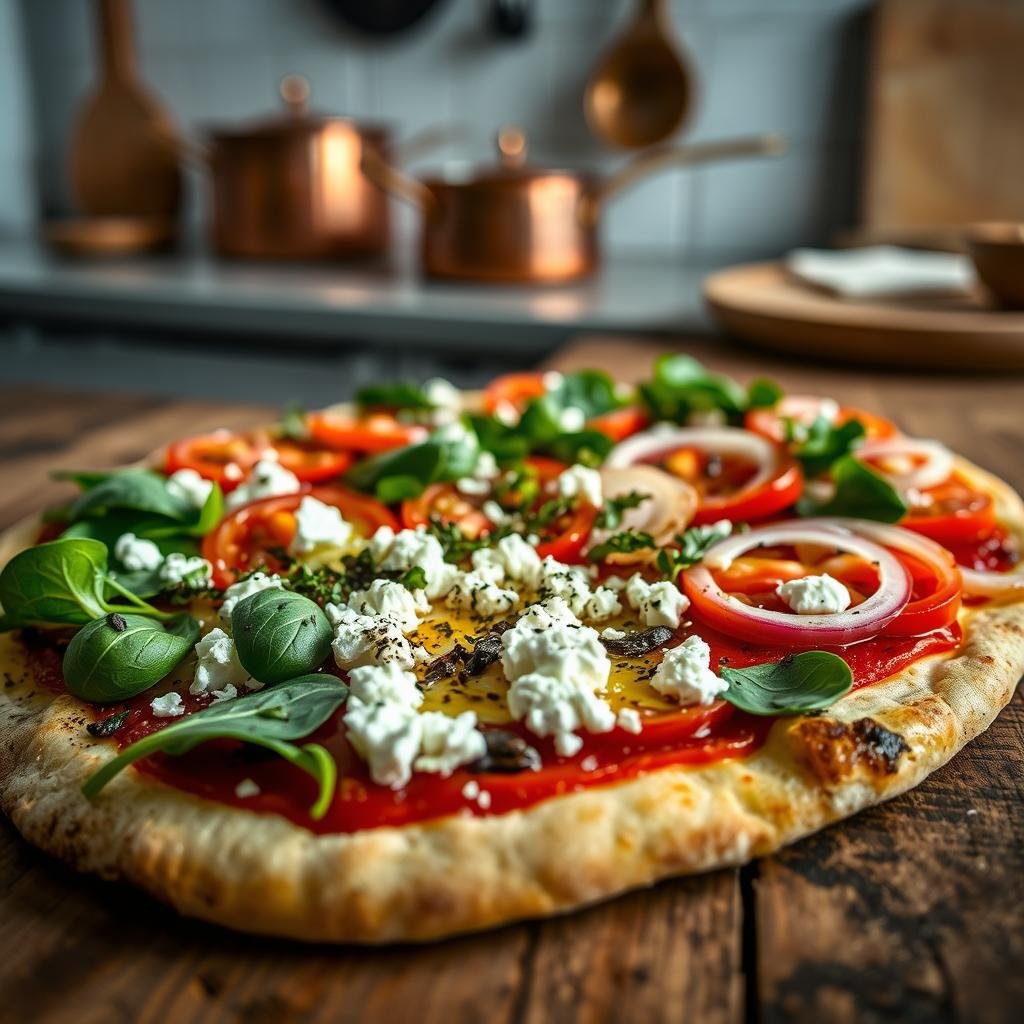

You want a weeknight meal that feels special without fuss. This vegetarian pie layers garlicky greens with salty block feta and a touch of melty mozzarella for bright, savory bites.
Haley’s quick bake at 425°F gives a crisp base in 10–15 minutes, while Katia finishes each pie with extra virgin olive oil and a pinch of red pepper flakes for heat. Roxana‘s cast iron trick yields thick, crunchy edges from a stove-to-oven move.
You’ll learn when to sauté aromatics so the topping stays vibrant and never watery. Choices from a blazing-hot stone to a skillet method let you match time, tools, and appetite.
Use pantry staples—olive oil, garlic, and pepper—to lift every slice. The result is a dinner that tastes like spanakopita in pie form: tangy cheese, garlicky greens, and a crust that sings.
Key Takeaways
- You can make a spanakopita-like pie quickly on a hot stone or sheet.
- Sauté aromatics early so leafy greens stay bright and not soggy.
- Balance salty block feta with creamy mozzarella for texture and flavor.
- Choose cast iron for crunchy edges or a stone for an even bake.
- Finish with extra virgin olive oil and optional red pepper flakes.
Why You’ll Love This Spinach and Feta Pizza
This pie delivers bright, savory notes that recall a classic Greek filling without the fuss. You’ll notice a familiar meld of sautéed greens, garlic, and onions with briny crumbles that echo spanakopita. That pairing gives each bite an inviting depth of flavor.
The texture play is a highlight. A crisp-edged crust meets soft wilted greens, melty mozzarella, and tangy feta for contrast in every slice.
Keep the topping light—no heavy sauce—so the aromatics and good olive oil shine. Finish with a drizzle and a pinch of red pepper flakes for brightness and heat.
Mediterranean notes that echo spanakopita
- You’ll love how garlicky greens with crumbled feta bring that spanakopita comfort to a bubbly pizza.
- Sauté just to wilt so the leaves stay vibrant and never soggy.
Balanced melt and tang
- Adjust more mozzarella for gooey melt or extra feta for a saltier bite.
- Simple, repeatable tips—hot oven and a quick bake—deliver consistent results every time.
Spinach and Feta Pizza: Mediterranean Style
A few well-chosen ingredients deliver big flavor with minimal fuss. Gather simple staples and you’ll move from prep to oven with ease.
What you’ll need at a glance
- One ready-made or homemade dough (Trader Joe’s refrigerated works well).
- 6–10 oz fresh spinach, a red or yellow onion, and one clove of garlic.
- Block feta and fresh or shredded mozzarella for balance.
- Extra virgin olive oil, salt, and black pepper to finish.
- Optional: fresh dill, parchment for easy transfer, and a hot stone or cast iron for baking at 425°F.
Use a quick stovetop sauté to wilt the greens and drive off excess moisture before topping the base. Choose a hot stone or sheet for a thin-crisp crust, or a skillet for thick, crunchy edges. Keep tools minimal—a single skillet and your chosen baking surface do the job.
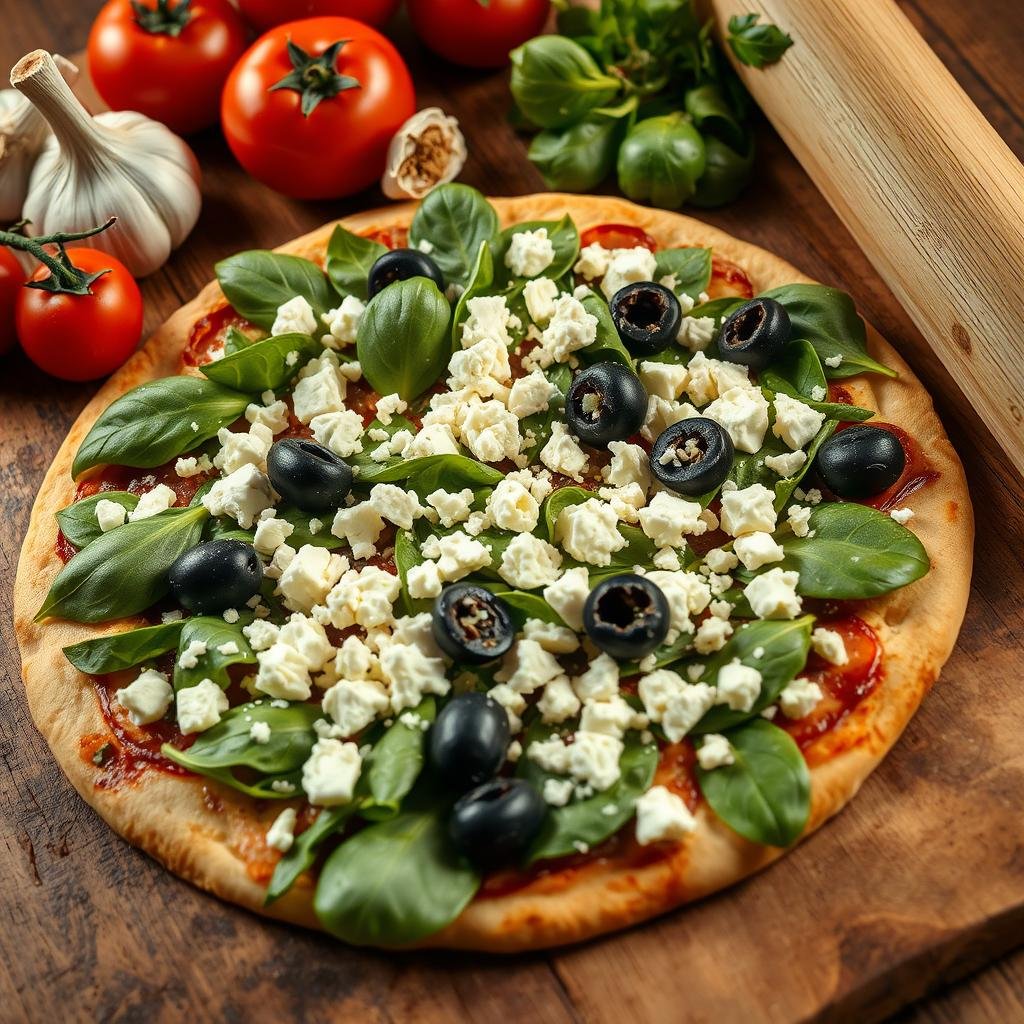
Ingredients: Fresh Spinach, Feta Cheese, Olive Oil, and More
Choose every ingredient with an eye on moisture and texture so your topping crisps instead of steaming.
Cheeses
Pick block feta in brine (PDO) for creaminess and a clean crumble over pre-crumbled options. Use fresh mozzarella in water for lush melt or a firm shredded mozzarella cheese if you want less moisture; dab wet pieces before placing.
Greens and aromatics
Use 6–10 oz baby spinach; sauté a red or yellow onion about ten minutes first, then add minced garlic plus the greens so aromatics bloom without burning. Frozen spinach works if fully thawed and squeezed extremely dry.
Pantry and finishing
Finish with extra virgin olive oil, a grind of pepper, and a light sprinkle of salt. Add red pepper flakes or fresh dill for heat or brightness. Keep moisture in check by draining the pan well before topping the crust.
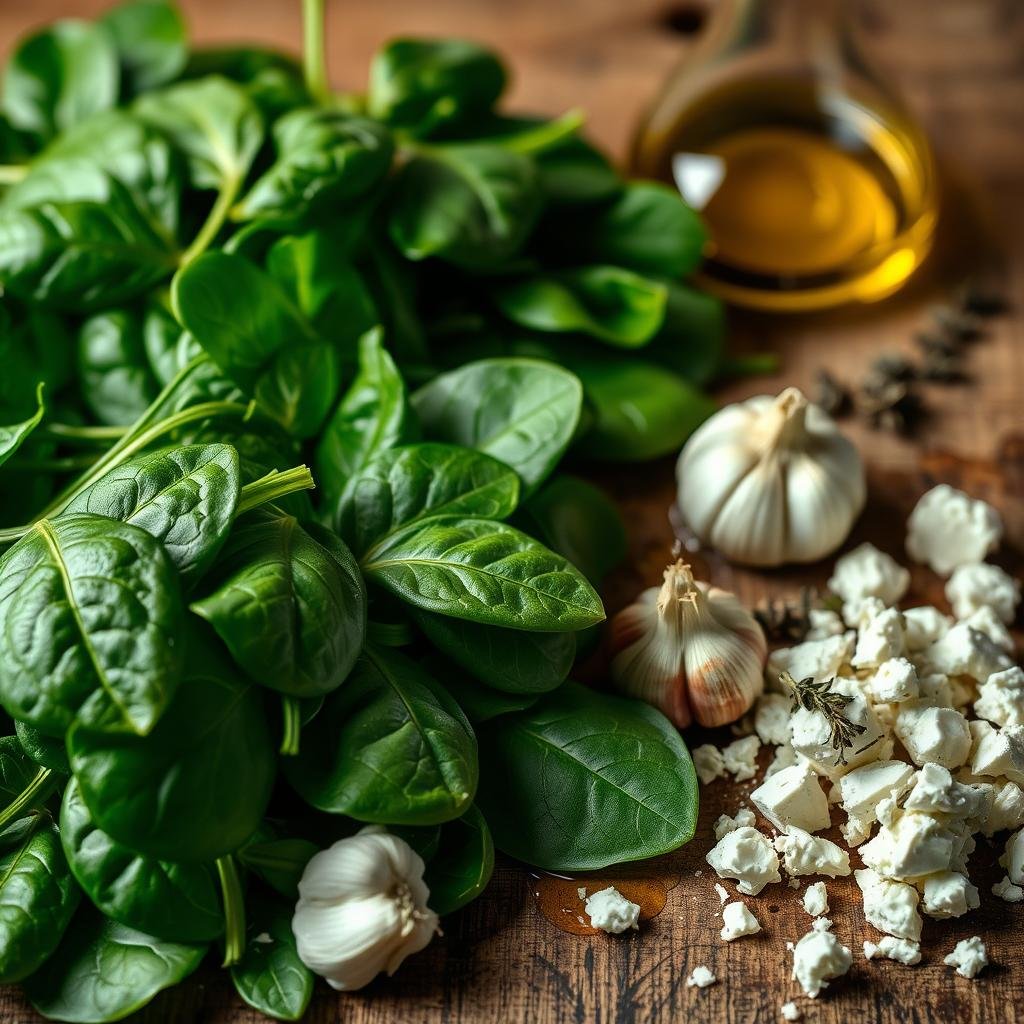
Step-by-Step: From Skillet Sauté to Golden-Brown Crust
Follow these clear steps to move from skillet to slice with a crisp rim and bright topping. Start by warming 1–2 tablespoons of oil in a skillet over medium heat.
Sauté the aromatics. Cook sliced onions about 10 minutes until sweet. Stir in minced garlic, then add spinach by the handful until wilted. Season with salt and pepper to taste so the spinach mixture is flavorful but not watery.
Stretch and build. Let dough come to room temperature, then stretch a 12-inch round or a 9×13 rectangle gently with your fingers. Layer shredded mozzarella cheese first, spoon the spinach-onion mix next, and finish with crumbled feta.
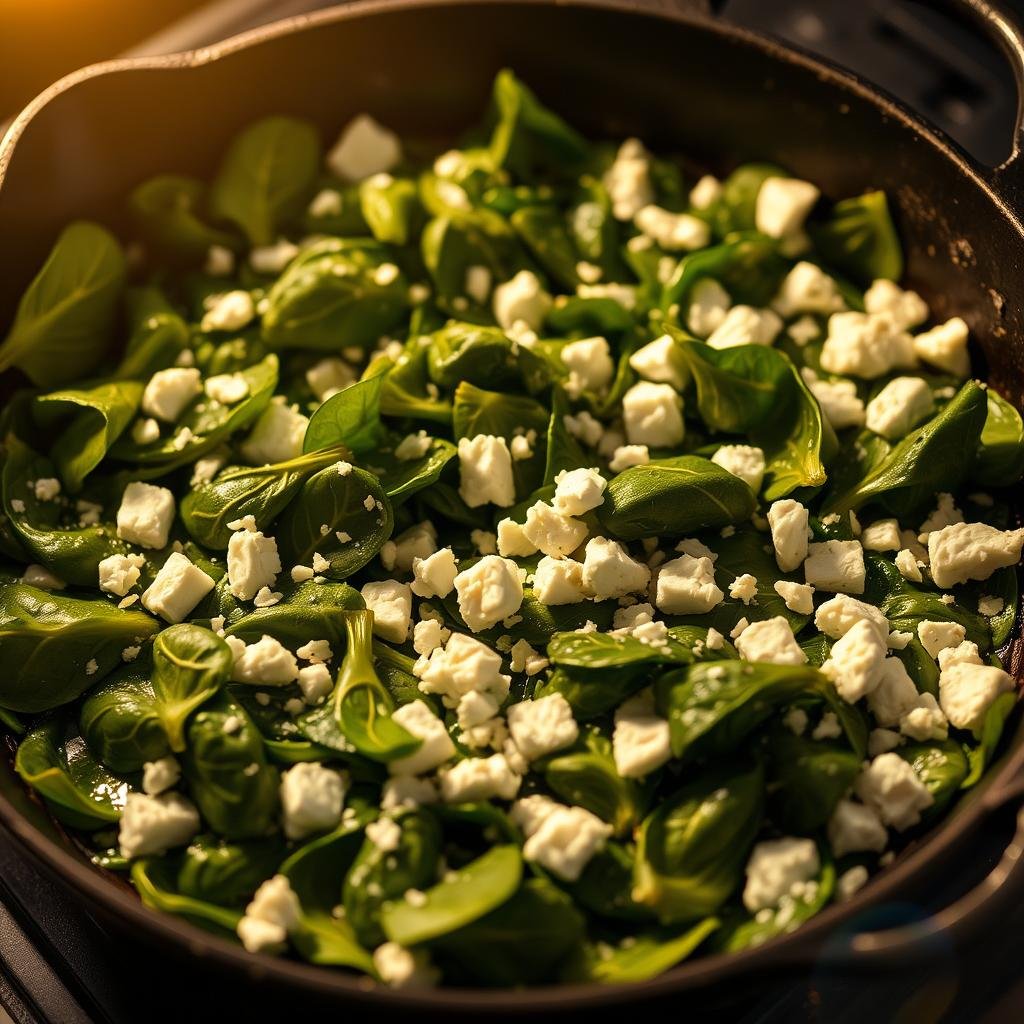
Final bake and finish
- Preheat oven to 425°F with your stone or sheet inside; slide assembled pie onto parchment paper for easy transfer.
- Bake 10–15 minutes until the rim is golden and cheese melts; minutes will vary by oven and thickness.
- Make sure any wet cheeses are dabbed before topping so the base stays crisp.
- Rest 1–2 minutes, then drizzle extra virgin olive oil and sprinkle pepper flakes for a bright finish.
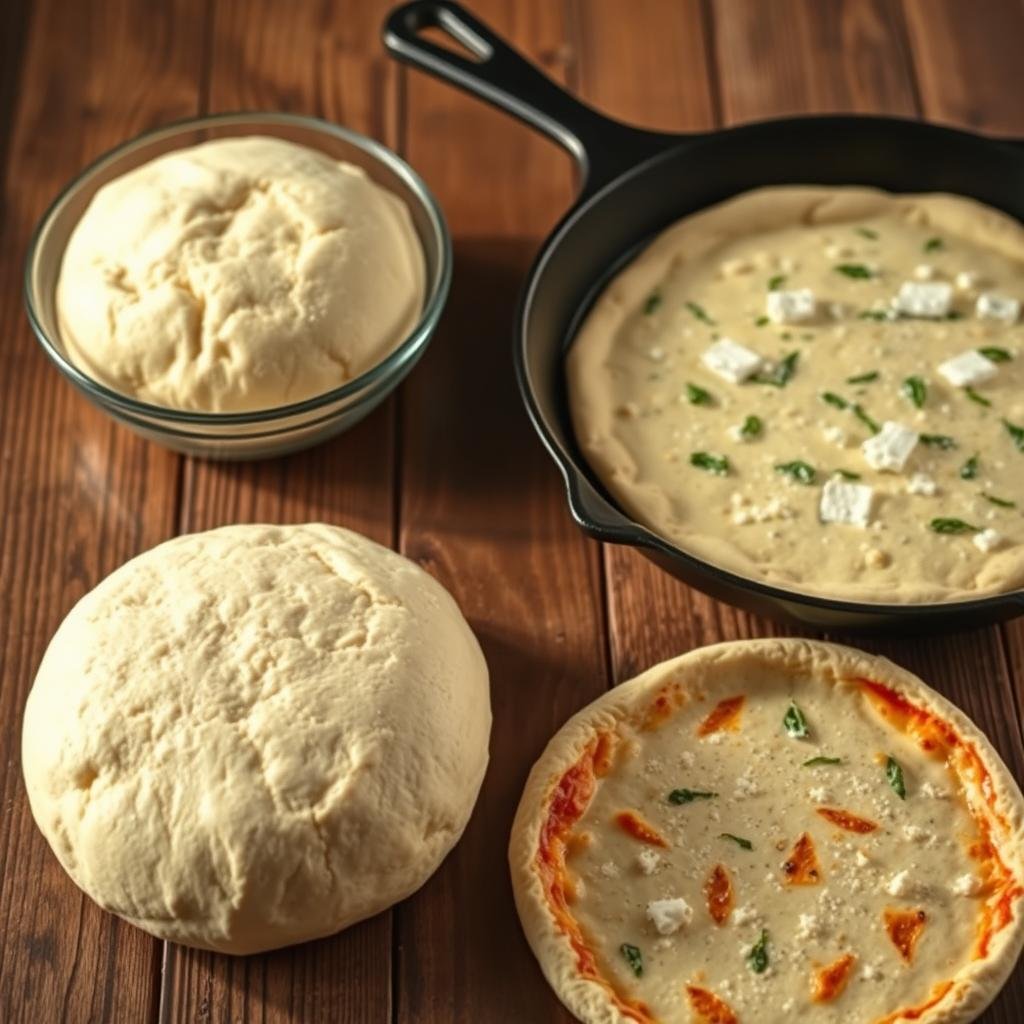
Dough Options: No-Knead, Store-Bought, or Cast Iron Pan Pizza
Your dough choice sets the tone for the whole pie. Pick a method that matches how much time and hands-on work you want.
No-knead dough gives a light, thin, crispy crust with almost no effort. Katia’s no-knead yields a bubbly crumb and quick browning. The recipe makes two 10-inch crusts so you can freeze one for later.
Refrigerated dough saves time when you’re short. Let store-bought dough come to room temperature before stretching so it relaxes for easy shaping. Trader Joe’s refrigerated dough works well in a pinch.
Cast iron pan method creates thick, crunchy edges. Preheat skillet or iron pan to 550°F, start on the stovetop 3–5 minutes, then transfer to the oven at 400°F for 10–12 minutes. This stove-to-oven move locks a golden rim and tender center.
Mixing some whole wheat boosts fiber without losing structure. Add a pinch of sugar in some recipes to wake up the yeast. Manage stickiness by oiling your hands or lightly flouring the bench.
| Method | Key Benefit | Timing | Notes |
|---|---|---|---|
| No-knead | Thin, crispy crust | Rest overnight to 18 hours | Low effort; two 10-inch crusts per batch |
| Refrigerated dough | Fast, convenient | Room temp 30–60 minutes | Great for busy weeknights; relax before stretching |
| Cast iron pan | Thick edges, crunchy rim | Stovetop 3–5 minutes, oven 10–12 minutes | Preheat pan hot; use stove-to-oven method |
| Whole wheat mix | More fiber, nutty flavor | Same as base dough | Replace up to 25% flour for best structure |
Pro Tips for a Perfect Crust and Flavor
A few simple habits at bake time will keep the bottom crisp and the topping bright. Follow these concise tips to get a reliable, shatter‑crisp result every time.
Heat and placement
Preheat oven thoroughly with the stone or steel inside. Place the rack on the lowest position so the base crisps fast without overcooking the top.
Transfer and surface
Use parchment paper and a peel or an inverted baking sheet for easy transfer. A hot surface stores heat and helps eliminate a soggy bottom.
Prep and drainage
Let dough come fully to room temperature so it stretches without springing back. Squeeze or drain leafy greens well so moisture does not seep into the crust.
“Finish each pie with a drizzle for aroma and a pinch of flakes for lift.”
- Finish with extra virgin olive oil to amplify aroma and gloss after baking.
- Add a tiny pinch of red pepper flakes to brighten rich dairy like feta.
- Keep toppings light so the crust bakes through—make sure your pie cooks evenly.
Tasty Add-Ins and Variations
A few smart toppings lift the whole dish without stealing the spotlight.
Savory-sweet and briny accents work best when kept modest. Layer sun-dried tomatoes, Kalamata olives, canned artichokes, or roasted red pepper for depth and contrast. Pick one or two so the topping stays light.
Cheese twists are a simple trade. Dot fresh ricotta, grate parmesan, or add a touch of cheddar to introduce creaminess or sharpness. Pair bolder add-ins with mild mozzarella to balance the board.
Herby finishes sharpen each slice. Sprinkle dill for a nod to Greek notes, parsley for bright lift, or oregano for classic pizzeria flavor. Add a few pepper flakes for gentle heat.
- Keep amounts modest so the base crisps.
- Reserve a cup of mixed add-ins to fill half-and-half pies for different tastes.
- Let the tang of feta remain a highlight; use variations to accent, not overwhelm.
Equipment: Pizza Stone, Skillet, and Parchment Paper
Choose the right heat-transferring surface so your crust crisps quickly and cleanly.
Stone or steel versus an inverted sheet. A preheated stone or steel in the oven gives the best bottom char and fast heat transfer. If you don’t have one, an inverted baking sheet preheated on the rack is a strong, budget-friendly stand-in for the same effect during baking.
Cast iron for thick, crunchy edges
Skillet technique. Use a preheated cast iron skillet when you want a thick rim with a tender center. Heat the iron on the stovetop, sear the stretched dough for 3–5 minutes, then finish in the oven for 10–12 minutes to lock the crust.
Transfer, release, and cleanup
Use a sheet of parchment paper for an easy launch and to prevent sticking, especially with high-hydration dough. A hot pan or skillet will change your bake time and texture, so preheat equipment several minutes before you start. The right gear keeps things simple with tools you already own.
Nutrition Snapshot and Lighter Swaps
A compact nutrition view helps you make smart swaps without losing taste.
Typical serving sits around 610–650 kcal with solid protein from mozzarella and feta that supports satiety and bone health.
You can trim overall fat by using part-skim mozzarella, cutting back on crumbled cheese, and finishing with less olive oil. Also, measure oil with a teaspoon to limit added calories.
Boost fiber by mixing some whole wheat into the dough or serving two slices with a leafy salad. One packed cup of greens per serving adds vitamins A and C with almost no calories.
Practical swaps and portions
- Use part-skim cheese and smaller portions to lower fat yet keep flavor.
- Skip sweet sauces to keep sugar low; rely on garlic, herbs, and lemon zest.
- Control sodium by choosing block cheese and adding only a measured teaspoon of salt in dough when needed.
- Adjust the recipe to fit goals—small tweaks preserve the dish’s character while improving nutrition.
| Nutrient | Typical Amount | Easy Swap | Impact |
|---|---|---|---|
| Calories | 610–650 kcal | Serve two slices + salad | Lower per-meal energy |
| Fat | Moderate | Part-skim mozzarella, less olive oil | Reduced calories from fat |
| Fiber | Low | Partial whole wheat dough | Better fullness and digestion |
| Sugar | Minimal | No sweet sauce | Keeps carbs steady |
Make-Ahead, Storage, and Reheating
Plan ahead: chilling elements the day before turns busy weeknights into quick bakes. Refrigerate dough for up to a couple days, or freeze it for longer storage. Thaw frozen dough in the fridge overnight before bringing it to room temperature to stretch.
Prep the spinach mixture ahead—cool completely, pack in an airtight container, and label. Whether you used fresh leaves or frozen spinach that was squeezed dry, chilling the mix cuts prep time at assembly.
Leftover slices keep best in the fridge. Follow your preference: one day if you want the brightest flavor, or three to four days for flexible meals. For longer holds, wrap slices tightly and freeze up to 2–3 months.
Quick reheating tips
- Reheat refrigerated slices on a hot skillet or pan for a few minutes to return a crackly bottom.
- Frozen slices do well when baked straight from the freezer in a preheated oven at high heat; this preserves texture.
- Keep toppings separate for party prep—assemble and bake in minutes to serve fresh.
- Portion leftover filling by the cup so lunches pack cleanly and waste less.
“A hot pan or a fast oven will revive crispness faster than a microwave.”
| Item | Storage | Reheat Method |
|---|---|---|
| Pizza dough | Fridge 2 days / Freeze long-term | Room temp 30–60 minutes before stretching |
| Spinach mixture | Refrigerate 3–4 days / Freeze if sealed | Use directly on dough; warm briefly if very cold |
| Cooked slices | Refrigerate 1–4 days / Freeze 2–3 months | Skillet or hot pan 2–4 minutes; oven from frozen for best texture |
Conclusion
This short guide turns simple steps into a reliable weeknight recipe you’ll repeat. Follow a quick stovetop sauté, layer thoughtfully, and use a very hot bake for a crisp result every time.
You can choose a stone for a thin, blistered pizza or a cast iron pan for thick, crunchy edges. Keep toppings light so the spinach and feta stay vibrant and the crust bakes through.
Finish each pie with extra virgin olive oil and a pinch of chili for lift. Small make-ahead moves and smart reheating keep slices craveable, while easy add-ins let you vary the cheese and herbs without losing the core flavor.
FAQ
How do I prevent a soggy crust when using frozen greens?
Thaw frozen greens fully, then squeeze or press out excess water using a clean towel or paper towels. Sauté the greens briefly with garlic and a splash of olive oil to dry them further before adding to the dough. Using room-temperature dough and preheated baking surface also helps keep the crust crisp.
Can I use store-bought dough and still get great results?
Yes. Choose high-quality refrigerated or frozen dough, let it come to room temperature for 30–60 minutes, then stretch gently. For a crisper bottom, bake on a pizza stone or preheated inverted baking sheet and use parchment to transfer the pie.
What type of cheese blend works best with tangy feta?
A combination of low-moisture mozzarella for melt and a small amount of ricotta or grated parmesan for richness pairs well with tangy feta. Sprinkle crumbled feta toward the end of baking to preserve its texture and flavor.
How long and at what temperature should I bake the pie for a golden crust?
Preheat your oven to 475–500°F (245–260°C). Bake the pizza on the lowest rack or a preheated stone/steel for 10–14 minutes, or until the crust is golden and cheese bubbles. Watch closely since times vary by oven and thickness of the crust.
Are there quick substitutions for fresh greens and herbs?
If you don’t have fresh greens, use well-drained frozen greens. Swap fresh dill or parsley for dried oregano or basil, but adjust quantities—dried herbs are more concentrated. A small squeeze of lemon brightens the overall flavor.
What are smart add-ins that complement the filling without overpowering it?
Roasted red peppers, Kalamata olives, artichoke hearts, or sun-dried tomatoes add color and depth. Keep salty add-ins modest because feta already brings tang and saltiness. Finish with a light drizzle of extra virgin olive oil and red pepper flakes for heat.
Can I make the filling ahead and freeze it?
Yes. Cool the sautéed greens and mix, then freeze in an airtight container for up to 3 months. Thaw in the fridge overnight and squeeze out any released liquid before assembling to avoid extra moisture on the crust.
Should I use a cast iron skillet or a pizza stone for best results?
Both work well. A preheated pizza stone or steel gives an evenly crisp bottom. A cast iron skillet produces thick, crunchy edges and works great for stove-to-oven methods. Preheat the skillet in the oven for best sear and texture.
How can I reduce calories and fat without losing flavor?
Use part-skim mozzarella, reduce the amount of feta, and increase herbs and roasted veggies for volume and flavor. Swap some olive oil for a light spray during sautéing and finish with lemon zest to boost perceived richness.
Any tips for seasoning the greens so flavors pop under the cheese?
Sauté greens with minced garlic and a pinch of salt, add a teaspoon of lemon juice or zest, and finish with black pepper and red pepper flakes. A small drizzle of good olive oil just before baking elevates the overall taste.
