If you’re ready to reveal the secrets of Sicilian style pizza, you’re in for a treat! Start with high-protein bread flour for that perfect chewy crust. Hydration’s key, so keep your dough around 70% moisture. Don’t skimp on toppings—classic choices like pepperoni or fresh mozzarella are always a hit! And remember, an overly baked crust can ruin your pizza night. Stick around, and you’ll discover even more tips to impress your family and friends!
Key Takeaways
- Achieve the ideal Sicilian crust using high-protein bread flour for a chewy, crispy texture.
- Maintain a hydration level of around 70% for a light and fluffy pizza dough.
- Allow the dough ample resting time to double in size for better rise and texture.
- Experiment with toppings like caramelized onions and fresh seasonal ingredients for unique flavor combinations.
- Serve Sicilian pizza warm and cut into generous squares for an authentic, enjoyable eating experience.
How to Make Sicilian Style Pizza: A Step-by-Step Guide
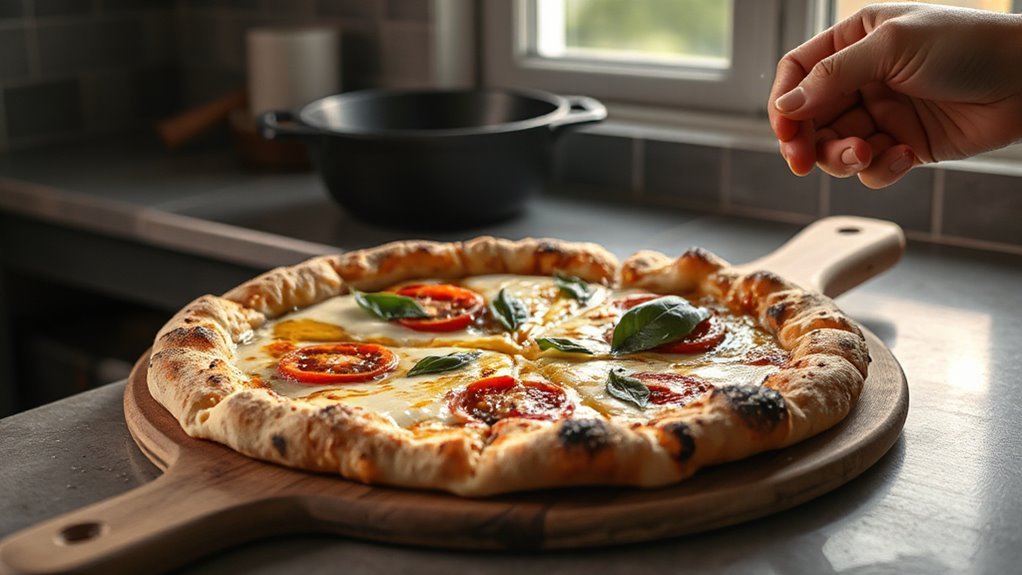
Making Sicilian style pizza at home might just become your new favorite weekend project. With roots in Sicily, this style’s thick, airy crust and delicious toppings can easily transport you to Italy. Start by mixing your flour and water, paying close attention to dough hydration. A hydration level around 70% will give you that fluffy texture Sicilian pizzas are known for.
Knead the dough until it’s smooth, then let it rise in a warm spot, allowing it to double in size—this is where the magic happens! Once it’s ready, stretch it out carefully in a well-oiled pan, ensuring it fills all the corners. Don’t skimp on toppings; from rich tomato sauce to gooey mozzarella, pile them on to create your perfect slice. After a quick bake, you’ll be savoring a taste of history right in your own kitchen. Enjoy this culinary freedom!
Essential Ingredients for the Perfect Sicilian Crust

To achieve that perfect Sicilian crust, you’ve got to focus on a few key ingredients. First up, high-protein bread flour is your best friend. It contributes to that desired crust texture, giving you a chewy yet crispy bite. Next, pay attention to your yeast; it’s vital for that nice rise without being overly dense.
Don’t forget about warm water—this activates the yeast and guarantees the dough comes together smoothly. As for salt, it’s important for flavor and controlling fermentation. Finally, embrace olive oil, as it adds richness and enhances browning.
When it comes to ingredient ratios, balance is key. A good starting point is about 3:1 flour to water, adjusting based on your preferences. With these essentials in your arsenal, you’re well on your way to mastering the Sicilian crust that’ll keep everyone coming back for more!
Favorite Classic and Modern Toppings for Sicilian Pizza

When you think of Sicilian pizza, the toppings can make or break the experience, so choosing the right ones is essential. Classic options like pepperoni, anchovies, and fresh mozzarella never disappoint, but why not get creative? You can explore unique topping combinations that elevate your pizza game. How about a mix of caramelized onions, gorgonzola, and pears for a sweet-savory twist? Or try roasted vegetables like zucchini and bell peppers, drizzled with balsamic glaze for that extra kick.
Don’t forget to play with seasonal ingredient suggestions! During summer, fresh basil and ripe tomatoes can transform your pie into a flavor bomb. In the fall, think about incorporating pumpkin and sage for a cozy vibe. Whatever toppings you choose, just remember to balance flavors! Go ahead and express your taste; experiment until you find your perfect Sicilian pizza masterpiece.
Common Mistakes When Making Sicilian Pizza?

While crafting a delicious Sicilian pizza may seem straightforward, it’s easy to stumble into a few common pitfalls. Here are some mistakes to watch out for:
- Overbaking the crust: You’ll want that perfect golden brown, but don’t let it turn into a brick.
- Using incorrect flour: Pizza needs a flour that can handle the stretch without tearing. Go for bread flour for that ideal chewiness.
- Skimping on sauce: Don’t hold back! A flavorful sauce is key to that authentic Sicilian taste.
Tips for Serving and Enjoying Sicilian Pizza

Sicilian pizza isn’t just about the crust and toppings; it’s also about the experience of sharing it with friends and family. When serving it up, aim for a warm serving temperature to let those flavors shine! Cut it into generous squares, making it easy to grab and enjoy.
Now, let’s talk about pairing drinks. A crisp, chilled beer complements the savory richness of the pizza perfectly. If you’re feeling fancy, a light red wine, like a Chianti, can elevate your meal and add a touch of sophistication.
Pair a chilled beer with your Sicilian pizza for the perfect match, or enjoy a light Chianti for a touch of elegance.
Don’t forget the sides! Fresh salads or zesty dips are fantastic accompaniments that balance out the richness of the pizza.
Make it a social affair; set the table with your favorite people, share stories, and immerse yourself in the deliciousness. It’s all about savoring the moment and indulging in great flavors together!
Frequently Asked Questions
What Are the Origins of Sicilian Style Pizza?
Sicilian pizza’s origins trace back to the culinary history of Sicily, where bakers created a thick, rectangular pie to satisfy local tastes. This style incorporates various cultural influences, from Arab spices to Spanish cheeses, making it a unique variation among pizza types. You’ll taste the rich, fluffy crust and fresh toppings that scream tradition and creativity. Exploring Sicilian pizza is like diving into a flavorful journey through time and rich Mediterranean culture!
How Does Sicilian Pizza Differ From Neapolitan Pizza?
Sicilian pizza differs from Neapolitan pizza mainly in its dough and toppings. You’ll find Sicilian dough is thick and fluffy, often baked in rectangular pans, while Neapolitan dough is thin and chewy, baked in high-temperature ovens. When it comes to toppings, Neapolitan pizzas feature a few fresh, quality ingredients, whereas Sicilian pizzas embrace a heartier variety, often layered with bold flavors. So, whether you like it thick or thin, there’s a perfect pie for you!
Can Sicilian Pizza Be Made Gluten-Free?
Absolutely, you can make Sicilian pizza gluten-free! Ever wondered how delicious it could be? Just swap out traditional flour for gluten-free dough made from alternative flours like almond or chickpea. These flours can create a unique texture and flavor profile, giving you that satisfying crust without the gluten. So, go ahead and experiment with different combinations to find the one that tickles your taste buds while enjoying your pizza freedom!
What Pairing Drinks Go Well With Sicilian Pizza?
You can’t go wrong with a bold red wine like Chianti or a soothing white like Pinot Grigio when pairing drinks with Sicilian pizza. If you prefer non-alcoholic options, try sparkling water with a slice of lemon or a fruity soda to balance the rich flavors. Craft beers also make great beverage options, especially a nice lager. Whatever you choose, let your taste guide you to create your perfect pizza experience!
How Should Leftover Sicilian Pizza Be Stored?
To store leftover Sicilian pizza, first, let it cool completely. Then, wrap each slice in plastic wrap or aluminum foil for proper storage, or place them in an airtight container. For pizza reheating, preheat your oven to 375°F and warm the slices for about 10-15 minutes. This way, you keep that crispy crust intact while enjoying your tasty leftovers. You’ve got the freedom to savor every bite!
Conclusion
Now that you’ve uncovered the secrets to making Sicilian style pizza, imagine biting into a golden, crispy crust, topped with rich, tangy sauce and your favorite fresh ingredients. It’s not just pizza; it’s a slice of joy shared with family and friends. So, roll up your sleeves, embrace your inner pizzaiolo, and let the aromas fill your kitchen. With a little practice, you’ll be the go-to pizza maestro, turning every meal into a delectable feast!