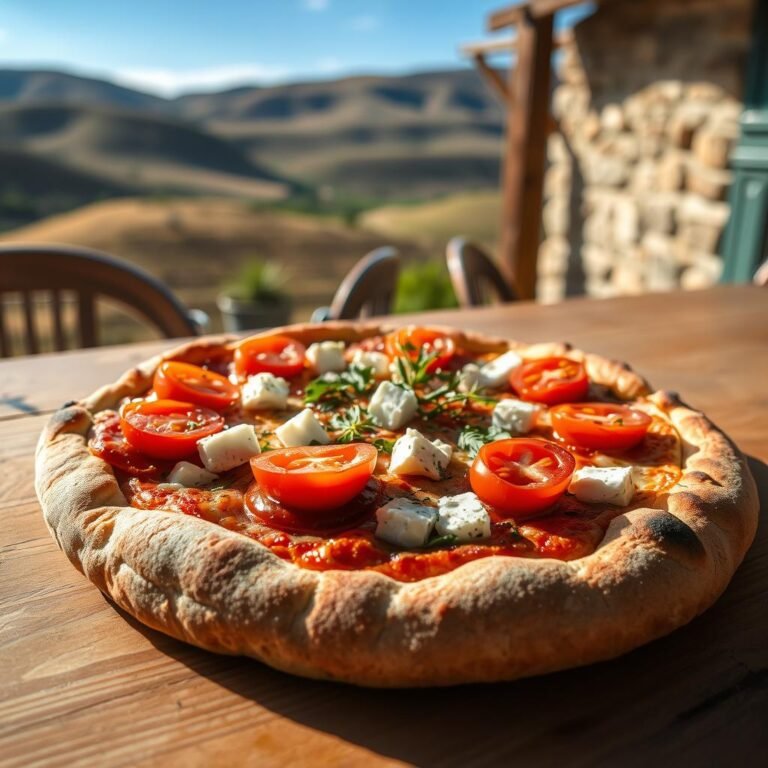
To nail Sicilian-style pizza, start with high-quality dough. Mix warm water, sugar, and yeast, letting it froth before combining with flour, salt, and olive oil. Aim for a fluffy crust by using 65-70% hydration and allowing longer fermentation. Pick your favorite toppings, but keep it simple—think classic mozzarella and tomato sauce or try roasted red peppers. Finally, bake at 475°F on a preheated stone for that perfect char. Stick around to discover some drink pairings that complement your pizza!
Key Takeaways
- Activate yeast properly in warm water with sugar, waiting for it to froth for successful dough rise.
- Use high-quality bread flour and maintain 65-70% hydration for a fluffy, well-structured crust.
- Allow for slow fermentation in the fridge for up to 24 hours to enhance flavor and texture.
- Preheat a pizza stone to 475°F (245°C) for a crispy crust, sliding your pizza onto the hot stone immediately.
- Keep toppings minimal to avoid overcrowding, but feel free to experiment with unique combinations for personalized flavors.
How to Make the Perfect Sicilian Pizza Dough

When you’re ready to plunge into making Sicilian pizza, the foundation of your delicious creation is the dough. You’ve gotta start with yeast activation; it’s the magic that makes your dough rise. Mix warm water with sugar and yeast, then let it sit until it’s frothy—this means your yeast is alive and ready to work its wonders!
Next up is flour selection. You’ll want high-quality bread flour for that perfect chewy texture. The right flour absorbs water well and gives your dough structure. Combine the activated yeast with flour, a dash of salt, and drizzle in some olive oil for extra flavor.
Knead that dough until it’s smooth, then let it rise in a warm spot. Remember, patience is key. When it’s doubled in size, you’re ready to shape it into that iconic Sicilian rectangle. Enjoy the freedom to create your own pizza masterpiece!
Pick Your Favorite Traditional Toppings

After you’ve perfected that dough, it’s time to think about toppings that will elevate your Sicilian pizza to the next level. You can’t go wrong with Sicilian classic toppings like rich tomato sauce, gooey mozzarella, and pepperoni. But why stop there? Embrace your inner foodie and explore unique flavor combinations that’ll wow your friends. Consider toppings like roasted red peppers and goat cheese for a creamy burst or a sprinkle of arugula post-bake for a fresh kick. Don’t forget a drizzle of honey or balsamic glaze for a sweet-tart finish that contrasts beautifully with savory elements. The beauty of Sicilian pizza lies in its versatility, so experiment! Trust your taste buds—feel free to mix and match until you find your perfect blend. Turn your kitchen into a playground of flavors, and enjoy every delicious bite of your creation!
How to Achieve a Fluffy Sicilian Pizza Crust
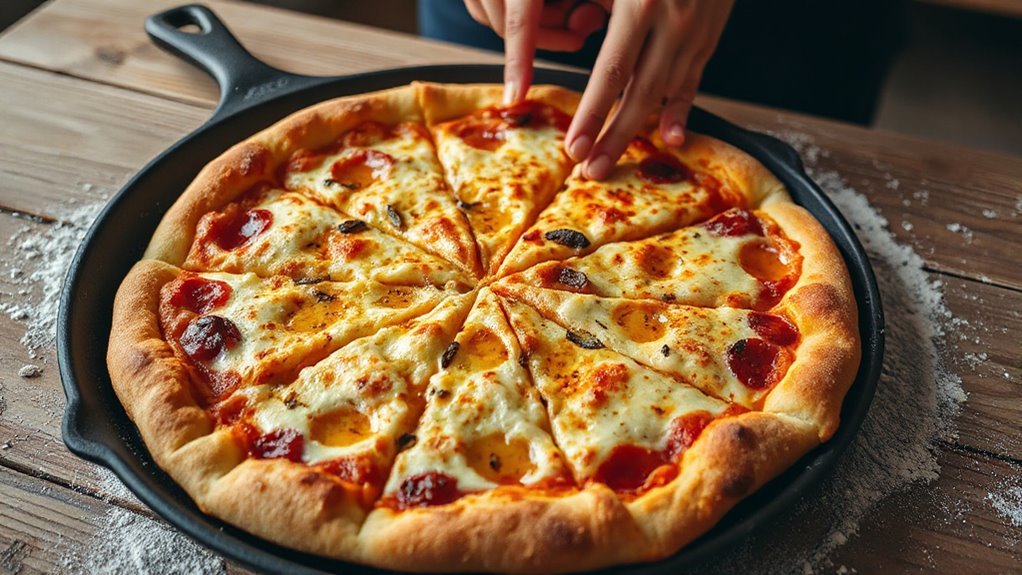
To achieve that light, fluffy crust you crave in a Sicilian pizza, it’s all about the dough’s hydration and fermentation. Start by mixing your flour with a high hydration water level—aim for around 65-70%. This lazy yet effective method allows your dough to absorb the water, enhancing its texture. Next, activate your yeast properly. Dissolve it in warm water with a pinch of sugar, giving it time to froth up. This yeast activation is critical for rising the dough to that sought-after fluffiness.
After mixing your ingredients, let the dough ferment longer than usual, about 24 hours in the fridge, if you can. This slow fermentation develops flavor while contributing to that airy structure. Don’t rush the process! The right balance of hydration and fermentation will reward you with an irresistibly fluffy crust, making your Sicilian pizza the talk of your kitchen gatherings. Happy baking!
Crucial Baking Tips for Perfecting Your Sicilian Pizza

While mastering the perfect Sicilian pizza takes some practice, following a few vital baking tips can make all the difference. First, verify your oven’s baking temperature is set around 475°F (245°C). This heat is essential for achieving that coveted crispy crust. Preheating your pizza stone is equally important; it mimics the temperature of a professional pizza oven, giving your pie that delicious finish.
When you’re ready to bake, slide your pizza onto the hot stone carefully. This immediate contact helps create a nice bottom char while keeping the interior airy. Don’t overcrowd your toppings—less is more when it comes to Sicilian pizzas! And, if you want an extra touch of flavor, consider brushing a bit of garlic-infused olive oil around the crust before baking. Trust me, these steps will elevate your Sicilian pizza game, leaving your friends and family craving more! Enjoy every bite!
Best Drinks to Pair With Sicilian Pizza
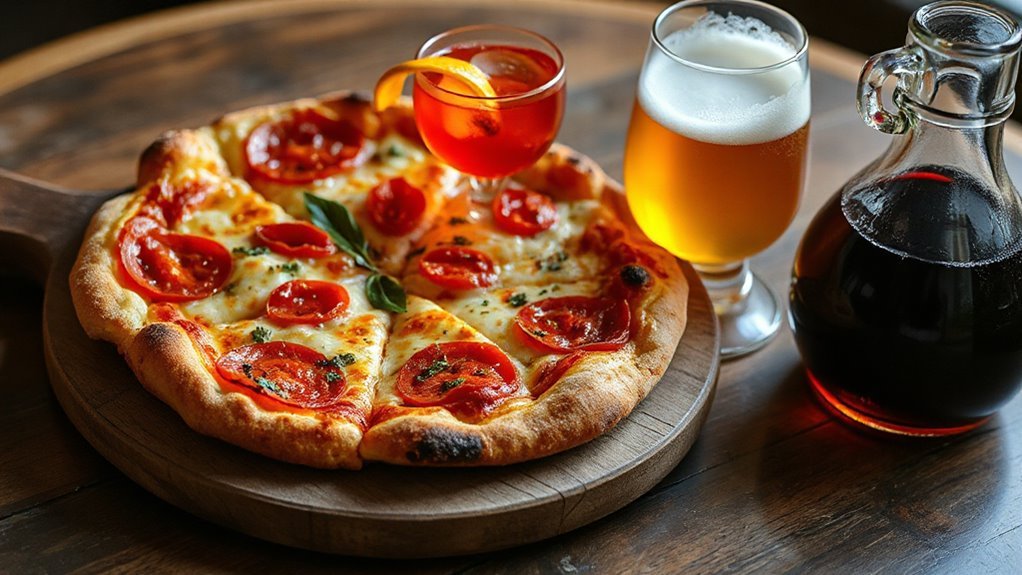
What pairs perfectly with the rich, savory flavors of Sicilian pizza? You’ve got some fantastic options to enhance your dining experience!
- Craft Beer: Try a crisp lager or a hoppy IPA to cut through the cheese and balance the flavors.
- Red Wine: A nice Chianti or Sangiovese complements the tomato sauce beautifully, adding a rustic touch.
- Cocktail Pairings: Go for a revitalizing Negroni; the bitters will elevate those savory notes!
- Sparkling Water: For a non-alcoholic choice, bubbly water with a twist of lemon cleanses the palate while you enjoy your pizza.
Each sip has the power to elevate your slice, making your meal even more memorable. So, grab your drink of choice and plunge into that delicious slice—you deserve it!
Frequently Asked Questions
What Are the Origins of Sicilian Style Pizza?
Sicilian style pizza has its roots in Sicily, Italy, where it’s shaped by historical influences from Arab, Greek, and Spanish cultures. You’ll find it features thick, airy crust topped with rich, flavorful Sicilian ingredients like tomatoes, olives, and anchovies. This pizza reflects the island’s diverse culinary heritage and is perfect for sharing. When you bite into a slice, you’re tasting centuries of tradition blended with vibrant local flavors. Enjoy every mouthful!
Can I Use Gluten-Free Flour for the Dough?
Absolutely, you can use gluten-free flour for your dough! Just keep in mind that it might change the dough texture, as gluten-free options often lack the elasticity of traditional flour. To achieve the best results, pair your gluten-free flour with a binder like xanthan gum. Experimenting with different blends can lead to delicious outcomes, giving you the freedom to enjoy a pizza that suits your dietary needs without sacrificing flavor or enjoyment!
How Long Can I Store Leftover Sicilian Pizza?
You can store leftover Sicilian pizza for about three to four days in the fridge! It’s like keeping a slice of heaven for a little longer. Just wrap it tightly in plastic wrap or place it in an airtight container to keep it fresh. For pizza storage tips, consider freezing it if you need even more time. You can whip up some amazing leftover recipes, turning yesterday’s meal into today’s delight! Enjoy that freedom!
What Temperature Should I Preheat My Oven for Baking?
Preheat your oven to 475°F (245°C) for the best results. This temperature helps achieve a crispy crust while keeping the inside tender. Experimenting with oven settings can enhance your baking techniques, so don’t hesitate to adjust if you like it extra crispy! Remember to let your oven fully heat up before sliding in that pizza; it makes all the difference. Enjoy the freedom of crafting the perfect slice just the way you like it!
Can I Freeze Sicilian Pizza Dough for Later Use?
Absolutely, you can freeze Sicilian pizza dough for later use! To guarantee dough preservation, divide it into portions and wrap each tightly in plastic wrap. Then, place them in a freezer bag, removing as much air as possible. When you’re ready to use it, just thaw it in the fridge overnight. Use proper freezing techniques, and you’ll have fresh dough at your fingertips whenever the pizza craving strikes! Enjoy that freedom!
Conclusion
Now that you’ve got the scoop on crafting the perfect Sicilian pizza, it’s time to unleash your inner pizzaiolo! Picture that golden crust rising like a sun-kissed Sicilian dawn, topped with your favorite ingredients. As you slide it into the oven, imagine the aromas wafting through your kitchen, beckoning everyone to gather ’round. So, grab a drink, slice that pizza, and immerse yourself in a slice of Italy right at home. Buon appetito!