To whip up restaurant-quality pizza sauce, start with quality San Marzano tomatoes and sauté fresh garlic and onions in extra virgin olive oil for a flavor boost. Simmer your crushed tomatoes with herbs like basil and oregano to build richness, and consider adding tomato paste for extra thickness. Store it properly to keep those vibrant flavors. Ready to elevate your pizza game? There’s even more to discover about crafting the perfect sauce!
Key Takeaways
- Use San Marzano tomatoes for their rich flavor; select DOP certified for the best quality pizza sauce.
- Sauté fresh garlic and onions in extra virgin olive oil to enhance depth and aroma in your sauce.
- Simmer the sauce longer to achieve a rich, thick consistency; add tomato paste for a quicker thickness boost.
- Store pizza sauce in airtight, non-reactive containers to maintain freshness and flavor, using it within a week.
- Freeze sauce in small, labeled batches for best flavor retention; use within 3-4 months to avoid quality loss.
Step-by-Step Guide to Crafting Your Pizza Sauce

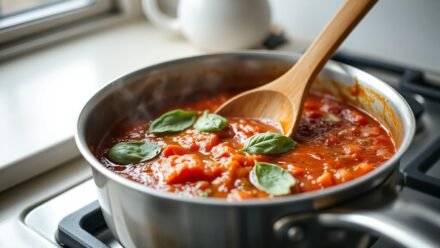
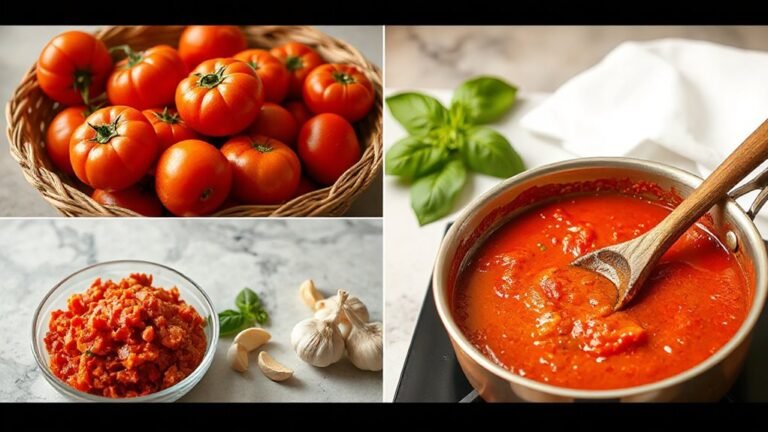
Creating a restaurant-quality pizza sauce might seem challenging, but you’ll find it’s simpler than you think! To start, gather your tomatoes—fresh or canned. You’ll want to crush them for that perfect sauce consistency. Next, sauté some garlic and onions in olive oil to build those rich flavor profiles. Once they’re fragrant, mix in the tomatoes and let them simmer.
Now, it’s all about seasoning! Add salt, pepper, and your favorite herbs like basil and oregano. Taste as you go; this is your chance to customize. If you like a bit of heat, sprinkle in some red pepper flakes.
As the sauce thickens and the flavors meld, watch it carefully. It should be rich and not too watery, ready to slather on your dough. Just a few steps transform basic ingredients into a vibrant sauce that’ll elevate your pizza game!
What Ingredients Make the Best Pizza Sauce?
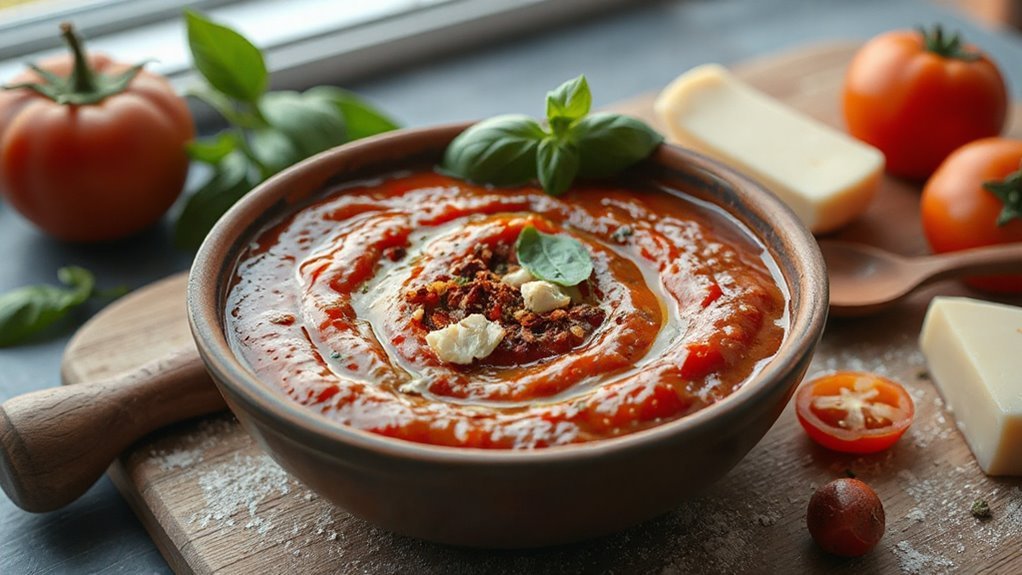
When it comes to crafting the perfect pizza sauce, quality ingredients make all the difference. The right combination not only enhances flavor but also helps you achieve that coveted balance. Here’s a handy overview of essential ingredients:
| Ingredient | Purpose | Tips for Sourcing |
|---|---|---|
| San Marzano Tomatoes | Richness and sweetness | Look for DOP certification |
| Extra Virgin Olive Oil | Adds richness and complexity | Choose a high-quality brand |
| Garlic | Depth of flavor | Fresh is best; avoid powder |
| Sea Salt | Enhances natural flavors | Go for a fine sea salt |
When you’re ingredient sourcing, always prioritize freshness and quality to elevate your sauce. That way, your flavor balancing will come through, transforming your pizza into a culinary masterpiece. So gather your ingredients, and get ready to impress!
Using Fresh Herbs and Spices to Enhance Pizza Sauce Flavor

When it comes to pizza sauce, fresh herbs and spices can take your flavor game to the next level. Just imagine the burst of basil, oregano, or a hint of crushed red pepper transforming your sauce into something extraordinary. Let’s explore some essential herbs and spice combinations that’ll really make your pizza shine!
Essential Fresh Herbs
Fresh herbs are your secret weapon for elevating pizza sauce from ordinary to extraordinary. When it comes to enhancing flavor, basil varieties like sweet basil and Thai basil add a fresh, aromatic punch. Don’t forget about oregano types—Greek and Italian oregano each bring a unique depth to your sauce.
Simply chop your fresh herbs and mix them into your sauce. You’ll want to balance these flavors; it’s about harmonizing them, not overwhelming. Try experimenting with combinations to find your perfect blend! The more vibrant the herbs, the more alive your sauce becomes, filling your kitchen with an irresistible aroma. So, release your creativity and let those fresh herbs shine; your pizza sauce will thank you later!
Spice Combinations That Shine
Spices can be the magic touch that transforms your pizza sauce into something truly memorable. Pairing spices enhances your flavor profiles, creating a delicious symphony in every bite. Here are some tasty spice pairings to try:
| Spice | Flavor Profile | Best Used With |
|---|---|---|
| Oregano | Earthy and fragrant | Tomato-based sauces |
| Crushed Red Pepper | Spicy and bold | Meat and veggie pizzas |
| Basil | Sweet and aromatic | Margherita pizza |
| Garlic Powder | Savory and rich | All pizza styles |
Experiment with these combos! Toss in some fresh herbs from our earlier section, and you’ll have a pizza sauce that speaks freedom and flavor. Trust me, your pizza will never be the same!
How to Achieve the Perfect Sauce Thickness
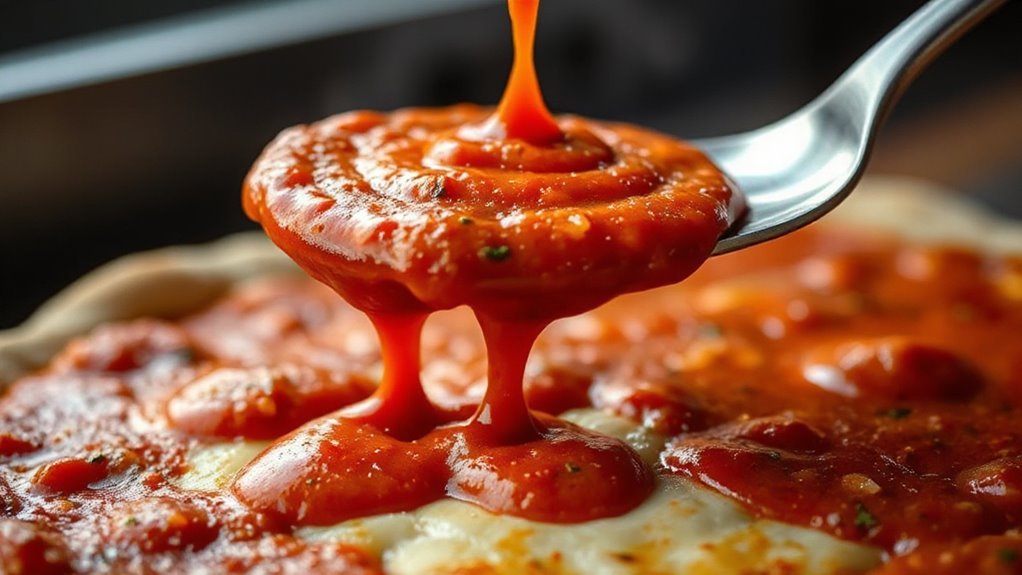
While crafting the ideal pizza sauce, achieving the perfect thickness can make all the difference in your dish. You want that sauce consistency to be just right—not too runny, but not so thick it overwhelms your pizza. One easy thickening method is to simmer your sauce longer, allowing the excess liquid to evaporate. If you’re short on time, try adding a bit of tomato paste, which instantly boosts thickness without compromising flavor.
Another trick is to incorporate finely grated vegetables like onions or carrots; they’ll thicken the sauce while enhancing its taste. Don’t forget to keep tasting as you go—you’re in charge of your sauce! Adjusting thickness is a personal touch that’ll elevate your pizza to restaurant-quality. So, get in there and experiment until you find that perfect balance that’ll have everyone coming back for more!
Fun Ways to Remix Classic Pizza Sauce
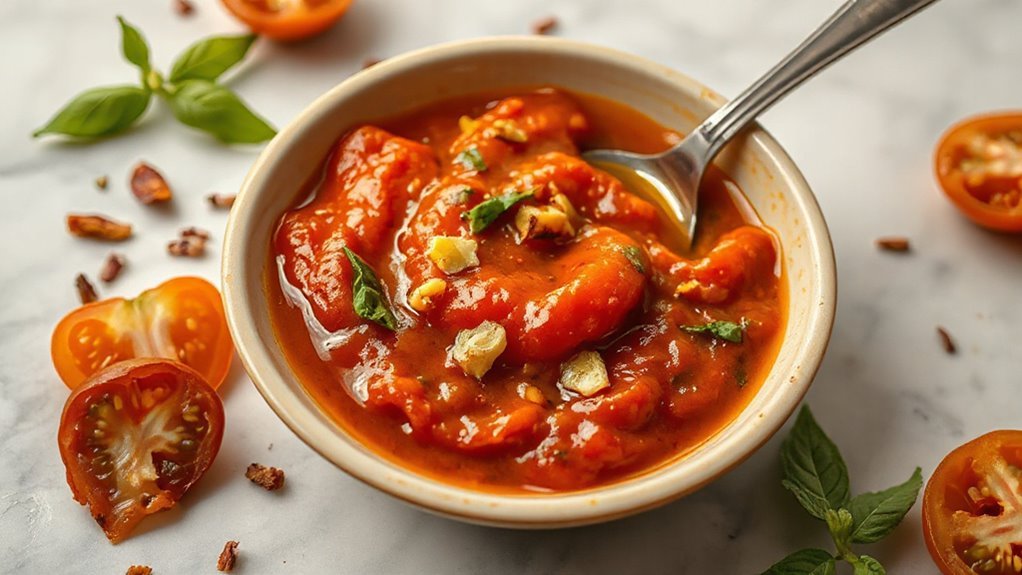
If you’re craving something a little different, remixing classic pizza sauce can turn your homemade pies into something truly unique. Why not try some exciting sauce swaps? Swap out traditional tomatoes for roasted red peppers or sun-dried tomatoes to create a sweet, smoky base. Want to kick it up a notch? Add flavor boosters like garlic powder, smoked paprika, or fresh herbs to elevate your sauce to new heights.
Thinking of a creamier option? Blend in ricotta or mascarpone for a lush sauce that’ll transform your pizza experience. You could also go for a zesty twist by incorporating pesto or a dash of sriracha for heat.
Just remember, it’s all about balancing flavors, so have fun experimenting! Mix and match these ideas, and you’ll discover a whole new world of delicious pizzas waiting for you. Enjoy your pizza adventure!
Top Mistakes to Sidestep for Perfect Pizza Sauce
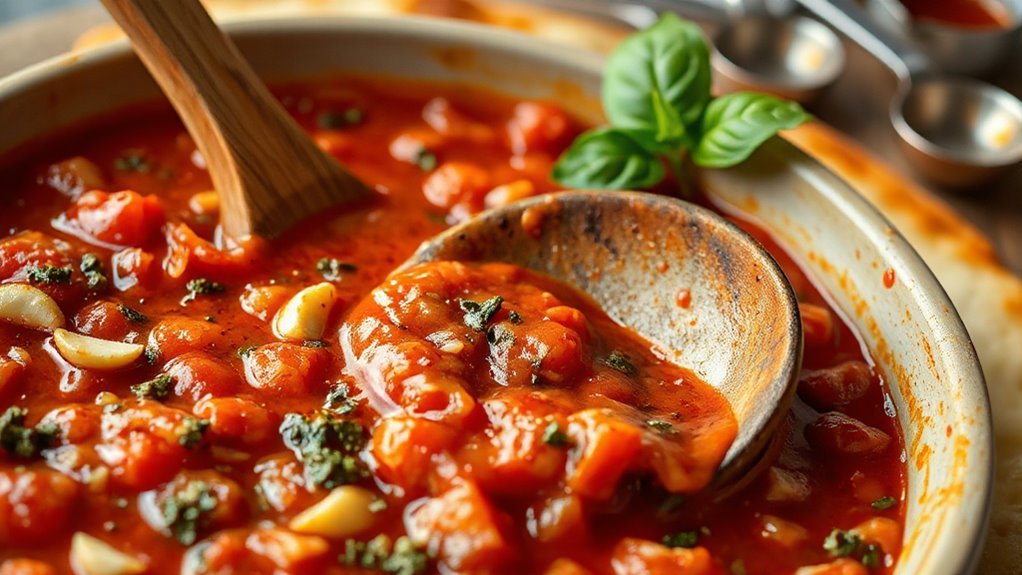
When it comes to crafting the perfect pizza sauce, avoiding common mistakes can be just as important as trying out creative remixes. Keep these tips in mind to nail your sauce every time:
- Neglecting Sauce Texture: A smooth sauce is great, but don’t over-blend. You want a bit of chunkiness for that authentic feel!
- Ignoring Ingredient Balance: Too much salt or sugar can throw off your sauce. Taste as you go, ensuring flavors like garlic, herbs, and tomatoes harmonize instead of clashing.
- Skipping Fresh Ingredients: Fresh is always better! Canned tomatoes can work, but selecting high-quality ingredients elevates your sauce from good to gourmet.
Storing Pizza Sauce for Maximum Freshness
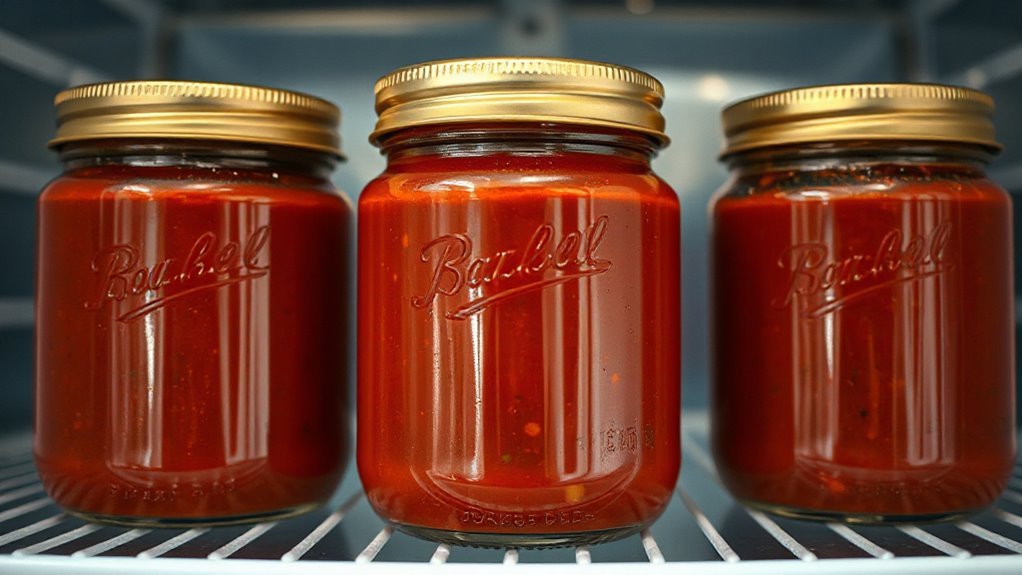
When it comes to keeping your pizza sauce fresh, using the right storage containers is key. You’ll want to know the best ways to refrigerate or even freeze your sauce to preserve that delicious flavor. Let’s explore some tips to make sure your sauce stays restaurant-quality!
Best Storage Containers
To keep your homemade pizza sauce fresh and flavorful, choosing the right storage container is essential. You want to make sure your sauce stays in top shape for your next pizza night. Here are the best containers and ideal materials to take into account:
- Glass jars – They’re non-reactive, easy to clean, and provide an airtight seal.
- Food-safe plastic containers – Lightweight and durable, but make sure they’re BPA-free to keep your sauce safe.
- Silicone bags – Great for freezable storage, they’re flexible and help minimize waste.
Refrigeration Tips
Keeping your pizza sauce fresh in the fridge is easier than you might think. Start by pouring your homemade sauce into an airtight container. This simple step is key for maximizing pizza longevity. Make sure to let it cool to room temperature before sealing; trapping heat can spoil your sauce. Aim to use it within a week, but feel free to use your senses—smell and taste can guide you! If you notice any discoloration or an off smell, it’s best to toss it. Keeping the fridge at a consistent temperature also helps maintain that zesty flavor. So, embrace these easy refrigerating tips, and enjoy your delicious pizza sauce anytime you crave that restaurant-quality experience!
Freezing Techniques
If you want to preserve the vibrant flavors of your homemade pizza sauce, freezing it is a fantastic option. Follow these simple techniques to keep that sauce consistency just right:
- Portion It Out: Divide the sauce into small batches—this makes defrosting easier and quicker.
- Use Airtight Containers: Invest in quality freezer-safe containers or resealable bags; this prevents freezer burn.
- Label and Date: Jot down the freezing duration on each container. Your sauce is best enjoyed within 3-4 months for peak taste.
Frequently Asked Questions
Can Pizza Sauce Be Frozen for Later Use?
Yes, you can absolutely freeze pizza sauce for later use! For easy sauce storage, pour the sauce into airtight containers or freezer bags, leaving some space for expansion. Use freezing tips like labeling your containers with the date, so you know how long it’s been in there. When you’re ready to use it, just thaw it in the fridge overnight or warm it up on the stove. Enjoy that fresh flavor anytime!
Is There a Vegan Alternative for Pizza Sauce?
Absolutely, you can whip up a delicious vegan pizza sauce that’ll have your taste buds dancing! Think of it as painting a canvas with vibrant flavors. Just use tomato puree or crushed tomatoes as your base, then sprinkle in flavorful herbs like basil and oregano. For vegan ingredient swaps, try adding roasted red peppers or a splash of balsamic vinegar to amp up the taste. Enjoy the freedom to mix and match your favorites!
How Long Can Homemade Pizza Sauce Last in the Fridge?
Homemade pizza sauce can last about 5 to 7 days in the fridge if you store it properly. Keep it in an airtight container to maximize its pizza sauce shelf life. If you want to enjoy it longer, consider freezing it; it’ll stay good for up to three months! Just thaw it when you’re ready to whip up your next pizza night, and you’re all set for some deliciousness!
What Type of Tomatoes Are Best for Pizza Sauce?
For the best pizza sauce, you can’t go wrong with San Marzano tomatoes. They’re sweet, rich, and have a low acidity, giving your sauce that perfect flavor. If you can’t find them, Roma tomatoes are a solid alternative. They’re also meaty and have fewer seeds, making them great for a thicker sauce. Either way, you’ll create a delicious pizza experience that’ll knock your socks off! So grab some tomatoes and let’s get saucing!
Can I Use Store-Bought Sauce for a Quick Meal?
Absolutely, you can use store-bought sauce for a quick meal! Imagine you’ve had a long day and crave a fast pizza fix. You grab a jar of your favorite marinara or pizza sauce from the pantry, spread it on your dough, and top it with cheese and toppings. It’s an effortless way to enjoy pizza without the fuss. Store-bought sauce is a great sauce alternative that saves you time and hits the spot!
Conclusion
With just a handful of ingredients, a pinch of creativity, and a dash of patience, you can whip up restaurant-quality pizza sauce right in your kitchen. Imagine the rich aroma wafting through your space, tempting friends and family to gather ’round as you spread that delicious sauce onto your dough. By avoiding common pitfalls and experimenting with flavors, you’ll be serving up slices that make everyone believe they’ve stepped into a cozy pizzeria!