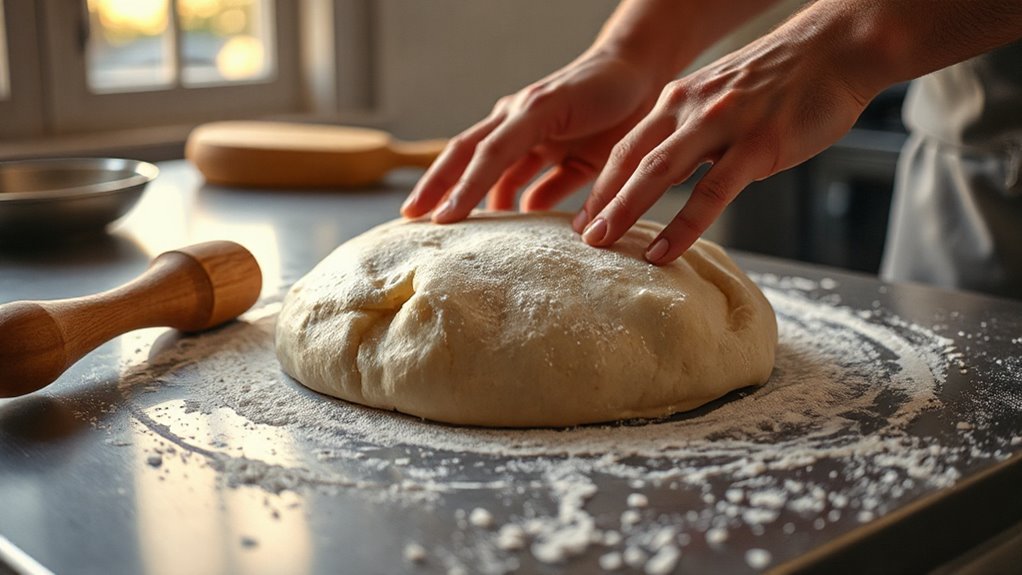

To make restaurant-quality pizza dough, start by combining flour, water, yeast, and salt. Knead it until smooth, then let it proof for at least an hour—or longer in the fridge for better flavor. Choose the right flour and yeast for your desired crust texture. Don’t forget to mix in olive oil and herbs for extra flavor! Avoid common mistakes like over-kneading. Keep following along to discover techniques that will take your dough to the next level!
Key Takeaways
- Use high-quality bread flour for a chewier crust, ensuring a restaurant-quality texture in your pizza dough.
- Allow for a long fermentation time, ideally 24 hours in the fridge, to develop richer flavors and better texture.
- Control the hydration level at 60%-65% for optimal dough consistency and manage yeast activity effectively.
- Incorporate olive oil and fresh herbs into the dough for added moisture, flavor, and authenticity reminiscent of traditional pizzerias.
- Master the kneading and shaping techniques to achieve smooth, elastic dough and a well-formed crust.
How to Make Pizza Dough From Scratch
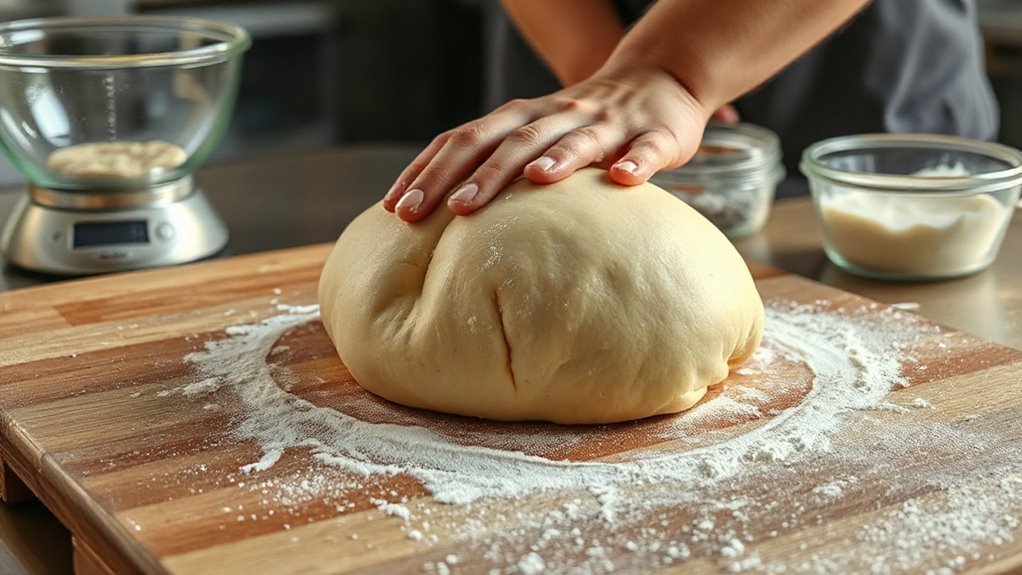
Making pizza dough from scratch is easier than you might think, especially when you know the right steps to follow. Start by mixing flour, water, yeast, and salt in a bowl. Knead it for about ten minutes until it’s smooth. This is where the fun begins—don’t skip the dough fermentation! Let it rise for at least an hour, allowing the flavors to develop and giving you that ultimately perfect crust.
Once it’s doubled in size, punch it down and shape it into your desired pizza form. Remember, the longer you let it ferment, the more complex the flavor becomes, so feel free to experiment.
Roll it out, add your favorite toppings, and bake it at a high temperature. Voilà! You’ve got freshly made pizza dough that’ll impress everyone. Enjoy the freedom of crafting your own perfect pizza right at home!
Choosing the Right Ingredients for Pizza Dough
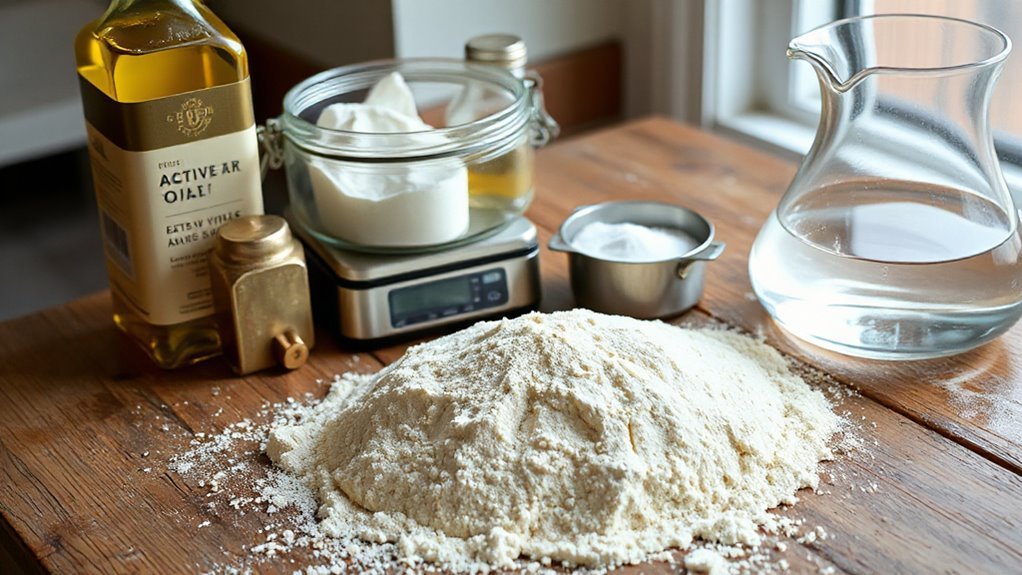
When it comes to crafting the perfect pizza dough, the ingredients you choose can make all the difference. Flour types, the specific yeast you use, and even the quality of your water play key roles in achieving that restaurant-quality taste. Let’s explore how each of these elements can elevate your homemade pizza experience.
Flour Types Matter
Choosing the right flour for your pizza dough can make all the difference in achieving that perfect crust. You might be wondering which flour suits your taste. Here’s a quick guide:
- Bread flour: Higher protein content, great for a chewier crust and better structure.
- All purpose flour: More versatile and easier to work with, giving you a softer, lighter crust.
- Type of pizza: Depending on the style—Neapolitan or New York—you may lean towards one flour over the other.
Experimenting with these options could lead you to your ideal pizza dough. Don’t shy away from trying different blends, and remember, the freedom to create your pizza masterpiece starts with the right flour!
Importance Of Yeast
Though it might seem like a small detail, the type of yeast you use can markedly impact the flavor and texture of your pizza dough. Knowing a bit about yeast varieties will help you choose the right one for your masterpiece. Activation’s key, so whether you pick instant, active dry, or fresh, make sure you handle it properly for the best rise and taste.
| Yeast Variety | Activation Method | Flavor Profile |
|---|---|---|
| Instant Yeast | Mix directly with dry ingredients | Mild and slightly sweet |
| Active Dry Yeast | Dissolve in warm water beforehand | Richer, robust flavor |
| Fresh Yeast | Crumble and dissolve easily | Strong, slightly fruity |
Pick wisely, and watch your dough transform!
Water Quality Considerations
The ingredients you select can make or break your pizza dough, and water often gets overlooked. Choosing the right water can seriously enhance your dough’s quality. You can really tweak your pizza’s flavor and texture by considering water hardness and temperature effects.
- Water Hardness: Soft water can yield a lighter, airier crust, while hard water might give you a denser dough.
- Temperature Effects: Use lukewarm water to activate yeast effectively, but be cautious—too hot can kill it.
- Chlorine and Contaminants: Filtering your water guarantees you avoid any chemicals that could affect your dough’s flavor.
Investing time into your water choice might just elevate your pizza game to a whole new level!
Mixing and Kneading Your Dough for Perfection
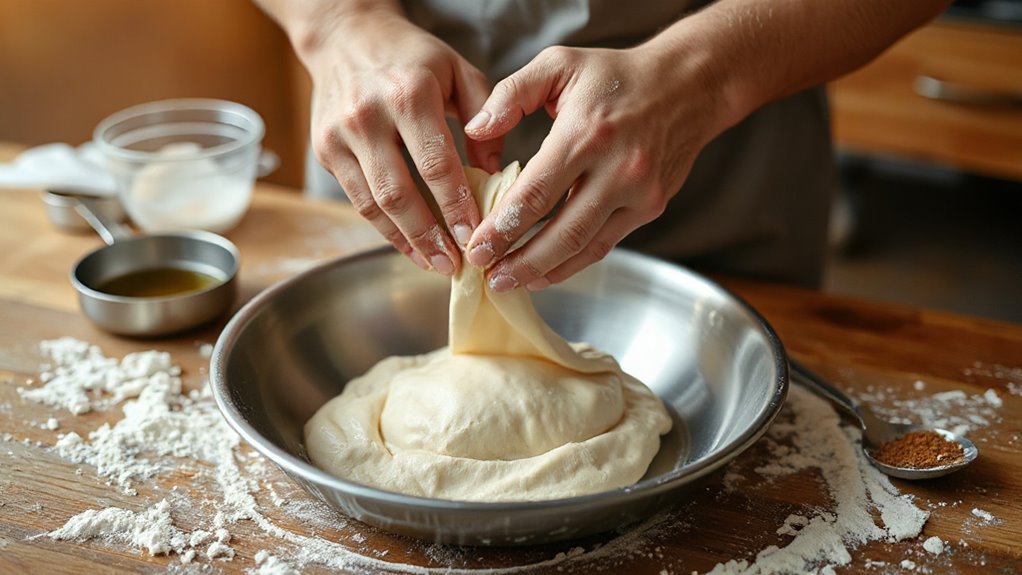
Now that you’ve gathered your ingredients, it’s time to focus on mixing and kneading your dough just right. You’ll want to master some essential mixing techniques to bring everything together smoothly. And when it comes to kneading, the right methods will help you develop that perfect texture for a delicious crust.
Essential Mixing Techniques
When you mix and knead your pizza dough, you’re not just combining ingredients; you’re setting the foundation for that delicious, restaurant-quality crust. The right mixing methods and proper dough hydration play an essential role in achieving that perfect texture.
- Start with room-temperature water to enhance gluten development.
- Mix until no dry flour remains, ensuring even hydration.
- Use a dough scraper to help incorporate stubborn bits.
Embrace these techniques to elevate your pizza game. Don’t rush the process; let your dough take shape and come together naturally. When you respect the art of mixing, you’re giving your crust the freedom to rise to its potential. Enjoy the journey, and soon enough, you’ll have a pizza that rivals your favorite pizzeria!
Proper Kneading Methods
Kneading your pizza dough is where the magic really happens. It’s not just about mixing ingredients; it’s the moment you develop that essential dough elasticity. You’ve got a few kneading techniques to choose from. The classic push-fold method works wonders—simply push the dough away with your palms and fold it back. Keep it rhythmic and enjoy the process! You can also try the stretch-and-fold technique, perfect for a more gentle touch. Whichever method you choose, focus on building strength in the dough. Knead until it’s smooth and resilient, usually around 8-10 minutes. Don’t rush; this is where you give your dough its character. With proper kneading, your pizza will have that delightful, chewy crust you crave!
How to Proof Your Dough for Maximum Flavor?

To open the rich, complex flavors in your pizza dough, proofing is key. The process of letting dough rise isn’t just about volume; it enhances taste and texture. Here’s how to optimize your proofing:
- Control dough temperature: Keeping your dough at a consistent, slightly warm temperature helps yeast thrive, boosting flavor during fermentation.
- Extend fermentation time: Don’t rush it! Allowing your dough to ferment longer develops deeper flavors. Aim for at least 24 hours in the fridge for a richer taste.
- Experiment with hydration: The right moisture level can create a more airy, flavorful crust. Keep it around 60%-65% for best results.
Techniques for Shaping Your Pizza Dough
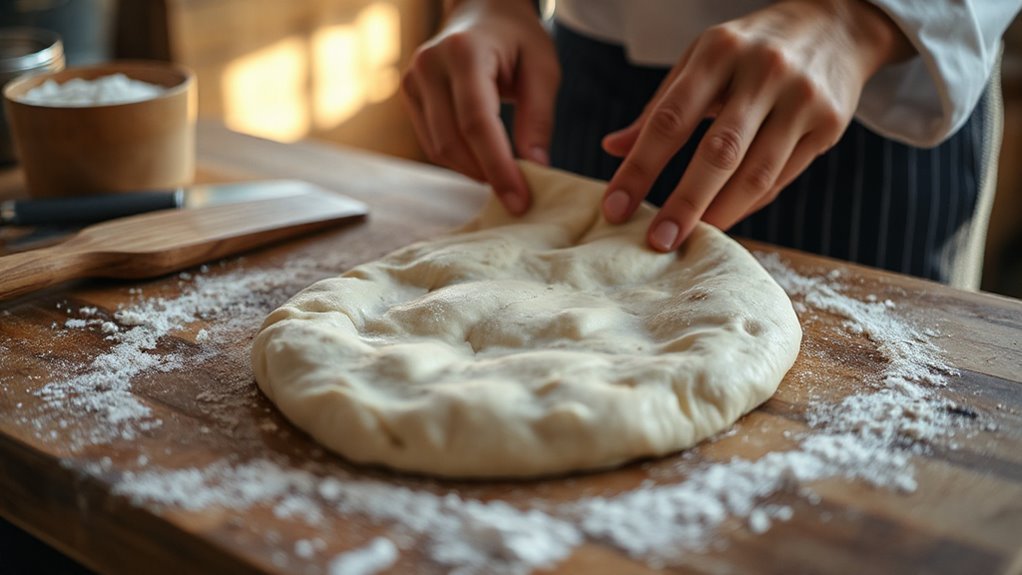
Shaping pizza dough can feel a bit intimidating, but with a few simple techniques, you’ll be forming perfect crusts in no time. Start with dough stretching: gently press the dough ball into a flat disc, allowing the weight of the dough to do the work. Use your fingers to stretch the edges while your thumbs keep the center relatively thick. This technique helps you maintain a nice, chewy crust.
Now, let’s talk about edge shaping. Once you’ve stretched the dough to your desired size, focus on creating a delightful lip around the edges. Pinch and fold the outer border upwards, ensuring a raised crust that’s ready to hold all those tasty toppings. Don’t be afraid to experiment! With practice, you’ll develop a technique that’s uniquely yours, giving you the freedom to create restaurant-quality pizza right at home. Enjoy the process, and remember—pizza-making is all about having fun!
Types of Yeast for Pizza Dough
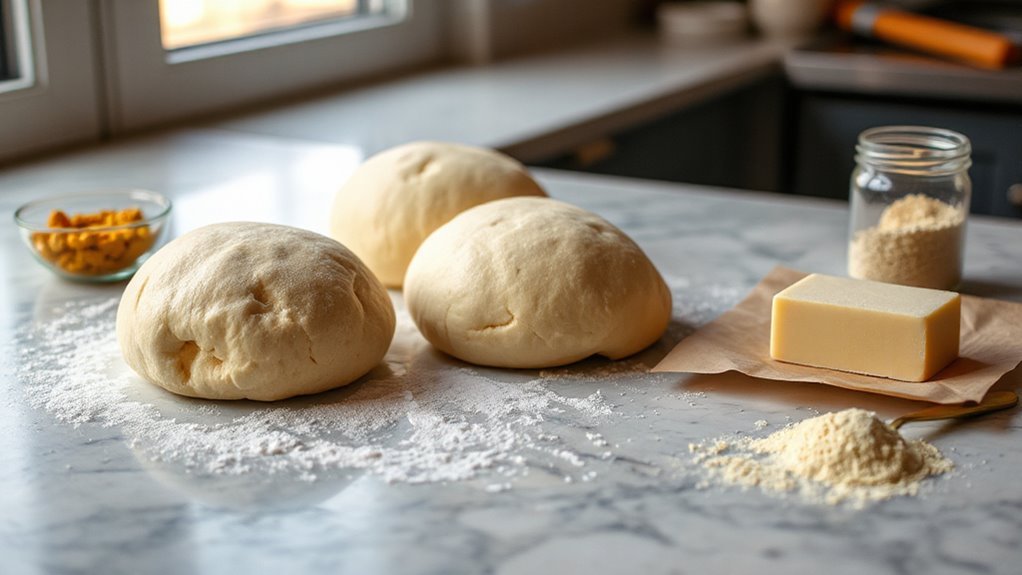
When it comes to making the perfect pizza dough, the type of yeast you choose plays an essential role in the final product. You’ve got a couple of great options to evaluate: active dry and instant yeast. Both can deliver delicious results, but they work a bit differently.
- Active Dry Yeast: This requires proofing in warm water before using, allowing it to activate. It’s great for those who enjoy a bit of ritual in baking.
- Instant Yeast: You can mix this directly into your dry ingredients, saving time and hassle. It’s perfect for those who want a quicker process.
- Fresh Yeast: While not as common, it’s known for a robust flavor and can elevate your dough if you can find it.
Choosing the right yeast can make all the difference, helping you achieve that perfect crust. So, experiment and find what suits your style best!
Enhancing Flavor With Olive Oil and Herbs
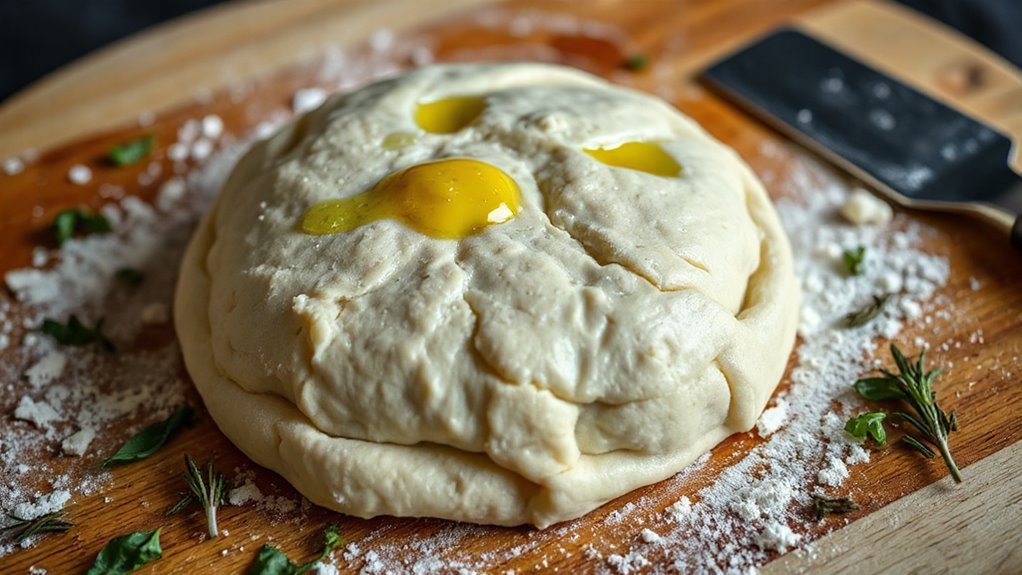
Have you ever wondered how a simple drizzle of olive oil or a sprinkle of herbs can elevate your pizza dough? Adding olive oil isn’t just about moisture; it’s a flavor enhancement that brings richness and depth to your crust. When you mix olive oil into your dough, you improve the overall texture, making it softer and allowing for a beautiful, golden-brown finish when baked.
Now, let’s explore herb infusion. Toss in some dried oregano, basil, or even rosemary, and watch as those aromas mingle with your dough, transforming the ordinary into extraordinary. These herbs not only add flavor but also give your pizza that authentic touch that reminds you of your favorite trattoria.
Common Mistakes to Avoid When Making Pizza Dough
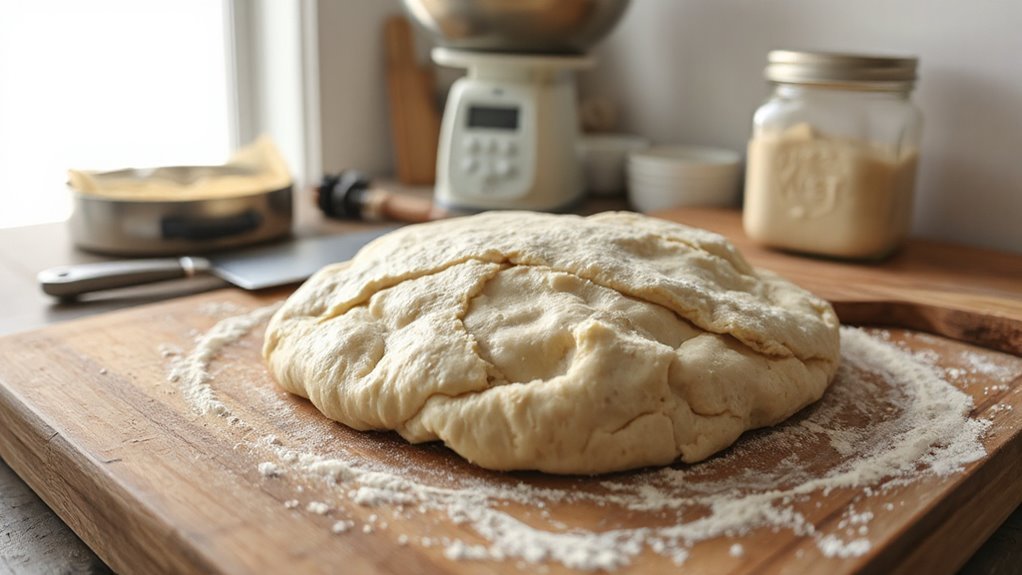
While making pizza dough can be a rewarding experience, it’s easy to slip up and create a subpar result. Avoiding some common mistakes can really elevate your dough game.
- Ignoring dough temperature: If your water’s too hot or too cold, it can mess with the yeast. Aim for a balanced temperature to encourage proper fermentation.
- Incorrect ingredient ratios: Following a recipe closely is vital. Too much flour can make your dough dry, while too little can leave it sticky and hard to handle.
- Over-kneading or under-kneading: You want the gluten to develop, but don’t go overboard. Find that sweet spot for smooth, elastic dough.
Stay mindful of these pitfalls, and you’ll be on your way to mastering the art of pizza dough. Remember, a bit of practice goes a long way and it’s all about enjoying the journey!
Storing and Reheating Pizza Dough Effectively

To keep your pizza dough fresh and ready for use, proper storage is key. You’ve spent time perfecting that dough, so let’s protect it! First, consider using airtight storage containers to keep out moisture and air. If you’re not using the dough right away, try freezing techniques. Divide the dough into portions, shape them into balls, and wrap each one tightly in plastic wrap before placing them in a freezer-safe container. When you’re ready to use the dough, just move it to the fridge overnight to thaw.
Reheating is simple! Let it sit at room temperature for about 30 minutes before stretching out. This relaxation helps prevent tearing. If you’ve got leftover baked pizza, store it in an airtight container in the fridge. Reheat slices in an oven or toaster oven to restore that crispy crust. Enjoy your pizza freedom with these straightforward tips for storage and reheating!
Frequently Asked Questions
How Long Should I Let My Dough Rest After Kneading?
You should let your dough rest for at least 30 minutes after kneading. This resting period is essential for developing dough elasticity, making it easier to shape later. If you’ve got the time, resting it for up to 2 hours can enhance flavor and texture even more. Just cover it with a damp cloth to prevent drying out. Your patience will payoff with a beautifully stretchy and delicious pizza dough!
Can I Use Whole Wheat Flour Instead of All-Purpose Flour?
Sure, you can use whole wheat flour instead of all-purpose flour! It’s a smart swap that brings a wealth of whole wheat benefits, like added fiber and nutrients. Just remember, the dough texture may change a bit, becoming denser and heartier. You might need to adjust the hydration levels since whole wheat absorbs more moisture. Embrace the earthy flavor and enjoy your healthier pizza creation! It’s a fun twist that invites experimentation.
What Tools Are Essential for Making Pizza Dough?
To make great pizza dough, you’ll need a few essential tools. Start with a large mixing bowl for those mixing techniques; a sturdy spatula can help combine your ingredients well. A clean surface or countertop is vital for kneading. You’ll also want a kitchen scale to measure your flour accurately. Finally, don’t forget airtight containers for dough storage—you need to keep it fresh as it rises. Enjoy the freedom to experiment with your pizza creations!
How Can I Tell if My Dough Has Risen Enough?
When it comes to pizza dough, you’ll know it’s risen enough when it doubles in size. Give it a gentle poke; if the indentation springs back slowly, you’re on the right track. The texture should be light and airy, and a warm rising temperature helps it along. Just remember, patience is a virtue—don’t rush it. Trust your instincts, and soon you’ll have dough that’s perfect for that delicious pizza you crave!
Is It Possible to Make Pizza Dough Without Yeast?
Yes, you can absolutely make pizza dough without yeast! Instead, you can use yeast alternatives like baking powder or baking soda. These act as leavening agents, giving your dough that fluffy texture. You could also try pizza substitutes like cauliflower or chickpea flour for a gluten-free option. Just mix your dry ingredients with water and some olive oil, let it rest briefly, and you’re ready to roll out a tasty crust!
Conclusion
With the right ingredients and techniques, you can whip up pizza dough that rivals your favorite pizzeria. Did you know that making your own dough can save you about $50 a year compared to ordering takeout? So, roll up your sleeves, have fun experimenting, and enjoy the delicious results. Trust me, there’s nothing quite like a homemade pizza made with love and fresh ingredients. Happy pizza making!