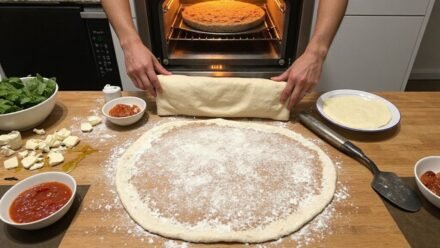
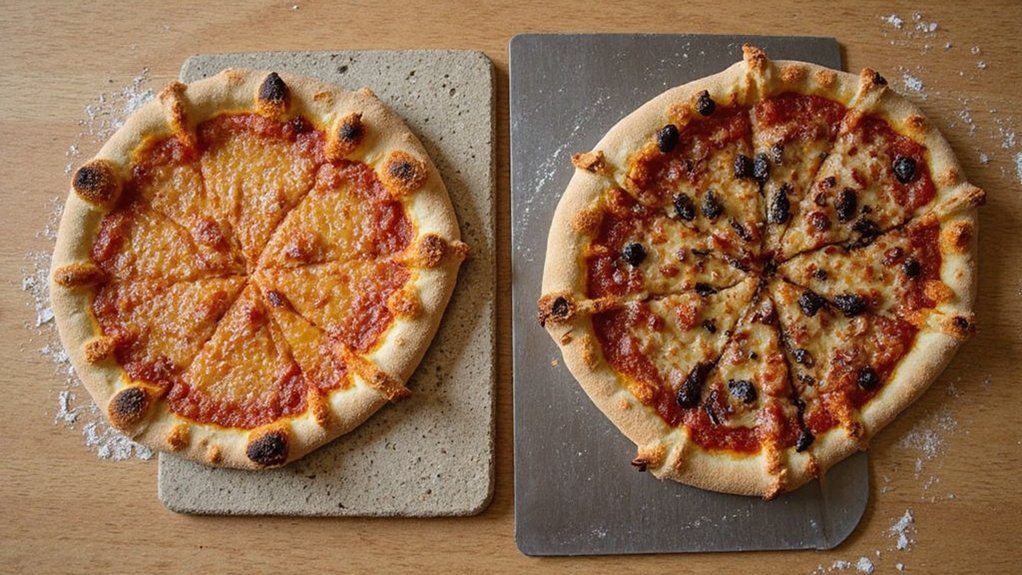

When you make pizza at home you want a crisp, blistered bottom and an evenly baked crust, and the choice between a pizza stone and a pizza steel changes that. Stones store heat and smooth temperature swings; steels transfer heat fast for quick charring. I’ll break down which fits your oven and style so you can choose with confidence.
How Pizza Stones and Steels Work
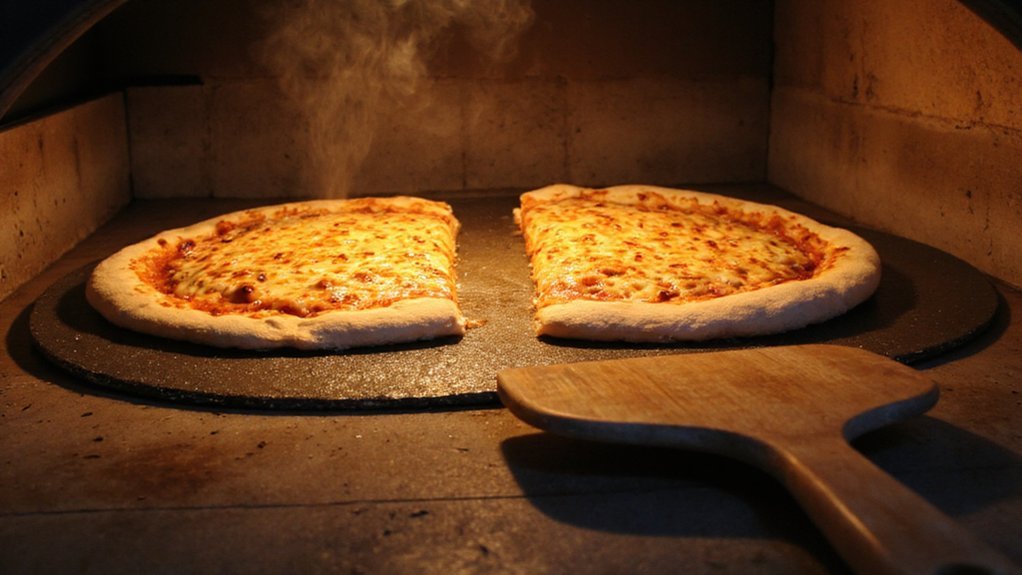
While both aim to deliver a crisp, evenly browned crust, pizza stones and steels work by different heat-transfer principles: stones store heat (thermal mass) and release it steadily through radiation and convection, while steels conduct heat rapidly and dump energy directly into the dough by conduction. You’ll rely on a stone’s ability to absorb oven heat and provide even, sustained warmth; that steadiness minimizes hot spots and supports longer bake cycles for thicker crusts. You’ll use a steel when you need near-instant surface heat to jump-start crust oven spring and create blistering in seconds. You should preheat either thoroughly, avoid thermal shock with stones, and handle steels with care because they transfer heat to tools and hands immediately. Use each for its intended purpose.
Heat Transfer: Ceramic Vs Steel
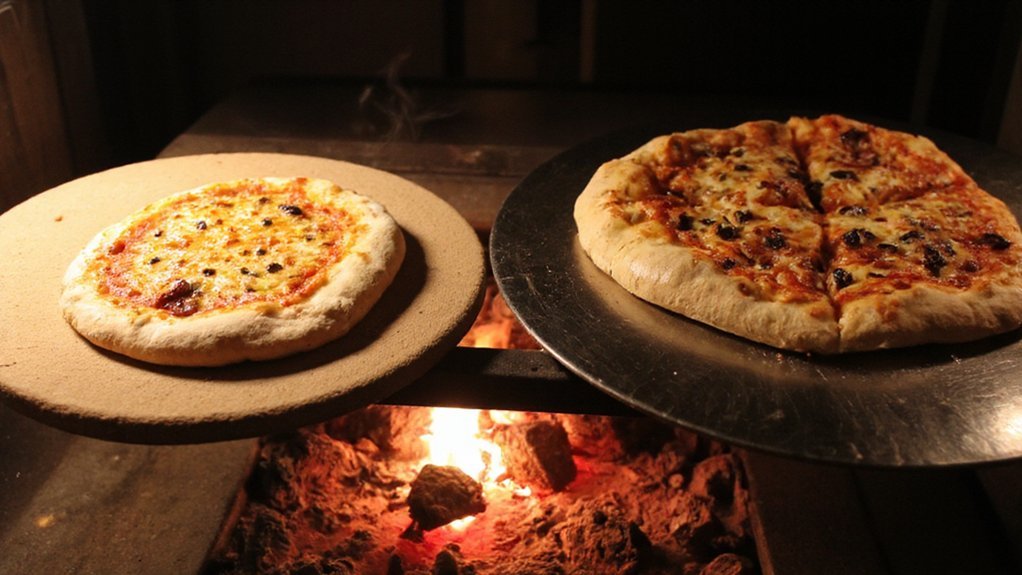
Although ceramic and steel both get hot, they move heat in fundamentally different ways that affect how your crust bakes. You rely on thermal mass and conductivity: ceramic stores heat and releases it slowly; steel conducts heat rapidly and transfers it directly into dough. That changes how quickly the bottom browns and how much oven spring you’ll get. Use ceramic if you want steady, even baking; choose steel when you need instant, intense bottom heat. The table highlights core differences.
| Material | Heat behavior |
|---|---|
| Ceramic | High thermal mass, low conductivity |
| Steel | Low mass, very high conductivity |
You’ll notice oven temperature and pizza size interact with these properties, so adjust timing and placement accordingly. Test and refine your approach consistently.
Pros and Cons of Pizza Stones
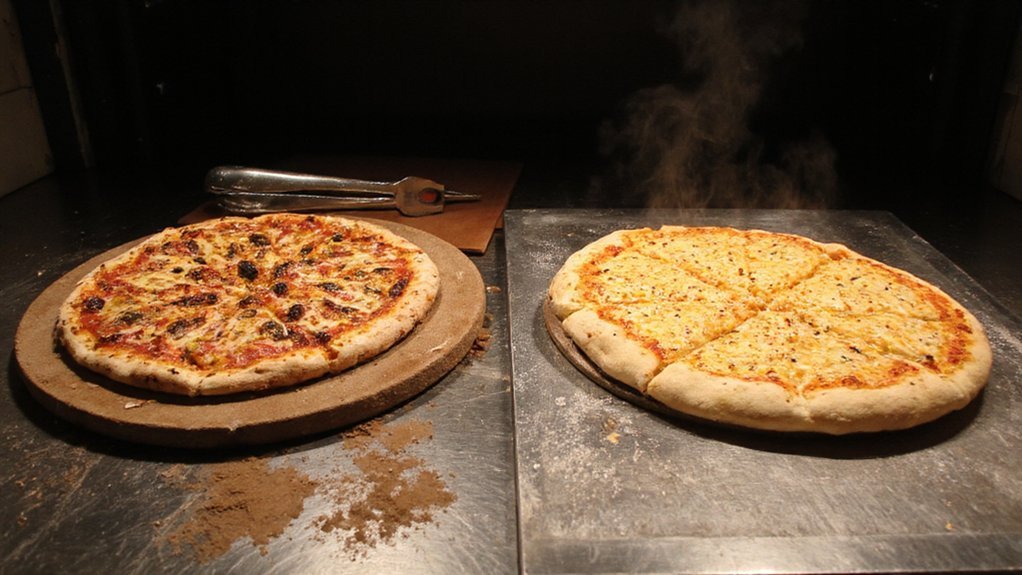
Because pizza stones hold and radiate heat steadily, you’ll get an even, well-browned crust and reliable results once the stone’s fully preheated, but you’ll also face slower heat recovery and a fragile, heavy piece of cookware that needs careful handling. You’ll appreciate the stone’s porous surface for drawing moisture from dough, improving crispness, and its affordability and compatibility with ovens and grills. You’ll tolerate long preheat times and cautious cleaning—no thermal shock, gentle scrubbing and gradual temperature changes. You’ll accept weight and fragility when moving or storing, and you’ll need a peel or board to load pizzas. If you prioritize authentic texture, low cost, and simplicity, a stone serves well; if you need speed, robustness, or fast recovery, consider alternatives. Match choice to needs.
Pros and Cons of Pizza Steels
If you want faster, crisper results, a pizza steel delivers: its high thermal conductivity heats quickly, recovers heat between pies, and produces a blistered, well-browned bottom that stones rarely match. You get rapid, even browning, shorter bake times, and consistent results with heavy-duty steels that won’t crack. They’re durable, thin enough to transfer heat efficiently, and often double as griddles. Downsides: steels are heavy, can be awkward to handle, and may rust if not seasoned and dried. They also retain surface heat, increasing burn risk and requiring care when inserting and removing pizzas. Prices vary, with quality steels costing more upfront but lasting indefinitely. For serious home pizzaiolos, a steel is a performance-focused investment. You’ll appreciate the speed and control once you switch easily.
Choosing the Right Surface for Your Oven and Style
When choosing between stone and steel, match the surface to your oven’s max temperature, how you bake, and how much effort you want to put into maintenance. Choose steel if your oven reaches high heat and you want rapid, blistered crusts; pick stone if you prefer even, gentler heat and a crisp bottom over longer bakes. Consider weight, preheat time, and how you load pizzas. If you use home ovens or grills, confirm fit and airflow; pro ovens benefit from steel. Use the table below to decide quickly.
| Attribute | Best for |
|---|---|
| High-temperature ovens | Steel |
| Even heat, longer bakes | Stone |
Match surface to dough style and timing daily. Prioritize performance over price, but balance with your cooking habits.
Care, Maintenance, and Safety Tips
Cleaning, seasoning, and safe handling keep your pizza stone or steel performing reliably and extending its life. You’ll treat each surface differently: never soak or use detergent on an unglazed stone — scrape crumbs, brush, and wipe with a damp cloth, then air‑dry completely; for steel, clean with hot water and a stiff brush, dry immediately, and rub a thin coat of high‑smoke‑point oil to maintain the seasoning and prevent rust. Avoid thermal shock: don’t transfer a hot surface to cold water or place it directly on a wet countertop. Use heavy oven mitts or gloves and sturdy tools when moving either surface. Store stones on a stable shelf and steels somewhere dry. Inspect for cracks or rust and replace when safety is compromised.
Conclusion
You’ll pick the best tool by matching it to your oven and pizza goals. If you want fast, blistered Neapolitan results and don’t mind seasoning and weight, a steel gives superior conduction and quicker bakes. If you prefer forgiving, evenly browned thicker crusts and a gentler heat hold, a stone works well. Consider preheat time, fragility, and maintenance; choose the surface that fits your workflow and don’t skip proper care. You’ll get reliably better pizza.