To make the best pizza sauce, start with quality tomatoes—heirloom or good canned ones work wonders. Don’t skimp on fresh herbs like basil and oregano. Balance sweetness and acidity with ripe tomatoes and a pinch of sugar, if needed. Simmer for 20-30 minutes to blend those flavors beautifully. Use essential tools like a blender and a saucepot to simplify the process. Want to elevate your sauce game? There’s more to discover!
Key Takeaways
- Start with high-quality tomatoes and fresh herbs to enhance the flavor of your pizza sauce.
- Simmer the sauce for 20-30 minutes to allow flavors to meld together beautifully.
- Balance sweetness and acidity using ripe tomatoes, a pinch of sugar, or a splash of balsamic vinegar.
- Avoid common mistakes by ensuring the sauce is thick enough and tasting throughout the cooking process.
- Explore innovative ingredients like smoked paprika or chipotle peppers to elevate the sauce’s overall flavor profile.
How to Make the Best Pizza Sauce

When you want to whip up the best pizza sauce possible, it’s all about balancing fresh flavors and simplicity. Immerse yourself in the rich pizza sauce history; you’ll find each region adds its twist. For instance, Neapolitan sauce is typically more straightforward, showcasing fresh tomatoes and basil, while Chicago-style might mix in spices and sweetness.
Start with quality ingredients. You don’t need fancy stuff—just good tomatoes, garlic, and herbs. Toss in some olive oil for richness. Don’t overthink it! Simply simmer your ingredients to meld those flavors beautifully.
Taste as you go, adjusting seasoning to your preference. You want a sauce that speaks to your style. Remember, it’s your pizza, your freedom! Whether you’re aiming for classic or something unique, explore those regional variations, and make it yours. Enjoy the process as much as the delicious result!
Choosing Quality Tomatoes for Flavor

To make your pizza sauce truly pop, picking the right tomatoes is key. Heirloom varieties are a fantastic choice, bursting with rich, complex flavor profiles. If you can’t find fresh ones, don’t fret! Good-quality canned options can work wonders too, especially when they’re sourced with care. When you’re shopping, keep ripeness factors in mind; those vibrant, slightly soft tomatoes signal peak freshness.
Seasonal availability plays a big role, so check your local farmers’ market for organic choices during harvest months. Sourcing locally not only supports your community but also guarantees you’re getting the freshest tomatoes possible. Plus, fresh tomatoes have that sweet, tangy taste that’s hard to beat. Remember, the importance of freshness can’t be overstated—it’s what elevates your pizza from ordinary to unforgettable. Happy tomato hunting!
Selecting the Perfect Herbs and Spices

While you might think that tomatoes steal the show, the right herbs and spices can truly elevate your pizza sauce. Focus on classic herb combinations that resonate with the rich flavors of tomatoes. Think oregano, basil, and parsley – they’re a match made in pizza heaven! Experiment a bit and find what works for your palate.
When it comes to spice ratios, start small. A pinch of red pepper flakes can add just the right kick, while garlic powder might bring out the savory depth you crave. Balance is key, so trust your instincts as you blend. Don’t be afraid to adjust those ratios until you hit that perfect note.
Achieving Sweetness and Acidity Balance

Getting the sweetness and acidity just right in your pizza sauce can really elevate your dish. Start by picking the right tomatoes and consider a few sweetening agents to balance out the acidity. It’s all about that perfect mix to make your sauce taste amazing!
Choosing The Right Tomatoes
When it comes to making the perfect pizza sauce, choosing the right tomatoes can make all the difference in achieving that sweet and tangy balance. You’ve got options, so let’s break it down:
- Heirloom Varieties: These beauties often pack a rich flavor and natural sweetness, elevating your sauce.
- Canned Options: Don’t shy away from quality canned tomatoes. Look for whole peeled San Marzano or diced varieties—they can be life-savers!
- Seasonal Picks: If you’re feeling adventurous, using fresh tomatoes in season could give your sauce a unique twist.
Explore what works for you, and remember, it’s all about finding that perfect mix to delight your taste buds. Happy saucing!
Sweetening Agents To Consider
Ever wondered how to strike that perfect balance between sweetness and acidity in your pizza sauce? You’ve got some great options when it comes to sweetening agents. Each adds its own unique twist, making your sauce pop!
| Sweetening Agent | Flavor Profile |
|---|---|
| Agave Syrup | Mild and almost neutral |
| Honey Drizzle | Floral and rich |
| Brown Sugar | Deep, caramel-like taste |
| Maple Syrup | Earthy and smooth |
| Fruit Puree | Bright and fruity |
Consider a splash of balsamic vinegar for depth, too! A little of any of these can elevate your sauce and create that delicious balance you crave. So go ahead, experiment, and enjoy your pizza nights!
Balancing Acidic Ingredients Properly
Although it might seem tricky, balancing acidic ingredients in your pizza sauce is key to achieving that perfect flavor harmony. You want the right ratios to not overpower your sauce—too much acidity can ruin the experience. Here are a few quick tips to help you nail those acidic ingredient ratios:
- Tomatoes: Choose ripe, sweet tomatoes to start; they provide natural sweetness to counterbalance acidity.
- Vinegar or Lemon Juice: Use sparingly! A dash can enhance flavors but too much will spike the acidity.
- Sugar: Just a pinch can work wonders in balancing acidity flavors without making your sauce sweet.
Play around with these tips, and you’ll soon create a sauce that sings!
Simmering Techniques for Flavorful Sauce

When it comes to simmering your pizza sauce, picking the right tomatoes is key to getting that perfect flavor. You’ll also want to keep an eye on your simmering times to really let those flavors blossom. Don’t forget to add in seasonings for that extra depth that’ll make your sauce unforgettable!
Choosing The Right Tomatoes
Choosing the right tomatoes can make all the difference in creating a mouthwatering pizza sauce. To elevate your sauce’s flavor, consider these tips:
- San Marzano Tomatoes: These are a must-try! They’re sweet, low in acidity, and perfect for sauce.
- Organic Tomato Varieties: Go for organic when possible. They often have richer flavors and fewer additives, so your sauce stays pure.
- Fresh vs. Canned: While fresh tomatoes can be vibrant, high-quality canned options save time and still pack a punch in flavor.
Experiment with combinations, and you’ll find the perfect blend that matches your taste. Remember, the right tomatoes can elevate your pizza sauce from good to unforgettable!
Ideal Simmering Times
To create a pizza sauce that truly delights, you need to focus on the simmering times—after all, patience pays off! Here are some quick simmering tips to keep in mind for the perfect sauce:
| Simmering Duration | Flavor Impact |
|---|---|
| 20-30 minutes | Fresh and bright flavor |
| 30-45 minutes | Rich and balanced taste |
| 45+ minutes | Deep, intense flavor |
Keep an eye on your sauce during the simmering duration. You want it thickening but not burning. Stir occasionally to blend those beautiful flavors, and don’t hesitate to adjust the time based on personal preference. Trust me, when you find that sweet spot, you’ll be glad you let it simmer just a little longer!
Seasoning For Depth
Simmering your sauce is just one piece of the puzzle; the right seasonings can elevate those flavors even further. When you’re exploring umami and enhancing smokiness, think about these quick tips:
- Add garlic and onion powder: These timeless staples give depth and a rich flavor base.
- Incorporate smoked paprika: This ingredient doesn’t just enhance smokiness; it also adds a warm, subtle sweetness.
- Experiment with fresh herbs: Basil and oregano can brighten your sauce, while thyme introduces a touch of earthiness.
Essential Tools for Pizza Sauce Making
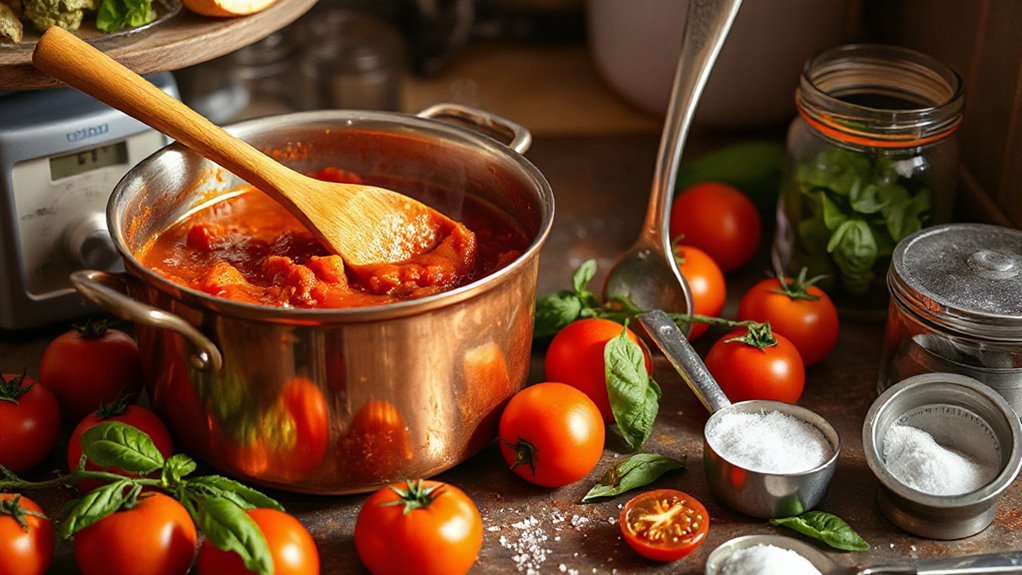
Crafting the perfect pizza sauce isn’t just about the ingredients; it’s also about having the right tools in your kitchen arsenal. You don’t need a lot, but a few essential sauce making tools can elevate your game.
| Tool | Purpose |
|---|---|
| Blender | Purees tomatoes and ingredients |
| Saucepot | Heats and simmers flavors |
| Wooden Spoon | Stirs and combines easily |
| Measuring Cups | guarantees accuracy in recipes |
| Tasting Spoon | Helps you adjust flavors |
Having these essential kitchen items handy makes the process smoother and more enjoyable. You’ll actually look forward to making your sauce! Remember, it’s not just about the end result, but the freedom and fun that comes with experimenting in your kitchen. So, get these tools, and let your creativity flow as you whip up that perfect pizza sauce!
Innovative Ingredients to Elevate Your Pizza Sauce

When you’re ready to take your pizza sauce from ordinary to extraordinary, consider shaking things up with some innovative ingredients. Adding a few surprises can release smoky flavors and unexpected spices that everyone will love!
Here are three ideas to elevate your sauce:
- Smoked Paprika: A sprinkle adds a rich, smoky flavor that transforms your sauce. It’s like a flavor rocket for your pizza!
- Chipotle Peppers: These little guys pack a punch. Blending in a bit of chipotle can bring a delightful heat that keeps people coming back for more.
- Fresh Herbs: Don’t just stick to basil! Try adding oregano, thyme, or even cilantro. They’ll provide a fresh twist that elevates your sauce game.
Get creative, mix things up, and watch your pizza sauce shine like never before! You’ve got the freedom to experiment, so why not?
Common Pizza Sauce Preparation Mistakes to Avoid

A few common mistakes can turn your pizza sauce from delightful to disappointing. First, don’t ignore sauce consistency; it should be thick enough to cling to your crust but not so thick that it overwhelms your toppings. If it’s too runny, try simmering it longer to reduce excess liquid.
Next, pay attention to flavor layering. Rushing the process can lead to a bland sauce. Start with a base of sautéed onions and garlic, then build depth with herbs, spices, and a splash of vinegar or wine. Don’t forget to taste as you go!
Also, avoid using canned tomatoes straight from the can without seasoning. They need a little love to reach their full potential. Finally, don’t skip the cooking step entirely! A quick blend won’t cut it; simmer the sauce to let those flavors meld beautifully. Follow these tips, and your pizza sauce will always steal the show!
Efficiently Storing Your Leftover Pizza Sauce

To make the most out of your leftover pizza sauce, it’s essential to store it properly so it stays fresh and flavorful. Here are a few efficient strategies you can use:
- Jar Preservation: Pour your sauce into a clean, dry jar. Make sure to leave some headspace at the top—this allows for expansion if the sauce freezes.
- Freezing Strategies: If you’ve got more sauce than you can use, consider freezing it. Ice cube trays work wonders. Just fill them up, freeze, and transfer the cubes to a freezer bag. You can easily grab just what you need later!
- Label & Date: Don’t forget to label each jar or bag with the date. This way, you won’t accidentally dig into old sauce that’s long past its prime.
With these tips, you’ll savor that delicious sauce without any waste. Enjoy your pizza nights stress-free!
Frequently Asked Questions
Can Pizza Sauce Be Made Without Tomatoes?
Absolutely, you can make pizza sauce without tomatoes! Think outside the box and try alternative ingredients like roasted red peppers, pumpkin, or even olive tapenade for a unique flavor twist. You can whip up sauce variations by blending these ingredients with herbs and spices you love. Experimenting is key—don’t be afraid to mix and match! This way, you’ll have a delicious, personalized sauce that breaks the traditional mold while satisfying your pizza cravings.
Is It Okay to Freeze Pizza Sauce?
Absolutely, it’s okay to freeze pizza sauce! Just use good freezing methods for best results. First, let the sauce cool completely, then pour it into airtight containers or freezer bags. Label them with dates, so you know when to use them. When you’re ready to enjoy your sauce, just thaw it in the fridge overnight. This way, you maintain the flavor and freshness for your next pizza night without any hassle!
How Long Does Homemade Pizza Sauce Last?
Homemade pizza sauce typically lasts about five to seven days in the fridge when stored properly. For the best sauce shelf life, keep it in an airtight container. If you want to extend the life, consider freezing it. Just make sure you leave some space in the container, as the sauce will expand. By mastering these storing techniques, you’ll always have delicious sauce ready for your next pizza night!
What Are the Signs of Spoiled Pizza Sauce?
You’ll know if your pizza sauce has spoiled by paying attention to a few signs. First, trust your nose—if it smells off or sour, toss it. Next, check for any color changes; a brown or darkened hue can signal spoilage. If you spot any mold or a watery layer, it’s time to say goodbye. Don’t risk a bad meal, so keep these tips in mind for your next pizza night!
Can I Use Canned Sauce as a Base?
Absolutely, you can use canned sauce as a base! Canned sauce has its advantages, like convenience and shelf life, making it a perfect go-to for quick meals. Plus, you can easily add your favorite herbs and spices to create unique sauce flavor variations tailored to your taste buds. So, don’t shy away from experimenting; mix in garlic, oregano, or even a dash of chili flakes for that added kick! Enjoy your pizza-making!
Conclusion
Now that you’re armed with these pizza sauce secrets, you can impress your friends and family with each delicious slice! Did you know that over 93% of Americans eat pizza at least once a month? With your homemade sauce, you’ll be part of that tasty statistic. Remember, it’s all about those quality ingredients and a little love. So, grab a can of tomatoes and get saucing—your pizza nights will never be the same!