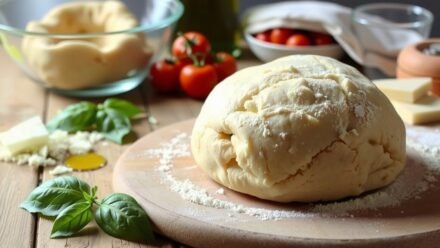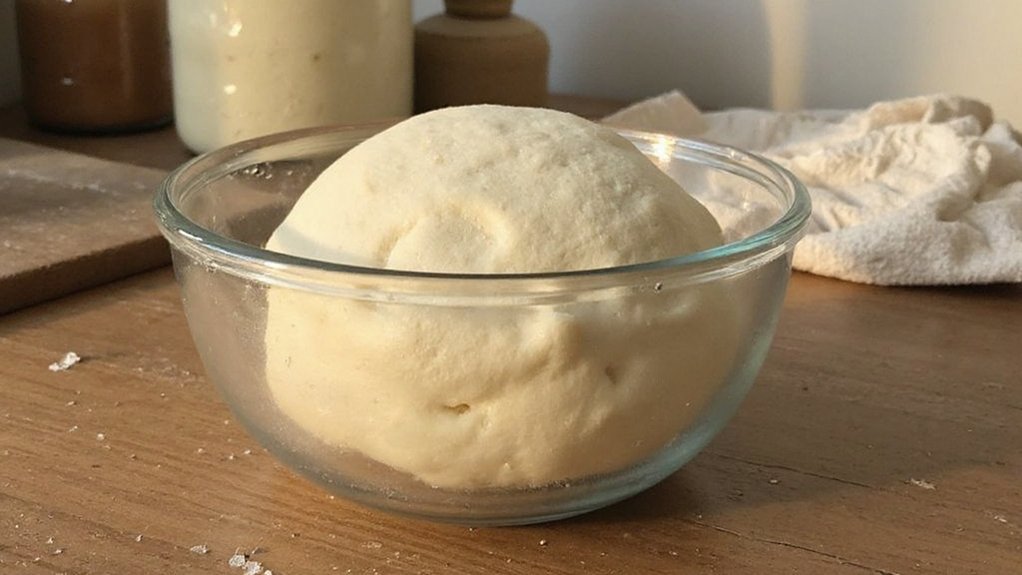

When you plan pizza dough, rise time is a tool, not a rule. It shapes texture, flavor, and how the dough handles. Warmer temps speed things up; cold slows and improves taste. Yeast amount, hydration, and technique change the clock. Learn simple ways to judge readiness and schedule your ferment for the result you want.
Why Rise Time Matters for Pizza Dough
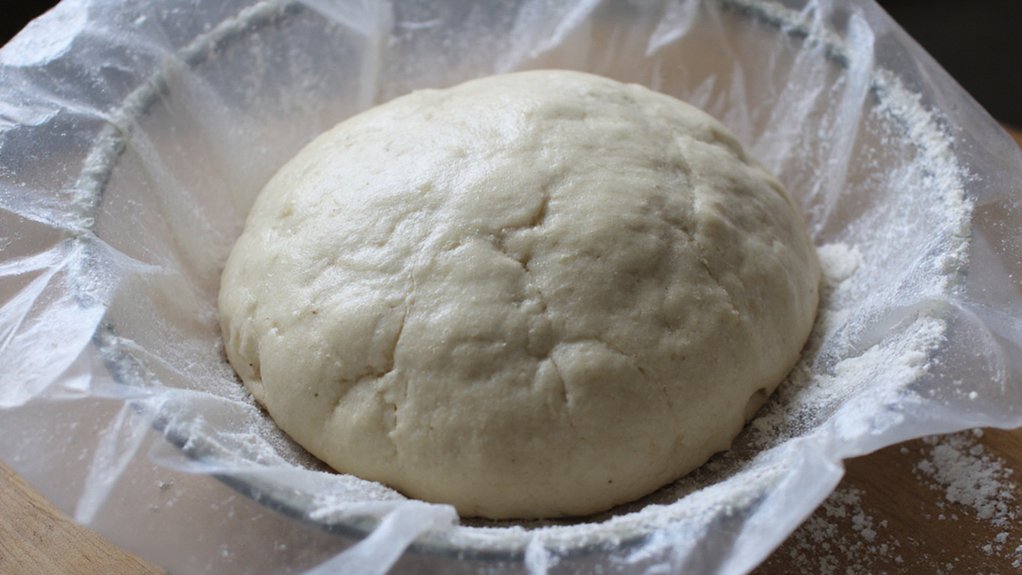
Because rise time controls gluten strength, gas retention, and fermentation flavor, it directly determines your crust’s texture and taste. You’ll shape chew, openness, and crispness by choosing how long to proof: shorter rises yield tighter crumb and quicker oven spring, longer rises produce more extensible dough, larger air cells, and deeper fermented notes. Proper rise balances strength and extensibility so the dough holds gas without tearing during shaping or collapsing in the oven. It also affects handling—well-risen dough relaxes and springs back predictably—so you can stretch thin without excessive resistance. Underproofing gives dense, gummy crumb; overproofing risks collapse and blandness. Control rise time to achieve intended style—neapolitan blistering, NY chew, or a delicate, airy artisan crust. Adjust timing to match oven temperature and recipe.
Factors That Speed Up or Slow Down Fermentation
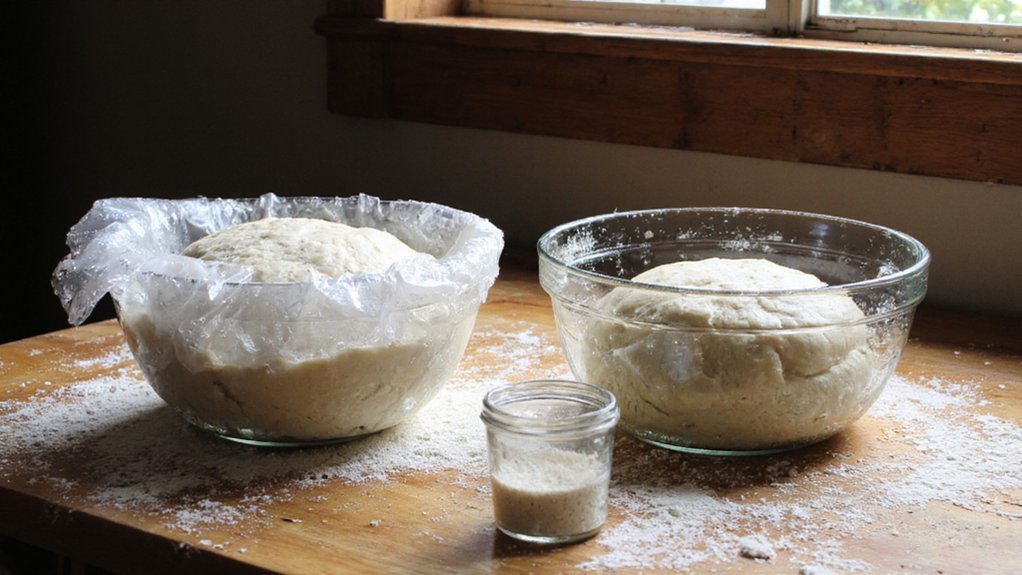
Now that you know how rise time shapes crust and handling, look at what actually controls that timing: fermentation rate. You can speed or slow fermentation by adjusting temperature, yeast amount, salt, sugar, hydration, and mixing. Warmer environment and more yeast accelerate activity; cold and less yeast retard it. Salt and low hydration slow fermentation; sugar and high hydration speed it. Control these variables to hit target flavor and texture without guessing.
| Variable | Effect |
|---|---|
| Temperature (↑) | Faster fermentation |
| Salt/Hydration (↑ salt, ↓ water) | Slower fermentation |
You should also factor in initial dough strength and proofing vessel: stronger gluten tolerates longer fermentation and a roomy container prevents sticky walls and uneven rise; use a thermometer and timer to manage predictable outcomes for repeatable, reliable bakes.
Typical Rise Schedules for Different Pizza Styles
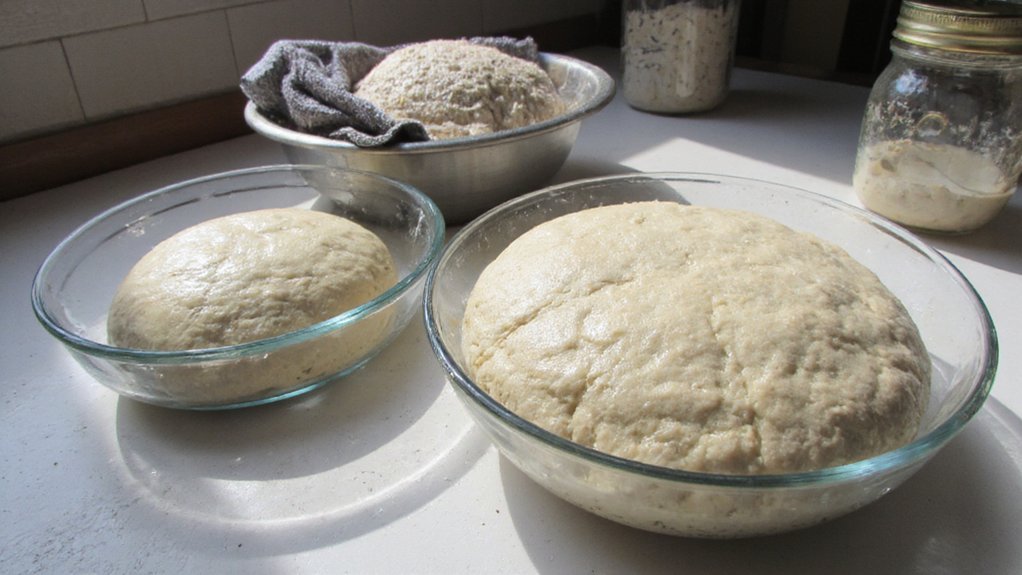
While Neapolitan, New York, and Sicilian doughs share the same fermentation chemistry, each style demands a specific rise schedule to develop its signature crumb, chew, and crust color. For Neapolitan you’ll want a relatively quick bulk rise at warm room temperature, about 60 to 90 minutes, then gentle shaping and a short proof to preserve extensibility for an airy cornicione. For New York, aim for a longer bulk fermentation to build strength and chew: roughly 2 to 4 hours with intermittent folds, finishing with a brief bench rest before stretching. Sicilian benefits from a longer, controlled rise to create open, airy pockets and a crisp bottom: plan for extended fermentation with occasional degassing and a final rise in the pan until puffy and jiggly.
Same-Day, Overnight and Multi-Day Ferments Explained
When you choose between same-day, overnight, or multi-day fermentation, you’re deciding how time, temperature, and yeast activity will shape flavor, gluten development, and oven spring. Same-day ferments let you mix, proof, shape, and bake within hours; you get a mild-flavored crust with tighter crumb and quicker turnaround, useful for busy schedules or high-volume service. Overnight ferments, typically refrigerated, give balanced flavor, improved extensibility, and more predictable shaping without demanding extra work the baking day. Multi-day ferments deepen flavor complexity, strengthen dough structure, and reward patience with superior oven spring and nuanced aromas. You should pick the schedule that matches your timeline and desired crust character, then keep handling minimal so the dough’s developed qualities remain intact. Adjust proofing cadence to your kitchen’s rhythm daily.
How Temperature, Yeast Amount and Hydration Change Timing
Having chosen a fermentation schedule, you’ll need to fine-tune temperature, yeast quantity and hydration to hit your target timing and flavor. Temperature accelerates or slows fermentation: each 10°C rise roughly doubles activity, so cooler slows for flavor, warmer shortens proofing. Yeast amount sets pace—more yeast shortens bulk ferment; reduce yeast for long, cold ferments. Hydration affects enzyme mobility and gas retention: higher hydration speeds fermentation and gives open crumb, lower hydration slows and yields tighter structure.
- Increase temperature to shorten proofing; decrease to extend.
- Cut yeast for long, slow ferments; add for same-day proofs.
- Raise hydration for quicker activity and extensibility.
- Lower hydration for firmer dough and slower rise.
Adjust variables incrementally, observe dough, and make small, deliberate corrections regularly.
Practical Tips for Planning Your Dough Schedule
Because dough timing hinges on your kitchen temperature, yeast amount and desired flavor, plan your schedule before you mix: pick a bake time, work backward to set final proof, bulk ferment and mixing windows, and assign temperatures and yeast percentages for each stage. Decide whether you’ll cold-ferment overnight or use a same-day schedule; cold slows enzymatic development and improves flavor, so reduce yeast (0.2–0.5%) and refrigerate 12–72 hours. For same-day bakes use 1–2% instant yeast and keep bulk ferment at 24–27°C for 1–3 hours with folds every 30–60 minutes. Always perform a bench rest 15–30 minutes before final shaping. Note that dough should roughly double during bulk or show visible aeration; adjust times if it underperforms. Record outcomes so you refine timing for consistent results.
Conclusion
You’ll plan dough rising by matching time to temperature, yeast and hydration: use one to three hours at room temperature for same-day pizzas, or reduce yeast and cold-ferment eight to seventy-two hours for deeper flavor and better extensibility. Adjust hydration and folds to speed or control fermentation, and always judge readiness by puffiness and slight springback, not the clock. With these rules you’ll schedule reliable, repeatable doughs that fit your workflow and desired crust perfectly.