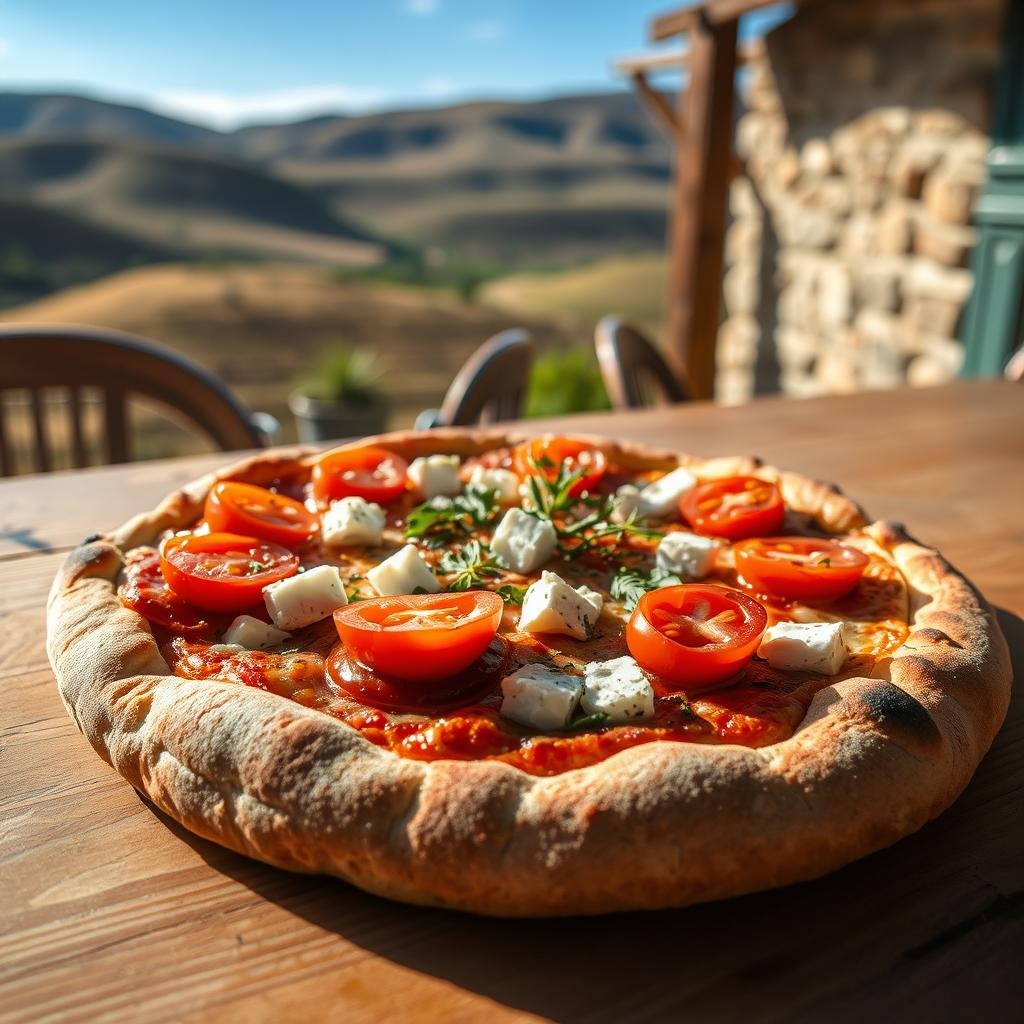

Make a bold, home-baked pie that balances melty mozzarella and tangy feta cheese. You’ll learn how to build a pillowy crust and a topping combo that tastes bright and Mediterranean.
Start smart: use feta in brine for texture, dab fresh mozzarella to reduce moisture, and pre-roast cherry tomatoes and red onion for 10–15 minutes so they caramelize instead of steaming the base.
Preheat a pizza stone or inverted sheet pan and bake on the lowest rack for a crisp bottom and golden edges. Brush the border with melted butter, garlic, and oregano for extra flavor.
Try a yogurt-enriched dough for extra tang and tenderness, or long ferment 8–12 hours for depth. Store leftovers refrigerated up to 1 day or freeze up to 3 months and reheat on a hot stone or pan until crisp.
Key Takeaways
- You’ll master a pillowy dough and a savory cheese balance using mozzarella and feta cheese.
- Pre-roasting tomatoes and onions for 10–15 minutes concentrates flavor and limits moisture.
- Use a heated stone or inverted pan on the lowest rack for a crisp bottom.
- Dab fresh mozzarella or use low-moisture cheese to avoid a soggy center.
- Greek yogurt in dough and long fermentation boost tenderness and taste.
Why you’ll crave this thick‑crust Greek pizza tonight
When you roast toppings and crank the heat, you get a pizzeria-quality pie that bakes fast and stays crisp. Roasting red onion and cherry tomatoes at high heat for about 10–15 minutes concentrates sweetness and prevents sogginess so your toppings brown instead of steaming the base.
Layering mozzarella cheese as the melty base gives you that desirable stretch. Then sprinkle feta or feta cheese—preferably in brine—for bright, tangy pops that never go rubbery.
Bake hot (about 465–475°F) on the lowest rack to mimic a stone deck oven. A preheated pizza stone or inverted sheet pan helps the bottom turn golden while the interior stays pillowy.

Finish strong: brush the rim with garlic-oregano butter or olive oil, scatter olives and peppers sparingly, and hit the pie with more oregano after baking. Control topping density and use good oil and salt—small ingredient choices lift this recipe into restaurant territory in minutes.
- Airy dough meets bubbly cheese and briny olives for craveable contrast.
- Pre-roast vegetables to keep the crust sturdy and flavors concentrated.
- High heat and a hot stone deliver crisp bottoms and golden edges.
Ingredients for bold Mediterranean flavor
Gathering fresh and briny components ahead of time saves minutes and boosts flavor. Below are the essentials that give this pie a true Mediterranean punch.
For the dough
No‑knead pizza dough uses all‑purpose flour, instant yeast, salt, water, and olive oil.
For a tangy crumb, add ½ cup Greek yogurt and use ½ teaspoon yeast for an 8–12 hour rise, or 3 teaspoons for a quicker proof.
Signature toppings
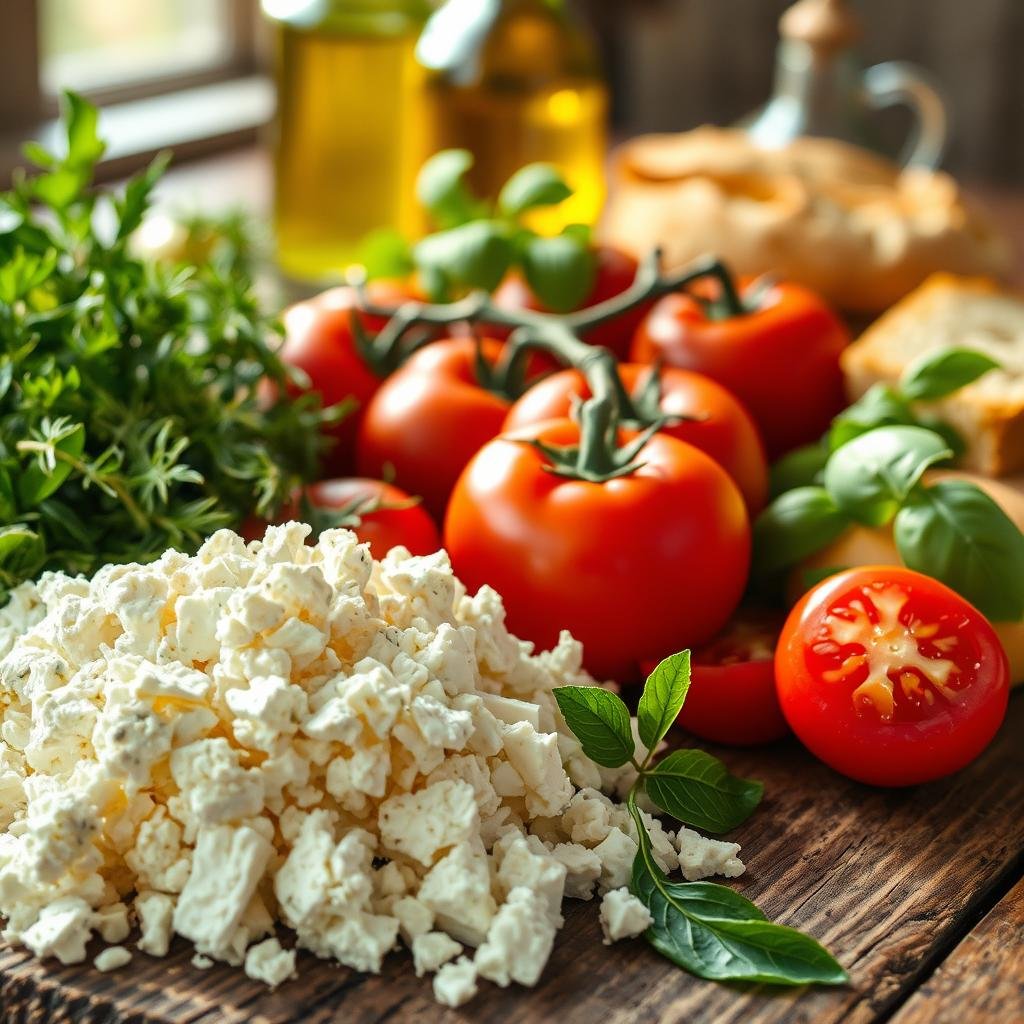
Choose feta in brine for better texture, plus shredded mozzarella cheese for melt. Add kalamata olives, cherry tomatoes, and red onion. Roast tomatoes and onion about 10–15 minutes in the oven before topping to concentrate flavor and cut moisture.
Pantry boosters
Keep dried oregano, garlic, salt, and a few tablespoons of olive oil on hand. For a quick sauce, thin tomato paste with water and season with garlic powder, onion flakes, and oregano—or skip sauce to highlight fresh toppings.
Build the thick crust: dough methods that work in a home oven
Start your build by choosing a dough method that matches how much time you have and how hands‑on you want to be. The right approach yields a pillowy interior and a sturdy rim that holds generous cheese and toppings.
No‑knead dough for easy weekends and great texture
Use all-purpose flour, instant yeast, salt, water, and a splash of olive oil for a no‑knead pizza dough that mixes in minutes and rests into flavor. Let it sit at room temperature until bubbly, then shape gently on parchment.
Greek yogurt dough variation for tang and tenderness
Mix the same base but add ½ cup Greek yogurt for a softer crumb and slight tang. For best results, use ½ teaspoon yeast and rest the dough 8–12 hours; use 3 teaspoons if you need it in less time.
Long fermentation improves flavor and handling. Shape with light fingertips and keep the outer rim a bit thicker to support toppings like mozzarella and crumbled feta.
Proofing, shaping, and thickness cues for a pillowy crust
Proof until the dough feels airy and puffy. Shape on parchment, pressing from the center and leaving a raised border. Aim for a sturdy round or a 9×13 rectangle so the base stays supportive.
- Preheat a pizza stone or invert a sheet pan on the lowest rack to get a well‑browned underside.
- Brush or drizzle olive oil over the surface to limit moisture from tomatoes and cheese.
- Consider a short par‑bake if your oven runs cool or if the dough is especially thick.
“Keep handling gentle to preserve gas bubbles — that lightness is what makes your homemade pizza feel professional.”
Whether you choose a no‑knead, a yogurt dough, or a use favorite store‑bought option, these steps help you bake a reliable, tender base every time. For more detailed mixing ratios, see how to make pizza dough.
Greek Pizza Recipe: Thick Crust with Feta — step‑by‑step baking guide
Set your oven to 465–475°F and position the lowest rack so the bottom crisps while the top browns. Preheat a pizza stone or an inverted sheet pan until it feels very hot.
Roast the veggies first: toss halved cherry tomatoes and onion wedges in olive oil, salt, pepper, and dried oregano. Roast 10–15 minutes until edges caramelize and sweetness concentrates.

Stone vs. sheet pan
Shape the dough on parchment for an easy transfer. Use a peel to slide the pie onto the hot pizza stone or preheated sheet pan so it sets immediately.
Assemble and bake
Lay down mozzarella cheese first to create a melty base. Dab fresh mozzarella to remove excess moisture, then add roasted tomatoes, onion, kalamata olives, and crumbled feta.
- Finish with a sprinkle of oregano and a light drizzle of olive oil.
- Bake until the rim is golden and cheese has browned—about 8 minutes in a fan oven or 15–20 minutes in a standard oven.
- Use visual cues—bubbling cheese and charred spots—rather than only a timer.
“When you control moisture and use high heat, the dough puffs, the toppings concentrate, and every slice holds together.”
Toppings that sing: getting feta, mozzarella, and olives just right
Pairing a stretchy, mild cheese with tangy crumbles keeps every bite creamy and bright.
Why mozzarella and feta work so well: mozzarella gives you a gooey, melting base that holds ingredients in place. Feta adds sharp, salty contrast without fully melting, so each slice has both creamy and crumbly textures.
Balance and smart add-ins
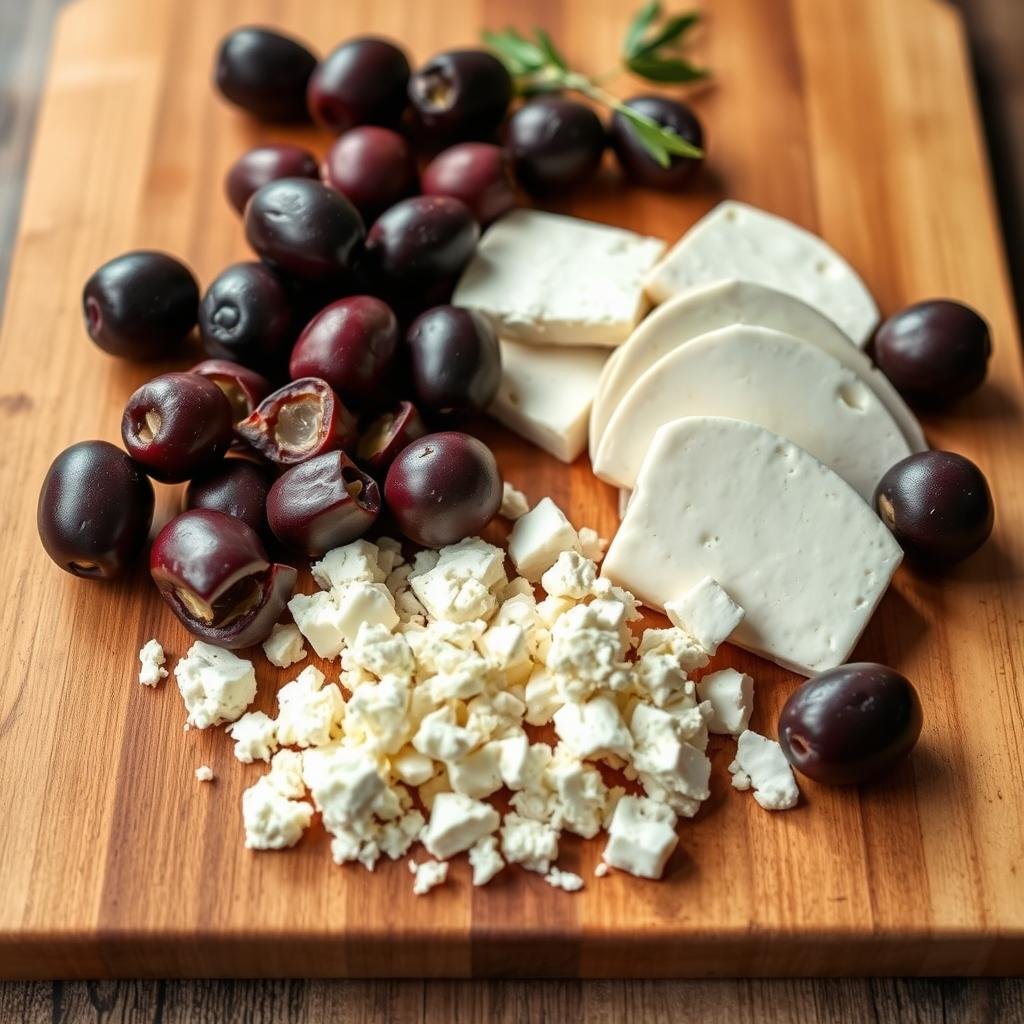
Choose feta in brine for the best moisture and flavor. That keeps the crumbles plush while mozzarella bubbles below.
Keep toppings light. Crowding causes steaming and a soggy center. Aim for about a cup of combined vegetables on a 12–13 inch round to protect the dough and edges.
- Fold in artichoke hearts or wilted spinach for body.
- Add roasted red peppers or sun‑dried tomatoes for sweetness and depth.
- Scatter kalamata olives for a briny, meaty accent that pairs with oregano and olive oil.
Finish tips: pre‑roast tomatoes to concentrate flavor and cut moisture. Skip heavy sauce and instead drizzle a little olive oil and a pinch of oregano before serving. Add a few extra feta crumbles right after baking for bright contrast.
“Less is more when you top: space ingredients so the surface roasts and the rim stays golden.”
| Ingredient | Role | Use Amount |
|---|---|---|
| Mozzarella | Melty base, structure | 8–10 oz shredded |
| Feta cheese | Salty, tangy contrast | 3–4 oz crumbled (in brine) |
| Vegetables | Flavor boosters | ~1 cup combined (pre-roasted if juicy) |
| Kalamata olives | Briny accent | 6–8 whole, halved |
Pro tips for crispy bottoms, golden edges, and make‑ahead success
Mastering heat, timing, and topping spacing is the fastest route to a reliably golden edge. Start by dabbing watery mozzarella or switch to low‑moisture to cut surface moisture. Space toppings so they roast instead of steam.
Prevent soggy crust
Keep excess water off the surface. Pat fresh mozzarella dry and brush the dough lightly with olive oil before adding toppings. If you use a store‑bought dough, prick it to avoid large air pockets and brush the rim with a garlic‑oregano butter for color and flavor.
Oven strategy
Preheat your oven to 465–475°F and heat a pizza stone or an inverted sheet pan on the lowest rack. Slide the pie onto the hot pan so the underside sets fast. Watch in minutes and trust visual cues: blistered cheese, golden edges, and a deep brown base mean it’s ready.
Store and reheat
Wrap leftovers tightly and refrigerate up to 1 day or freeze up to 3 months. To revive slices, reheat on a hot stone or in a skillet until the bottom crisps — avoid the microwave, which softens the base.
“A hot stone and a light hand with toppings make every homemade pizza feel professional.”
Conclusion
Trust your eyes and your oven. Look for bubbling cheese, a bronzed rim, and a set center to know the bake is done. Let the pie rest a few minutes so the cheese firms and slices cut cleanly.
Keep it simple: roast cherry tomatoes and onion briefly, use mozzarella for melt, and finish with feta crumbles and a drizzle of olive oil and dried oregano. You can use a quick tomato paste sauce or go sauce-light to let toppings shine.
Use your favorite pizza dough or mix your own, bake on a hot stone or pan on the lowest rack, and store leftovers in the fridge for one day or freeze for longer. These steps give you repeatable homemade pizza that tastes like a night out at home.
FAQ
What oven temperature and bake time give a golden, sturdy bottom on a thick homemade pie?
Aim for 475–500°F and preheat your pizza stone or baking steel at least 45 minutes. Bake on the lowest rack for 10–15 minutes, then move up 1 rack for 2–4 minutes if the top needs more color. Watch for a puffed edge and a deep-golden base before removing.
Can you use no‑knead dough or should you opt for a quicker, yeast‑active method?
You can use either. No‑knead dough gives an open, airy crumb with minimal effort if you plan ahead. Active yeast methods produce a faster rise and slightly more uniform crumb. Choose no‑knead for hands‑off weekends and the yeast method when you need it ready the same day.
How do you stop toppings like cherry tomatoes and mozzarella from making the crust soggy?
Roast cherry tomatoes and onions first to concentrate juices, pat down fresh mozzarella to remove excess moisture, and avoid overloading the center. Brush the shaped dough edge with olive oil to create a moisture barrier.
Should you use a sheet pan or pizza stone, and how does positioning affect results?
A pizza stone or steel gives the best bottom crispness by holding high, even heat. If you use a sheet pan, preheat it and bake on the lowest rack to mimic the stone’s effect. Stones need longer preheat time; sheet pans are more forgiving for thicker dough.
What’s the best way to combine feta and mozzarella so you get both tang and melt?
Use shredded mozzarella as the melty base and scatter crumbled feta on top after the cheese layer. This lets mozzarella melt and create stretch while feta gives bright bites without fully melting away.
Can you swap ingredients like olives or roasted red peppers for dietary preferences?
Yes. Kalamata olives bring brine and character, but you can swap for green olives, artichoke hearts, roasted red peppers, spinach, or sun‑dried tomatoes to suit tastes or dietary needs without losing the Mediterranean profile.
How long can you store leftovers and what’s the best reheating method?
Refrigerate for up to 3 days or freeze slices for up to 2 months. Reheat refrigerated slices on a hot skillet or on a preheated stone at 450°F for 5–8 minutes to revive crispness. For frozen slices, thaw in the fridge overnight before reheating.
Is the Greek yogurt dough variation worth trying, and what does it change?
Absolutely. Yogurt in the dough adds tang and tenderness while reducing kneading time. It yields a softer crumb and pleasant flavor contrast with salty toppings like feta.
What pantry staples should you always have to build this Mediterranean‑style pie quickly?
Keep on hand all‑purpose flour, active dry yeast, olive oil, canned or fresh cherry tomatoes, dried oregano, garlic, salt, and pepper. Adding jarred roasted red peppers, olives, and precrumbled feta speeds assembly.