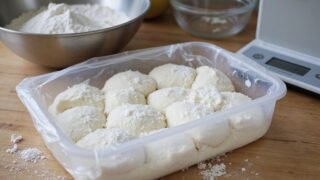
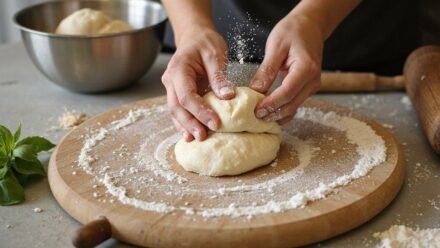
You’ll mix 300 g certified gluten‑free flour blend with 360 g water, 1–2 tbsp psyllium husk (or 2 tbsp chia), 1 tsp salt, 1 tbsp oil and a pinch of yeast or 1 tsp vinegar for structure. The dough should feel tacky yet cohesive and rest 20–30 minutes to hydrate. Keep going to learn how to turn that into a crisp, sliceable crust.
Why Gluten-Free Crusts Work
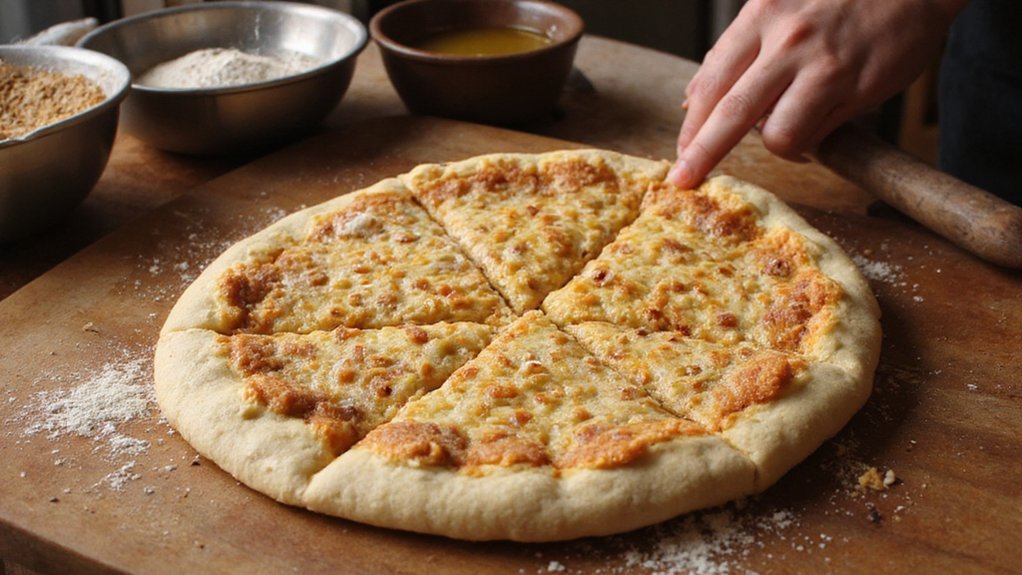
Because gluten-free mixes lack gluten’s elastic network, you recreate structure with specific ratios and binders. You’ll use roughly 1:1.2 flour-to-liquid by weight to avoid gummy crumb; that’s 100 g flour to 120 g water. Add 1.5–2 tsp psyllium husk or 2 tbsp ground chia per 250 g flour equivalent to mimic elasticity. Include 1 tsp salt per 300 g flour equivalent and 1 tbsp oil for moisture and extensibility. Rest the dough 20–30 minutes to hydrate starches and let binders form a gel. Bake at 230°C (450°F) on a preheated steel or stone to set crust quickly, preventing collapse. You’ll judge doneness by firm edge, light spring, and dry crumb, not elasticity. Adjust hydration by 5–10% for altitude, humidity, or flour blend and tolerance.
Ingredients You’ll Need

For one 12-inch pizza (about 300 g flour equivalent) you’ll need 300 g certified gluten‑free flour blend (preferably a mix of rice or sorghum flour + 30–50% starch like tapioca or potato for crispness), 360 g water (1:1.2 hydration) at room temperature, 1.5–2 tsp psyllium husk powder or 2 tbsp ground chia to create the elastic gel, 1 tsp fine salt, 1 tbsp neutral oil (olive or avocado) for extensibility and browning, and 1–2 tsp instant yeast (or omit if making a thin, unleavened style) plus 1 tsp sugar if you use yeast. You’ll also want 1 tsp apple cider vinegar for strength, 1 tbsp dairy-free milk powder for browning, and semolina or cornmeal for dusting. Measure precisely and avoid cross-contact with any gluten.
Step-by-Step Dough Preparation
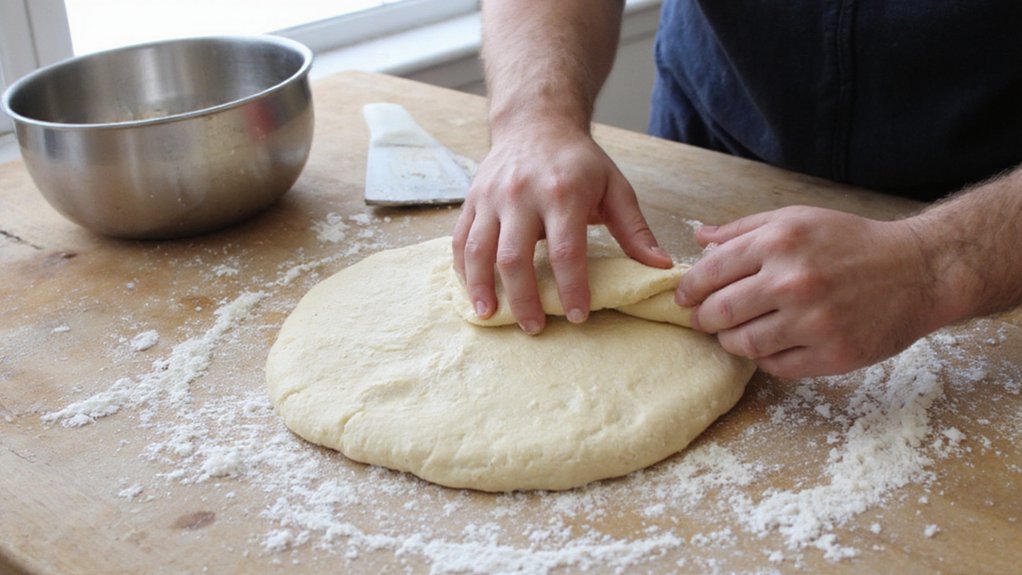
Starting by whisking together 300 g certified gluten free flour blend, 1 tsp fine salt, 1 tbsp dairy free milk powder (or omit if allergic), and 1–2 tsp instant yeast plus 1 tsp sugar (or skip yeast for an unleavened crust), you’ll create an even dry base; then bloom 1.5–2 tsp psyllium husk powder (or 2 tbsp ground chia) in 360 g room temperature water until it forms a glossy, gel like slurry. Combine slurry with dry mix and 2 tbsp olive oil, stir until a cohesive, tacky dough forms. Rest 20 minutes. Gently fold, portion and smooth.
- Mix until no dry streaks remain.
- Dough should feel tacky, not wet.
- Use oil on hands to shape.
- Hydrate longer if crumbly.
- Scale balls ~220–260 g.
Baking and Finishing Techniques
Preheating the oven and stone/steel guarantees a crisp, blistered crust: heat to 250–260°C (475–500°F) and allow a pizza stone or steel to soak for 45–60 minutes (or 30 min for a steel), or use a heavy baking sheet preheated for 20–30 minutes. Stretch a 250–300 g dough ball on parchment, dust with 10 g rice flour, dock lightly; you won’t get large air pockets. Bake 8–12 minutes until edges reach 95–100°C center temp and char appears.
| Stage | Temp/Time | Texture cue |
|---|---|---|
| Start | 250–260°C | thin, pliable |
| Mid | 6–8 min | bubbling, set |
| Finish | 8–12 min | blistered, crisp |
| Rest | 2–3 min | slightly tender |
Brush crust with 5 mL olive oil for sheen and prevent dryness; top with allergy-safe toppings. Let slices rest 2 minutes before serving for texture.
Troubleshooting Common Issues
After heating your oven to 250–260°C and soaking a stone or steel, you may still run into issues like a gummy center, dense crumb, or weak blistering. Adjust hydration, bake, and leavening precisely.
- Reduce water 5–10 g per 100 g flour for gummy crumb.
- Add 60–90 s under broiler to boost blistering.
- Use 10–15 g psyllium husk per 250 g flour for elasticity.
- Don’t cross-contact; avoid wheat proteins and shared utensils.
- Replace 4 g instant yeast and fresh baking powder if rise lags.
Taste and adjust salt modestly. Keep dough temperature 22–26°C, proof 45–75 minutes depending on yeast and flour blend; record grams and timings, and always use dedicated, allergen-free tools to protect sensitive eaters. Measure precisely and document every change for repeatable results.
Conclusion
You’ll get a crisp, tender base when you use 300 g certified gluten‑free flour and 360 g water, with 10 g psyllium husk or 12 g ground chia to mimic gluten’s elasticity. Add 15 g olive oil, 8 g salt and 3 g yeast or 5 g apple cider vinegar for structure. Rest 20–30 minutes, bake on a 250–300°C steel or stone to lock in chew and brown edges—avoid cross‑contact if you have celiac disease.