You’re about to learn how to make a restaurant-quality pie at home with simple ingredients and clear technique. Start with flexible pizza dough from Trader Joe’s, Whole Foods, or a local pizzeria and let it come to room temperature so it stretches easily.
Par-bake the base at 500°F to build structure, then add sauce, basil, and Parmesan so the crust stays crisp while the top turns golden. For an Ooni-style pizza oven at ~850°F, plan 3–4 minutes and rotate often for even charring.
Finish hot pies with torn burrata and a drizzle of quick herb oil (olive oil, dried basil, dried oregano, salt) to create that irresistible hot-cold contrast without melting the creamy center.
Reheat smart: use a cast iron skillet to re-crisp the bottom, then broil briefly. Cool on a wire rack after baking to keep the underside crisp and avoid a soggy crust.
Key Takeaways
- Use room-temp dough for easy stretching and an airy crust.
- Par-bake in a home oven, or blast in a pizza oven for 3–4 minutes.
- Finish with torn burrata and herb oil for hot-cold contrast.
- Cool on a wire rack to protect bottom crispness.
- Reheat in cast iron then broil to restore texture.
Why You’ll Love This Burrata Pizza
This version keeps the topping list short so the soft center and crisp crust take full center stage.
Less is more: by limiting toppings you let the fresh filling shine. A high heat oven at 500°F and a stone preheated in the lower third give you a shatter-crisp bottom and a chewy rim.
You get bold flavor from just a few quality items. Add halved cherry tomatoes, a pinch of red pepper, or a few prosciutto slices after baking for contrast without weight.
Timing matters: add delicate basil and arugula only once the pie is out of the oven. This preserves aroma and keeps the top cool while the center softens.
“Small tweaks—preheat low in the oven, hold delicate herbs, and keep toppings minimal—make restaurant-style results at home.”
| Focus | What to Do | Result |
|---|---|---|
| Stone placement | Lower third of oven | Crisper bottom, even bake |
| Toppings | Keep minimal; add fragile items after baking | Light crust, bold flavor |
| Finish options | Cherry tomatoes, arugula, balsamic | Fresh pop and peppery lift |
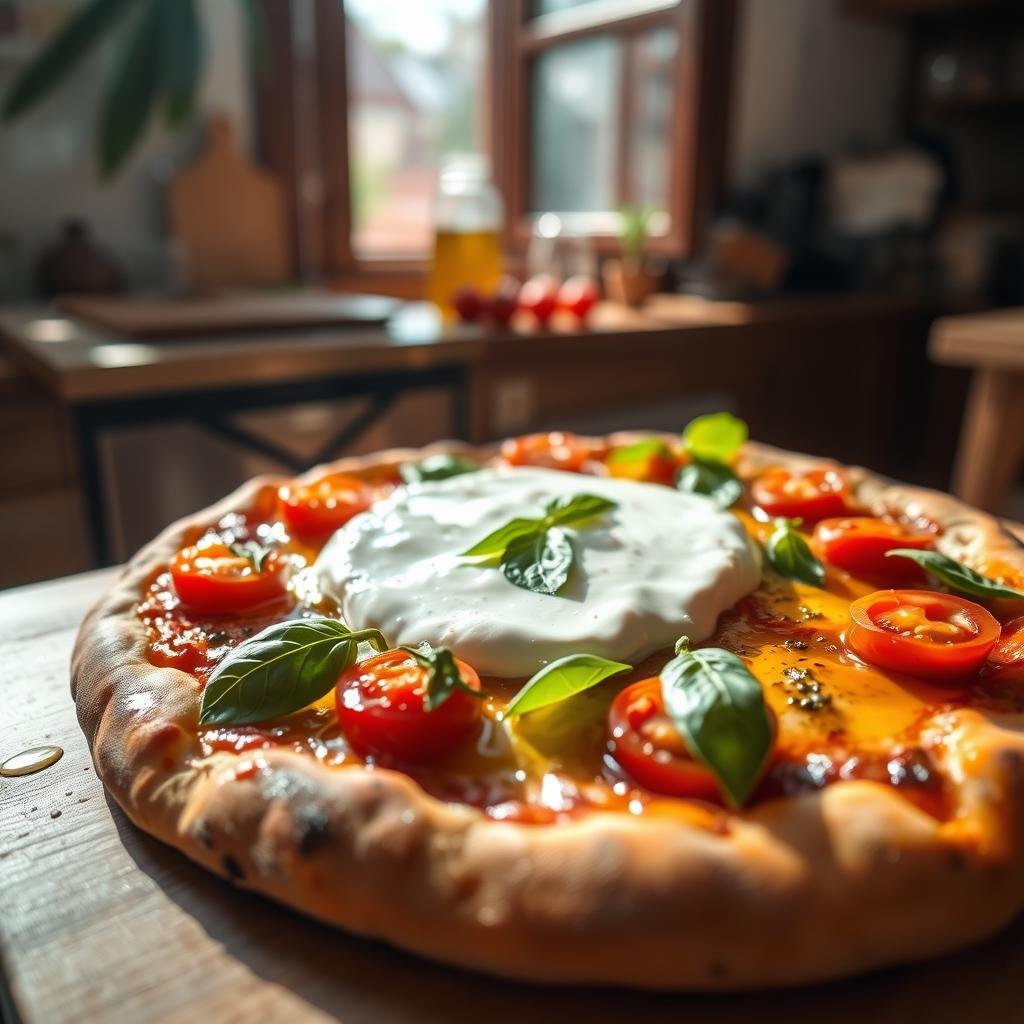
Ingredients You’ll Need for Authentic Flavor
Focus on a few standout items—good dough, bright sauce, and fresh greens—to let texture and aroma lead.
Core items: grab quality pizza dough (homemade or refrigerated from Trader Joe’s or Whole Foods) so the base stretches easily. Use a quick 5-minute pizza sauce or a fresh pesto as your canvas.
Star toppings: use burrata as the focal point and back it with freshly grated Parmesan and a touch of mozzarella for structure. Finish with torn fresh basil and a light sprinkle of salt for lift.
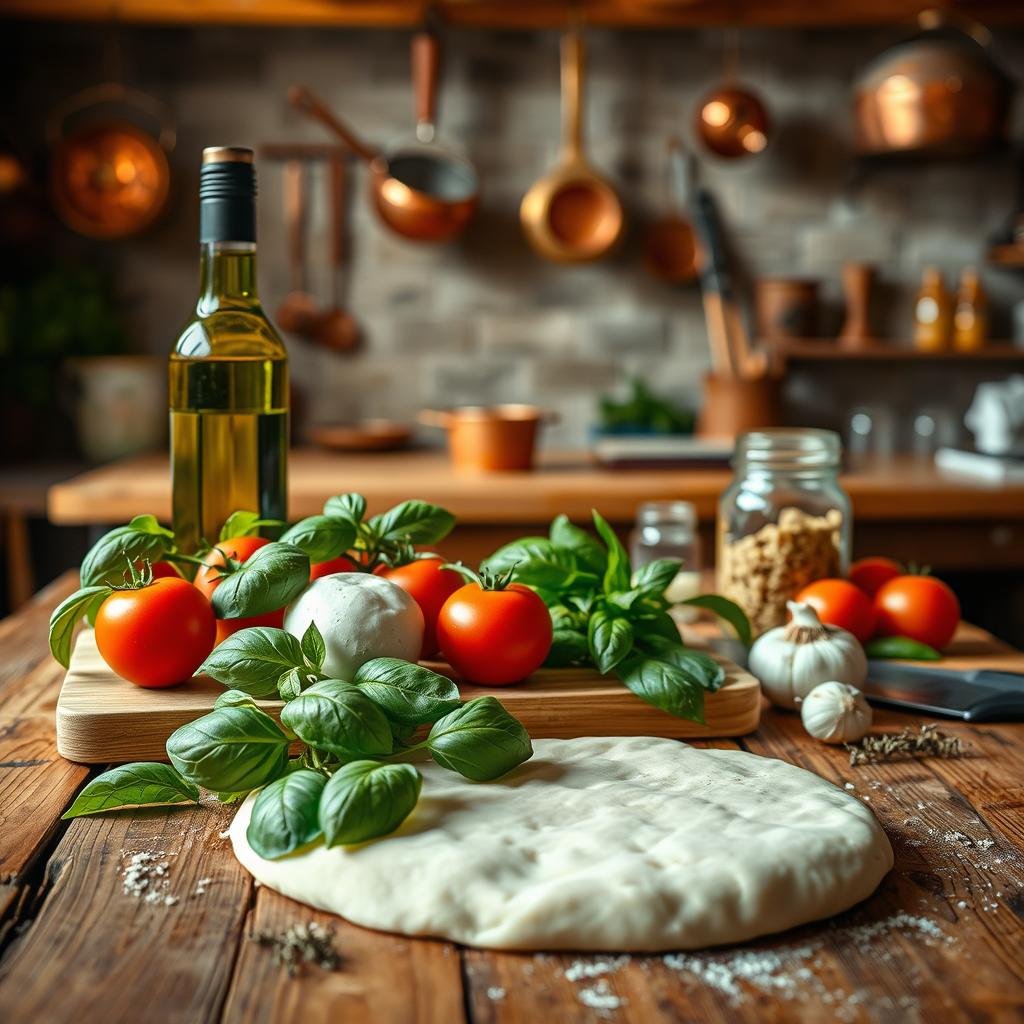
Optional finishes
- Halved cherry tomatoes for juicy pops, prosciutto for savory depth, or arugula for peppery contrast.
- A drizzle of balsamic glaze or a pinch of red pepper flakes add last-minute flair.
Herb oil for drizzling
Combine 1/4 cup extra-virgin olive oil, 1 tsp dried basil, 1 tsp dried oregano, and 1/2 tsp kosher salt. Use the herb oil after baking to boost aroma and sheen.
Special Equipment for a Crisp, Restaurant-Quality Crust
Start with the right setup and you’ll notice crisper edges and a firmer base every time. Small choices in gear let you control heat, launch, and finish with predictable results.
Pizza stone and why preheating matters
Preheat a pizza stone in the lower third of the oven at 500°F for at least 30 minutes. This gives an instant sear to the base so the crust holds structure under sauce and toppings.
Pizza peel and a no-peel baking sheet hack
Use a pizza peel for fast, smooth launches. If you don’t have one, the back of a flat baking sheet works as an effective no-peel hack.
Wire cooling rack to keep the bottom crust crisp
Transfer finished pies to a wire rack right away. Venting steam from the bottom prevents soggy results and preserves that first-bite snap.
Cast iron skillet advantages for reheating
Reheat slices in a hot cast iron skillet to re-crisp the base, then broil briefly to melt the top without over-drying. This iron method restores texture faster than a microwave.
- Lightly dust your peel with semolina to avoid sticking.
- Rotate frequently in a pizza oven at very high heat for even char.
- Use a metal tray for cutting and serving to protect your stone.
| Tool | Why it matters | Quick tip |
|---|---|---|
| Pizza stone | Delivers intense bottom heat for blistered crust | Preheat in lower third at 500°F for 30+ minutes |
| Pizza peel / baking sheet | Smooth launch; prevents sticking | Dust with semolina; use sheet as a no-peel hack |
| Wire cooling rack | Keeps underside crisp by venting steam | Move pie off the stone immediately after baking |
| Cast iron skillet | Fast, even reheating and re-crisping | Crisp on stovetop, finish under broiler |

Dough, Sauce, and Flavor Foundations
Start by matching your dough choice to the time you have—homemade when you can, store-bought when you need speed. Choose refrigerated dough from Trader Joe’s or Whole Foods, or buy dough from a local pizzeria for consistent results.
Let chilled dough rest 30–60 minutes at room temperature so gluten relaxes. Use minimal flour while shaping to preserve surface hydration that helps the crust puff and blister.

Sauce options that shine
For a bright base, make a quick 5-minute crushed-tomato sauce; it keeps tomato flavor fresh and light. Or choose a basil-forward pesto for a herbaceous contrast that won’t weigh the pie down.
Keep sauces sparse so the dough can crisp and the soft center stands out. Add a touch of Parmesan under the final topping for salinity and depth.
“Small choices—rest time, sauce amount, and a light hand with flour—unlock consistent, high-flavor results.”
- Pick dough based on schedule: homemade, store, or local shop.
- Rest chilled dough 30–60 minutes before stretching.
- Use a little flour to shape and keep the surface hydrated.
- Choose crushed tomato or pesto; keep sauce light.
Burrata Pizza Recipe: Creamy Burrata Cheese Pizza
Heat the oven and stone to 500°F so the base sears fast and holds up under toppings.
Prep and shaping: work with room-temp dough on a light bed of semolina and dust your peel with cornmeal for an easy launch.
Par-bake: slide the stretched base onto the stone and par-bake about 6 minutes until pale and bubbly. This step locks structure so the crust stays crisp.
Top and bake: swipe a thin layer of pizza sauce, scatter torn basil and grated Parmesan, then bake another ~6 minutes until the rim is golden.
- Move the pie to a wire rack so steam escapes and the underside stays snap-crisp.
- Finish by tearing burrata over the hot surface and drizzling herb oil to boost aroma.
- Season with a pinch of salt and a light sprinkle of red pepper; keep halved tomatoes sparing to protect texture.
Why finish after baking: adding the soft center only when the pie is hot preserves its custardy core and delivers a true hot-cold contrast you’ll notice in every bite.
Pizza Oven Method and High-Heat Tips
An extremely hot pizza oven turns minutes into magic: fast bake, charred rim, tender center. Crank your oven to roughly 850°F for the classic blister and oven spring. At this heat you don’t need a par-bake.
Launch and rotation: heat a pizza stone until it’s very hot, then slide your dough onto it. Use a metal peel and rotate the pie every 15–20 seconds so the edge nearest the flame doesn’t scorch while the center cooks.
Expect a 3–4 minute bake window. Watch closely and adjust for wind, fuel, and hydration. Keep toppings ultra-light so the base cooks through before the top over-charred.
Cooling and slicing for best texture
When the bake is done, move the pie to a wire rack for about one minute. Letting it rest protects the crisp underside and keeps the crust from steaming soggy.
Finish with torn burrata after the bake for a cool contrast, or add it for the last 30–60 seconds if you want it warmer. Clean excess flour from the stone with a small brush so burnt bits don’t tart the flavor.
- Use a quick, confident launch to avoid tearing the dough.
- Slice on a board with a sharp wheel, not on the stone, to protect your gear.
Pro Tips, Common Mistakes, and Smart Fixes
A handful of pro moves—right stone height, light toppings, and confident launches—keeps the crust crisp and the center soft.
Don’t overdo the toppings
Keep the focus on the burrata by using light, high-impact toppings. Heavy layers weigh the dough down and slow baking.
Stone placement and rack position
Place your pizza stone in the lower third of the oven to brown the bottom without overcooking the top. This simple shift improves texture in minutes.
Sticky dough and transfer solutions
Dust the bench lightly and use a cornmeal-dusted pizza peel or parchment for shaping. If the dough won’t slide, bake it a few minutes on a sheet pan to set the bottom, then move it to the stone.
Nutrition and sodium awareness
Be mindful: cheese and herb oil add salt and fat. Season lightly with salt and pepper, and pair slices with a green salad to balance richness.
Store and reheat
Refrigerate leftovers up to three days. Remove the burrata before reheating. Re-crisp the base in a hot cast iron skillet, then finish briefly under the broiler.
| Issue | Quick Fix | Result |
|---|---|---|
| Sticky dough | Light flour, parchment, or short pan-bake | Smoother transfer, no tears |
| Soggy bottom | Stone in lower third; preheat longer | Crisp crust, even bake |
| Over-salted finish | Skip extra salt; taste after oil | Balanced flavor, less sodium |
| Flat reheated slices | Cast iron then broil; add burrata after | Restored texture, intact filling |
Variations, Toppings, and Pairings You’ll Crave
Keep toppings sparse and bold—few ingredients, strong contrasts, and a crisp crust win every time. These variations let you play with texture and fresh flavor without weighing down the dough.
Caprese-style with halved tomatoes and basil
Go Caprese: scatter halved cherry tomatoes and torn fresh basil after baking.
The bright acidity and herbs lift the milky center and add a lively pop against a hot crust.
Pesto-forward option with a light drizzle finish
Swap tomato sauce for pesto to double down on basil flavor.
Finish with a small drizzle of olive oil and a pinch of red pepper for contrast.
Prosciutto and arugula—added after baking
Add thin prosciutto slices and a handful of arugula once the pie comes off the oven.
The residual heat warms the ham and keeps greens crisp and peppery.
Caramelized shallots with a balsamic glaze
For a date-night twist, top with sweet, slow-cooked shallots and a drizzle balsamic.
This sweet-savory pairing feels elevated while staying light enough to preserve the top texture.
“Keep toppings light and finish with an artful drizzle to respect the base and highlight each flavor.”
- Use mozzarella sparingly to support the center without weighing it down.
- Consider a whisper of pizza sauce under pesto for layered depth.
- Serve a small cup of herb oil on the side for dipping crusts.
Conclusion
strong, confident finish is your final step: keep choices simple and timing tight to serve a standout burrata pizza that sings.
You’ll pick pizza dough that fits your schedule, rest and stretch the dough, then par-bake on a hot stone at 500°F for structure. Use a light sauce and add basil and the soft filling after bake for that perfect hot-cold contrast.
For very high heat, an Ooni-style oven cooks in about 3–4 minutes with frequent rotation. Reheat slices in cast iron, broil briefly, and add the filling back after warming.
Keep a light drizzle of olive oil and a small sprinkle of salt and enjoy a balanced, repeatable dish you’ll return to again and again.
FAQ
How do you prevent a soggy crust when adding a soft cheese after baking?
Let the pie cool on a wire rack for one to two minutes, then tear or place the soft cheese in the center so it melts less into the crust. Use a thin layer of sauce and par-bake the base at 500°F to build structure before adding the creamy topping.
Can you use store-bought dough and which brands work well?
Yes — store dough like Trader Joe’s or Whole Foods 365 gives reliable results. Let it rest at room temperature for 30 minutes, dust with semolina for easy launch, and stretch gently to preserve bubbles.
Should the soft cheese go on before or after baking?
Add it after baking to protect the creamy center. Finish with dollops or halves right before serving so you get contrast between the hot crust and cool, silky interior.
What oven setup gives the crispiest bottom crust?
Preheat a pizza stone on the lower third of the oven at the highest safe temperature (500°F or use a pizza oven). Slide the pie on with a floured peel or parchment and cool on a wire rack to retain crispness.
How do you make a fast sauce that pairs with delicate cheese?
Simmer crushed tomatoes with a pinch of kosher salt, a splash of olive oil, and a clove of garlic for 10–15 minutes. Keep it light and slightly chunky so it complements the soft cheese without overwhelming it.
What are smart finishing touches and optional toppings?
Try fresh basil, a drizzle of herb oil (olive oil with dried basil and oregano), prosciutto, arugula, or a few halved cherry tomatoes. Add spicy red pepper flakes or a balsamic glaze sparingly for contrast.
How do you transfer a soft, sticky dough onto the peel without tearing?
Use semolina or fine cornmeal on the peel, keep the dough well-floured, and gently stretch on a lightly floured surface. If it sticks, lift the edges and dust under with extra flour or use parchment for an easy slide.
Can I finish and reheat leftovers while keeping quality?
Store slices in the fridge up to three days. Reheat in a cast iron skillet over medium, then broil for 1–2 minutes to revive crispness. Add fresh greens or a quick drizzle of herb oil after reheating.
Is it okay to use pesto instead of tomato sauce?
Absolutely — pesto creates a fragrant, nutty base that pairs beautifully with soft cheese. Use a thin spread to avoid excess oil and top with fresh basil or arugula after baking.
How should you season and make the herb oil for finishing?
Whisk good olive oil with a pinch of kosher salt, dried basil, and dried oregano. Let it sit for 10 minutes to meld flavors, then drizzle lightly over the pie after you add the soft cheese.
What temperature and timing work for a home oven versus a pizza oven?
In a home oven, preheat to 500°F and bake 7–10 minutes on a preheated stone. In a high-heat pizza oven (like Ooni), aim for 700–900°F and rotate frequently; cook times can fall to 60–90 seconds depending on the oven.
How can you keep sodium and calories in check without sacrificing flavor?
Use kosher salt sparingly, choose a milder hard cheese like Parmesan for grating, cut back on cured meats, and drizzle a modest amount of olive oil. Load up on fresh herbs and tomatoes to boost flavor with less fat.