
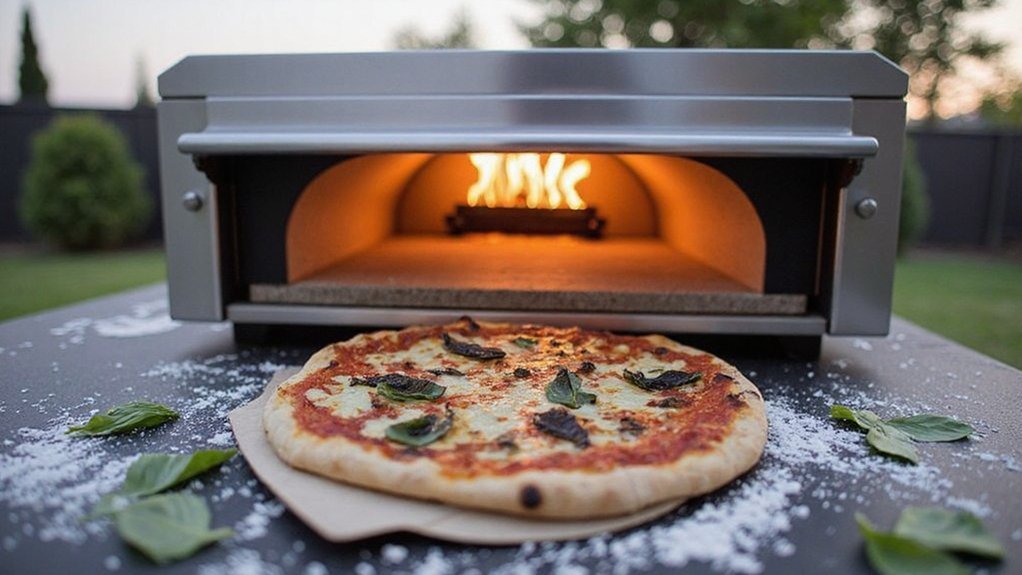

You want pizza that’s consistently better than takeout, and a dedicated oven changes more than just temperature. I’ll compare wood, gas, electric and hybrids on flavor, heat recovery, build quality and upkeep, and show which models suit countertops, backyards, or high‑heat Neapolitan work — so you can pick the right oven for your kitchen and budget…
Why a Dedicated Pizza Oven Is Worth It

If you want restaurant-quality crust and faster cook times, a dedicated pizza oven delivers more consistent high heat than a standard home oven or a backyard grill. You get quicker recovery between pies, fewer hot spots and a crispier edge without overcooking toppings. You’ll notice reduced overall cook times — often under two minutes at peak heat — so you can serve multiple pizzas in one sitting. A focused design lets you control temperature precisely and use higher thermal mass for steady results; that consistency beats improvising with stones or steel in a conventional oven. Maintenance is straightforward: routine ash removal and periodic sealing keep performance stable. For serious home cooks, the performance gains and repeatability justify the investment. You’ll appreciate consistent, predictable pizza.
Types of Pizza Ovens Explained

You’ll compare three main types: wood-fired for high heat and smoky flavor, gas/propane for quick heat-up and temperature control, and electric/countertop for compact convenience and indoor use. Each option trades off flavor, peak temperature, run cost, and setup complexity, so you’ll weigh what matters most for your cooking style. Next, you’ll get practical tips to match a model to your priorities—taste, speed, space, and budget.
Wood-Fired Ovens
Wood-fired ovens deliver smoky flavor and intense radiant heat that set them apart from gas and electric models. You’ll get blistered crusts in 60–120 seconds at 700–900°F; brick or refractory floors store heat, while domed interiors reflect it evenly. Choose between portable stainless steel, backyard dome (brick or refractory), and hybrid units with wood-plus-alternative fuel options. Consider build time, fuel sourcing, and ventilation: wood demands tending, ash removal, and a chimney or flue for smoke control. Weigh thermal mass versus responsiveness—heavy masonry holds steady but heats slowly; lightweight ovens heat fast but cool quicker. For maintenance, expect occasional mortar repair and chimney cleaning. If you want authentic char, fiddly operation is the trade-off for superior flavor and texture. Plan placement for wind and safety.
Gas and Propane Ovens
After enjoying the high-heat drama of a wood-fired oven, many home cooks prefer gas or propane for predictable, user-friendly performance. You’ll get rapid heat-up, adjustable flame control, and steady dome temperatures that simplify timing and repeatability. Gas models plumb to natural lines for long-term cost efficiency; propane units give portability and simpler installation. Choose based on fuel availability, footprint, and ventilation requirements. Compare recovery times, burner placement, and stone or steel cooking surfaces—these affect crispness and char. Look for good thermostat control, piezo igniters, and easy-clean drip trays. Expect lower smoke complexity than wood, but fewer smoky aromatics. If you value consistency, quick starts, and simpler maintenance, gas or propane is a pragmatic, reliable choice. You’ll save time and dial in results every bake.
Electric and Countertop Ovens
Although they don’t deliver the same smoky char as wood or the raw heat of gas, electric and countertop pizza ovens give you consistent, plug-and-play performance that’s ideal for indoor use and small spaces. You’ll get steady temperatures, fast preheat, and simple controls; they’re compact, safer, and often cheaper than outdoor units. Choose based on max temp, pizza size, and stone vs. metal deck. Expect 400–800°F range, limited charring, but reliable results for Neapolitan-like and thin-crust styles. Maintenance is minimal: wipe interiors and replace stones as needed. If you need portability and countertop convenience without propane logistics, these ovens fit most kitchens and routines.
| Feature | Typical Specs |
|---|---|
| Max Temp | 400–800°F |
| Size | 12–16″ pizza |
| Power | 120–240V, 1000–3000W |
| Pros | Indoor, fast, compact |
You’ll make better choices.
Choosing an Oven Based on Your Cooking Style
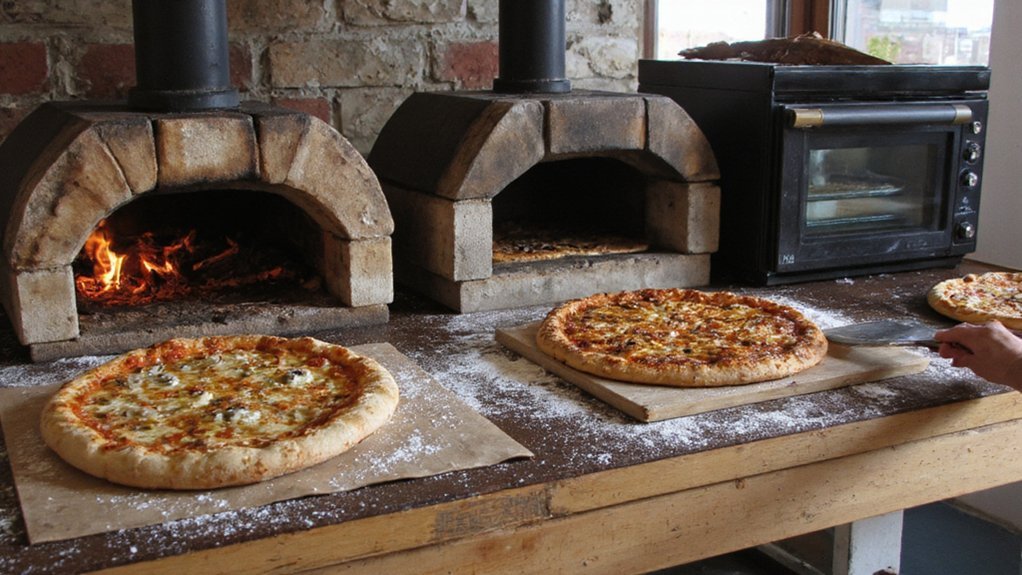
How do you match an oven to the way you actually cook? Start by listing your priorities: speed, crust char, temperature range, capacity, and cleanup. If you want Neapolitan-style pizzas with blistered crusts, choose a high-heat oven (800–900°F) or a model that reaches 700°F quickly; those give short bake times and intense bottom heat. If you cook family-sized pies or multiple racks, favor larger interiors and even heat distribution over peak temperature. For frequent baking and low maintenance, pick an electric oven with good insulation and easy-to-clean surfaces. If you value authentic smoky flavor, a wood- or gas-fired option delivers that but needs ventilation and practice. Compare runtimes, heat recovery, footprint, and fuel availability to match performance to your routine. Adjust as needs change.
Top Countertop Pizza Ovens of 2025
Now that you know which performance traits matter for your cooking style, countertop pizza ovens give you a compact way to get those results without remodeling or a big outdoor setup. You should compare heat-up time, max temperature, footprint, and stone or steel cooking surface. For quick weeknight pies choose ovens that hit 700–900°F and recover between pies; for thin-crisp crusts prefer models with convection plus a ceramic stone. Look at temperature accuracy, dial versus digital controls, and available accessories—peels, screens, covers. Consider capacity: single 12–13-inch pies fit most counters; if you want multiple small pies, check width. Energy use, warranty length, and ease of cleaning separate average from excellent. Test reviews and priority-ranked specs before you buy. Balance price against performance and durability.
Best Outdoor Wood-Fired Pizza Ovens
Fire up a wood-fired oven and you’ll immediately see how heat retention, dome material, and cooking footprint drive performance: stainless or carbon steel heats fast but cools sooner, while refractory or brick holds steady for long bakes and high thermal mass. You want a model that matches your cooking rhythm: portable steel for quick runs, insulated refractory for multiple pizzas at once, or brick for backyard permanence. Compare capacity, startup time, and maintenance. Check chimney draft and door fit. Choose fuel sourcing and accessories—peels, thermometers, covers—that suit use frequency. Use the table to compare typical options carefully.
| Type | Heat Response | Best Use |
|---|---|---|
| Stainless/Carbon Steel | Fast heat, low mass | Quick sessions |
| Refractory/Insulated | Moderate startup, high retention | Multiple pizzas |
| Brick/Masonry | Slowest startup, highest mass | Permanent setups |
Best Gas and Hybrid Pizza Ovens
You’ll compare gas and hybrid ovens on performance: gas gives steady, controllable heat for repeatable bakes, while hybrids let you add wood-fired flavor but can require more management. Check temperature range and control closely — gas models usually offer precise thermostatic control and quick recovery, whereas hybrids can reach higher peak temps with wider variability between models. For build quality and upkeep, prioritize robust materials (stainless steel or insulated masonry), easy-access burners and ash trays, and replaceable parts to keep maintenance simple.
Gas Vs Hybrid Performance
Although gas and hybrid ovens both hit high temps quickly, they perform differently in ways that matter for home use: gas ovens heat up faster and hold steady temps with simpler controls, while hybrids (gas plus wood) give you fuel flexibility and more pronounced wood-fired flavor at the cost of more active management. You’ll prefer gas if you want predictable, low-effort runs and consistent results across multiple pies; maintenance is usually limited to burners and gas line checks. Hybrids reward hands-on users: you can fine-tune char and smoke by adjusting wood placement and airflow, but you’ll spend time tending embers and cleaning ash. Consider kitchen layout, storage for wood, and how much time you’ll devote to feeding the fire when choosing between them carefully.
Temperature Range and Control
Having compared how gas and hybrid models perform in practice, it helps to look at what each gives you in temperature range and how easy it is to control that heat. Gas ovens typically reach 600–900°F quickly and hold steady with a simple dial or propane flow adjustment, so you can reliably blister crusts and char toppings. Hybrid units combine wood or charcoal with gas, extending peak ranges to 900–1000°F but requiring more attention to balance fuel and airflow. You’ll trade some simplicity for flexibility: hybrids let you fine-tune flavor via fuel mix, while gas prioritizes repeatable set-and-forget temperature control. When choosing, weigh how precise you need temp control versus the opportunity to dial in different heat profiles. Also consider response time and accuracy.
Build Quality and Upkeep
Often the difference between a reliable oven and a headache comes down to construction materials and access for maintenance. You should prioritize stainless steel or powder-coated steel exteriors, ceramic or cordierite cooking surfaces, and thick insulated domes that retain heat and resist warping. Check welds, hinge quality, and burner mounts; loose fittings mean future leaks and misalignment. Compare gas lines and regulator accessibility—choose models with external-facing valves and quick-release connectors for safe service. For hybrids, inspect the junction points between gas and wood chambers for crevice buildup. Look for removable baffles, ash trays, and easily swapped igniters. Consider manufacturer warranty terms, parts availability, and whether service manuals are published; those factors cut downtime and overall cost. You’ll save time and money long term too.
Accessories and Tools Every Home Pizza Maker Needs
Why spend on accessories when the oven and dough are the core? You still want tools that speed prep, improve consistency, and reduce frustration. Prioritize items that give measurable improvement so you avoid clutter.
- Peel: a wooden peel for shaping and a thin metal peel for launching to balance grip and slide.
- Infrared thermometer: instant surface readings beat guesswork; compare response time and accuracy.
- Steel or stone: steel heats faster and crisps better, stone holds heat longer for even bakes.
- Cutter and server: a sharp rocker or wheel plus a thin server prevents topping loss and speeds service.
Choose by performance, not novelty, and favor durable, replaceable parts. You’ll notice faster bakes and fewer ruined pies with the right kit.
Maintenance and Safety Tips for Home Pizza Ovens
Cleaning and inspecting your oven regularly keeps performance consistent and prevents hazards: wipe down the cooking surface and interior after each cool-down, remove ash and food debris from wood- or coal-fired units, and check seals, gaskets, and door hinges for wear so heat holds evenly. Inspect chimney and vents monthly, tighten loose fasteners, and replace cracked stones or tiles promptly. For gas and electric units, disconnect power before service; for wood ovens, store fuel dry and clear combustibles 3 feet away. Use a thermometer to compare set vs actual temps and recalibrate controls as needed. Wear heat-resistant gloves and safety glasses during maintenance. Compare manufacturer intervals for deep cleaning and parts replacement to extend lifespan safely. Follow safe storage practices. Keep records.
| Task | Freq | Note |
|---|---|---|
| Clean | Daily | Prevent |
Troubleshooting Common Pizza Oven Problems
You’ll notice uneven cooking from hot spots or poor heat retention — rotate pizzas, adjust stone placement, and check seals and insulation to balance the temperature. For ignition and flame problems, compare pilot light, electrode, and gas-supply issues: clean or replace clogged burners, tighten fittings, and test the regulator and igniter. Keep a short checklist that matches symptoms (cold center, edge burning, weak or erratic flame) to specific fixes so you can diagnose and resolve problems quickly.
Uneven Cooking Fixes
If your pizzas are coming out with charred edges and underdone centers, it’s usually down to uneven heat distribution—so you need to diagnose and correct where the hot and cool zones are. First, map heat with an infrared thermometer or by rotating a test pie; you’ll see which quadrant runs hotter. Compare results between stone, steel, and bare floor setups; stones smooth heat, steels conduct faster. Move your peel and rotate more often, or adjust rack height to blend top and bottom heat. Consider adding a heat deflector or preheating longer. Act promptly daily.
- Rotate pies every 30–60 seconds to equalize browning.
- Use an IR gun to chart hot spots.
- Swap stone for steel if bottoms burn.
- Shift rack height to balance crust and topping.
Ignition & Flame Problems
After you’ve sorted heat zones, next check the flame system—many cooking problems that look like hot-spot trouble actually start at the burner. Inspect ignition: if the spark clicks but won’t light, clean debris and test the electrode gap; compare to a working unit’s spark intensity. For gas flow issues, verify regulator settings, hose condition and valve seating; a weak blue flame signals low pressure, a yellow sooty flame indicates incomplete combustion or clogged ports. If you have an electronic igniter, swap batteries or reset the module; if it still fails, bench-test the igniter to isolate wiring vs component failure. Replace worn burners or jets with OEM parts; mismatched replacements change flame pattern and cooking consistency. Keep a maintenance log. Document dates and corrective actions.
Budget Vs Premium: Picking the Right Oven for You
How much you want to spend directly shapes the oven’s materials, heat performance, and long-term value. If you’re on a tight budget, you’ll trade raw power and insulation for lighter materials and simpler controls; you’ll pay less up front but replace sooner. Premium models give faster heat-up, higher stable temps, and thicker stone or steel that hold heat—worth it if you cook often.
- Budget: affordable start, occasional compromise, frustration avoided by realistic expectations.
- Midrange: balance cost and capability, pleasing results, fewer limits.
- Premium: professional heat, reliable durability, emotional pride in performance.
- Rent vs own: consider frequency, space, and how much pizza joy matters.
Choose with realistic expectations and you’ll get consistent results that match how often you bake at home.
Conclusion
You’ll get better results with a dedicated pizza oven because it reaches higher, steadier heat, recovers faster, and matches your cooking style—wood for smoky char, gas for control, electric for convenience. Compare peak temps, build materials, fuel trade‑offs, and maintenance costs against your budget and space. Choose a compact countertop for weekday pizzas, a high‑heat Neapolitan unit for authentic crusts, or a backyard hybrid for versatility; invest in quality accessories and routine care and attention.
