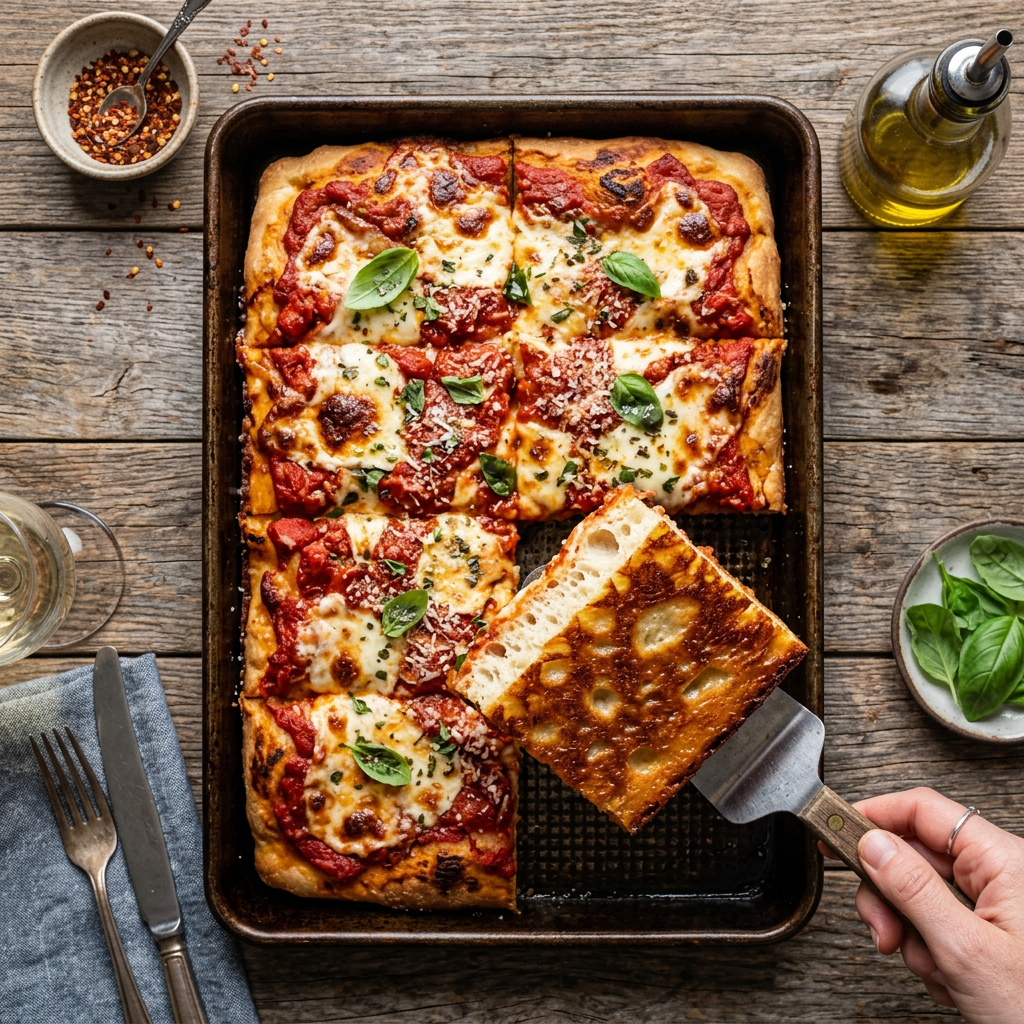

If you’ve ever made Sicilian pizza at home and ended up with a soggy bottom or crust that stuck to the pan, the pan itself was probably the problem. The right pan changes everything — it gives you that signature thick, airy crust with a crispy, golden underside that makes Sicilian pizza so satisfying.
We tested the most popular options so you don’t have to. Here’s exactly what to look for and which pans actually deliver.
What Makes a Great Sicilian Pizza Pan?
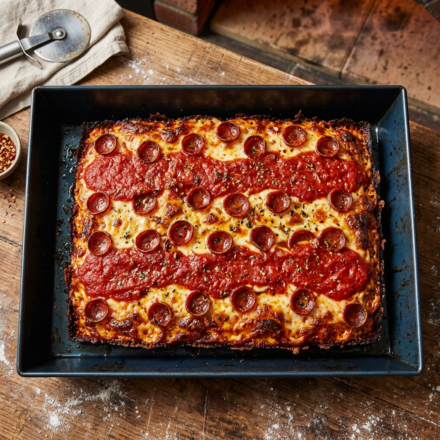
Sicilian pizza is baked in a well-oiled rectangular pan, and the pan needs to do two things really well: conduct heat evenly across the entire base, and hold enough oil to fry the bottom of the dough as it bakes. This is what creates that distinctive crispy-bottom, fluffy-interior texture.
- Material: Blue steel and seasoned carbon steel are the gold standard. They heat up fast, distribute evenly, and get better with use.
- Depth: You need at least 2 inches of depth so the dough has room to rise properly without spilling over.
- Size: A standard 12×18-inch pan (half sheet size) is ideal for a classic Sicilian pie that serves 6–8.
- Non-stick surface: Whether it’s a natural seasoning or a coating, the dough should release cleanly after baking.
The 5 Best Pans for Sicilian Pizza
1. Lloyd Pans 12×18 Detroit/Sicilian Pizza Pan — Best Overall
Lloyd Pans are what the pros use. Made from hard-anodized aluminum with their proprietary PSTK (permanent stick-resistant) coating, these pans heat evenly, release cleanly, and are virtually indestructible. The 12×18-inch size is perfect for a classic Sicilian pie and the 2.25-inch sides give the dough plenty of room to rise.
Best for: Home bakers who want professional results and plan to make Sicilian pizza regularly. This pan will outlast everything else in your kitchen.
✅ Even heat distribution | ✅ Permanent non-stick | ✅ Made in the USA | ✅ Dishwasher safe
2. Nordic Ware Natural Aluminum Half Sheet Pan — Best Budget Pick
Don’t overlook the humble half sheet pan for Sicilian pizza. At around $15, a good aluminum half sheet pan with 1-inch sides can produce a solid Sicilian if you oil it generously. It won’t give you the depth of a dedicated pizza pan, but for beginners or occasional bakers, it’s a great starting point.
Best for: Beginners, occasional bakers, or anyone who wants to try Sicilian pizza before investing in a specialized pan.
✅ Affordable | ✅ Widely available | ✅ Great for other baking too | ⚠️ Shallower depth
3. Chicago Metallic Commercial II Non-Stick Rectangular Cake Pan — Best Value
This 9×13 pan won’t give you a full-sized Sicilian, but it’s ideal for smaller households and delivers excellent results. The non-stick coating handles the olive oil treatment well, and the heavy-gauge construction prevents warping at high oven temps. At around $20, it’s a sweet spot between price and performance.
Best for: Smaller households (serves 3–4) who want a dedicated pizza pan without spending $50+.
4. Blue Steel Detroit-Style Pizza Pan — Best for Crispy Bottoms
Blue steel pans are seasoned like cast iron and get better with every bake. They conduct heat extremely efficiently, which means the underside of your crust gets genuinely fried in the oil — not just baked. The result is an incredibly crispy, almost fried bottom crust that’s impossible to achieve with non-stick coatings.
Best for: Anyone who wants the most authentic, crispiest Sicilian crust possible and doesn’t mind seasoning their pan.
✅ Superior crust crispiness | ✅ Gets better with use | ⚠️ Requires seasoning and hand washing
5. Cast Iron Skillet (10 or 12-inch) — Best for Small-Batch
A well-seasoned cast iron skillet makes a fantastic round Sicilian-style pizza. It holds heat exceptionally well, creates a deeply crispy bottom, and goes from oven to table beautifully. It’s not a traditional Sicilian shape, but the results speak for themselves. This is also a great option if you already own cast iron.
Best for: Cast iron fans, small households, or anyone who wants a round Sicilian-style pizza.
How to Get the Best Results From Any Pan
The pan matters, but so does how you use it. Follow these steps regardless of which pan you choose:
- Oil generously. Pour at least 3–4 tablespoons of olive oil into the pan before adding the dough. This is not optional — it’s what creates the crispy bottom.
- Let the dough proof in the pan. After pressing the dough into the pan, cover and let it rise for at least 2 hours at room temperature (or overnight in the fridge). This gives Sicilian its characteristic open, airy crumb.
- Dimple the dough. Use your fingertips to press deep dimples all over the surface before adding toppings. This prevents large bubbles and helps sauce and toppings sink in.
- Preheat your oven to 500°F (260°C). Sicilian pizza needs high heat. If your oven goes higher, use it.
- Bake on the lowest rack. This puts the pan closest to the heat source, maximizing bottom crust crispiness.
Sicilian Pan vs. Regular Baking Sheet: Is There a Real Difference?
Yes — and it’s significant. A dedicated Sicilian pan has deeper sides (2+ inches vs. 1 inch on a regular sheet) which gives the dough room to rise into a proper thick crust. The deeper sides also help contain the generous amount of olive oil needed for authentic results. That said, a regular half sheet pan absolutely works if you’re just starting out — just know the depth and crispiness won’t be quite the same.
Final Verdict
If you’re serious about Sicilian pizza, the Lloyd Pans 12×18 is the investment worth making. It’s the pan professional pizzerias use and it’ll genuinely change your homemade pizza game. If you’re on a budget or just getting started, grab a Nordic Ware half sheet pan, load it with olive oil, and you’ll still make a great pie.
The most important thing? Get the pan, get the olive oil, let the dough proof long enough, and enjoy one of the most satisfying styles of pizza you can make at home.