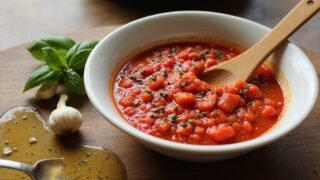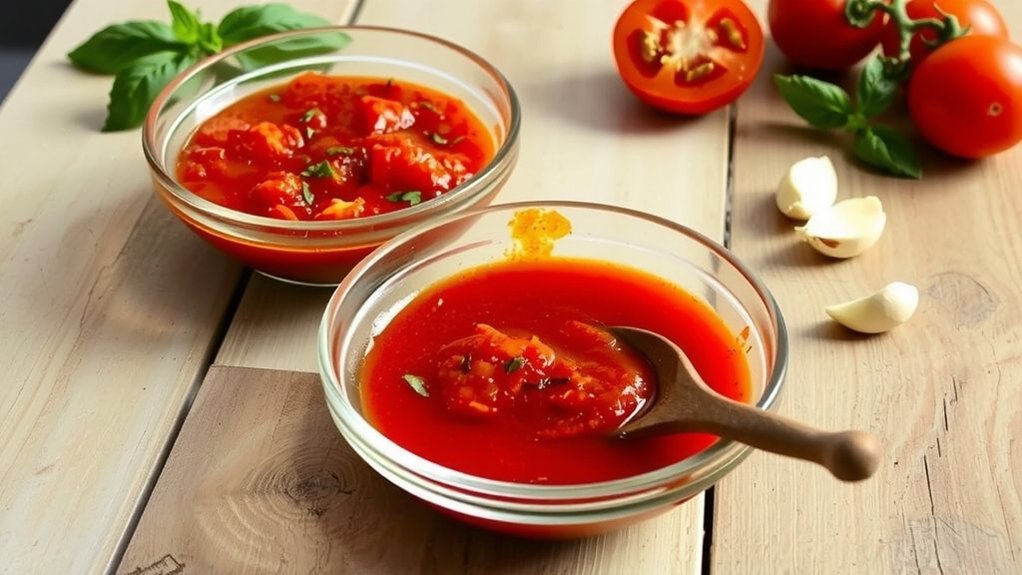

Cooked sauce deepens flavor, no-cook stays bright, and you decide. First, you’ll feel how heat changes sweetness and texture when you simmer versus blend, so you know what you’re aiming for in your kitchen this week. Then I’ll share quick no-cook ideas you can try tonight—yes, even you. Next we switch to cooked sauces for depth, with simple tips on balancing tang, building a velvety finish, and still letting toppings shine on pizza.
Why Cooked Pizza Sauce Deepens Flavor
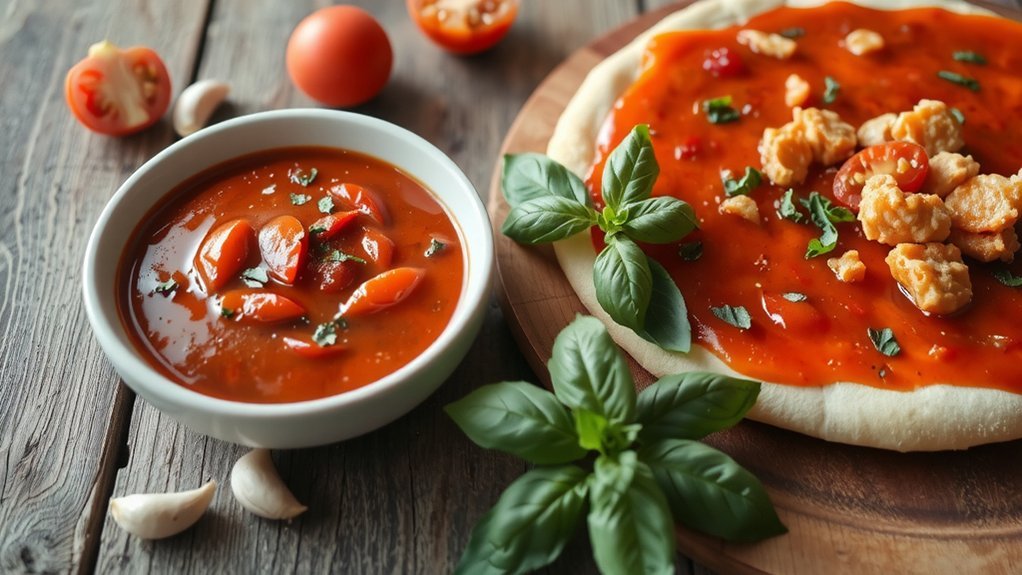
Because simmering reveals deeper flavor, you’ll taste more nuance in every bite. Cooking releases sweetness and rounds acidity. When you simmer sauce, Maillard browning and caramelization depth begin in small ways, building layers that hit your tongue with warmth rather than a flat tomato hit. This is why patience matters. Let it reduce, stir often, and trust the process to soften sharpness without losing brightness. You’ll notice richer color, deeper aroma, and a sauce that clings to crusts instead of swimming on top. If your simmer is gentle, you avoid bitterness and keep brightness from dulling; tasting along the way helps you stop at the right moment. Trust the clock, not the timer. Taste as you go, adjusting salt and herbs to suit your palate.
Why No-Cook Pizza Sauce Keeps Brightness
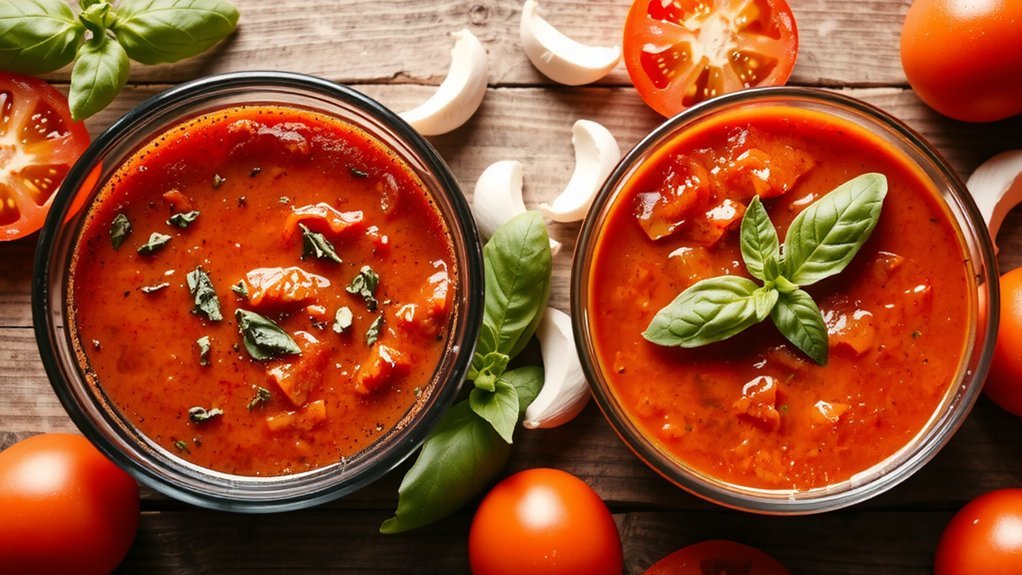
If you want bright pizza sauce, skip simmering and trust fresh ingredients. No-cook sauce keeps brightness because you avoid heat that dulls color, and you lean on ripe tomatoes, garlic, and basil to guide flavor with simple, direct notes. This is about brightness retention more than complexity. You notice how fresh ingredients give a punchy tang, and you control salt with care so acid balance stays friendly, not harsh, on your tongue. Signpost coming: keep the sauce bright by avoiding long simmering, letting tomatoes glow with minimal processing, and mixing in herbs just before serving for maximum color. If you doubt yourself, remember I do the same, and we both taste and adjust, chasing brightness retention with patience and a little playful optimism. Trust.
Tomato Base for Homemade Sauces: Fresh Vs Canned
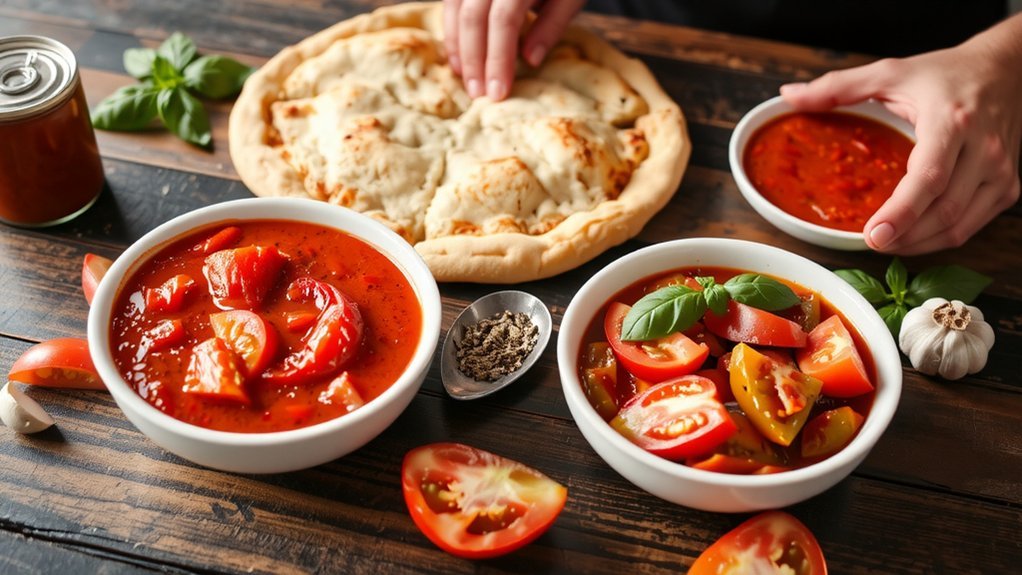
Why choose fresh over canned tomato bases for your sauces, and can you taste the difference right away?
Start with Fresh tomatoes for brightness.
You can compare their texture as you simmer, because Fresh tomatoes break down faster while Canned tomatoes stay thicker, yet both can make tasty sauces.
Seasoning later will bridge the gap.
If you want simple and bright, choose Fresh tomatoes; if you want consistency and shelf life, Canned tomatoes work, especially in busy weeks or season.
You can adjust as you go, so you keep flavor steady without waiting for the stars to align.
If you’re unsure, start with a small batch to taste the difference and learn what your pizza loves most before going full scale production in your kitchen today.
You’ll feel more confident choosing fresh or canned.
Seasoning Foundations: Herbs, Garlic, and Salt
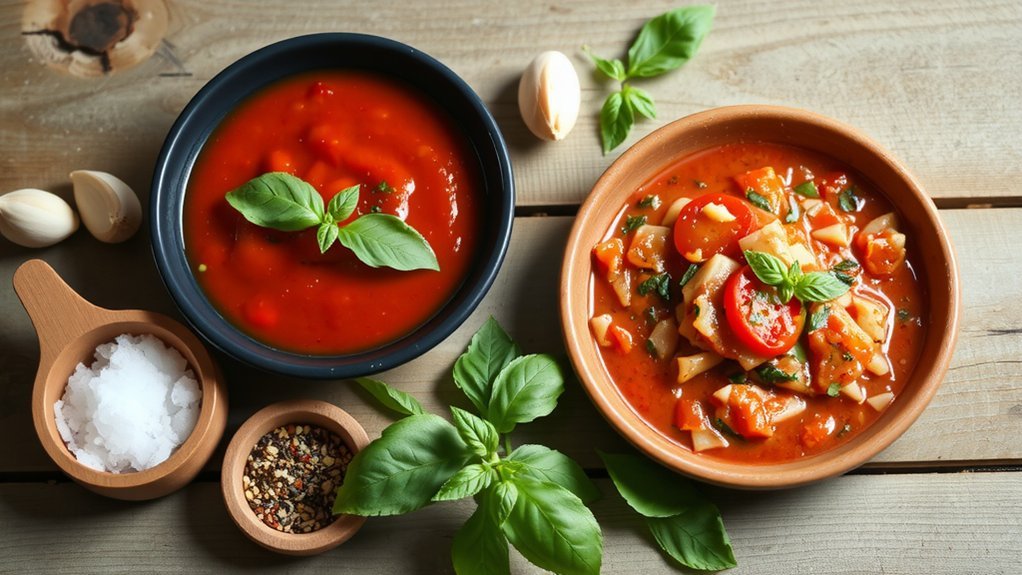
First, you’ll start by thinking about herbs as your flavor base, and I’ll admit I burn toast more than sauce.
Then you’ll see how garlic brightens the sauce and salt ties flavors together, so you taste balance rather than blandness, and you adjust by tasting and sprinkling in small increments.
Next, we’ll compare herbs like basil or oregano and explain how to layer them for a friendly, not overpowering, finish.
Finally, I’ll show you simple combos and invite your own tweaks.
Herbs for Flavor Base
Starting with fresh herbs builds your flavor base, and watching them bloom in the pan feels surprisingly rewarding.
You want basil balance in your sauce, so tear leaves gently, not chop them to bits, and let the scent rise as you simmer, guiding the overall taste.
Spin in dried oregano for structure.
Oregano compatibility matters, so start small and taste often, because its peppery notes shift with tomatoes and heat, making your base feel cohesive rather than flat and one-note.
Keep herbs refreshed and bright.
If you cook, add a pinch of fresh basil at the end for aroma, then pause to let flavors settle, before you pour the sauce into your pan.
Balance and patience pay off.
Garlic and Salt Roles
Moving from fresh herbs to garlic and salt, you’ll see how two everyday ingredients steer the sauce. First, garlic chemistry matters. When you crush or mince garlic, its aroma releases in waves, and you control warmth by how long you cook it. Second, salt interaction helps flavors wake up. A pinch too little tastes flat; add a little more and you heighten sweetness and umami together. In cooked sauces, give garlic a brief toast, then add tomatoes. In no-cook versions, let minced garlic mingle with oil to infuse flavor without bitterness. Both paths reward careful taste tests and small adjustments. If something feels off, pause, then adjust with a measured hand. You’ll learn balance by listening to the pan, the spoon, and your palate.
Texture and Consistency: From Smooth to Chunky

First, we’ll explore texture and how you choose smooth versus chunky. Next, consider the smooth to chunky range you want, how thickness and body change with simmering, and whether you want visible bits or a fully pureed sauce. Finally, I’ll admit I’ve burned a few sauces testing texture, but you’ll spot the best one by comparing textures side by side.
Smooth to Chunky Range
Think of the sauce texture like a kitchen mood. You can guide it from smooth to chunky by blending less or more, testing as you go, and noting your texture preferences across the Texture spectrum. Stick with simple tools and keep notes. If you want Chunky preferences, pulse minutes in the blender or mash with a fork until you reach size, then pause to reassess. A smoother version stays poured and glossy. Next, you’ll balance acidity and sweetness to keep it lively, but for now, honor your eye and chop, and adjust with salt so flavors stay calm. That balance defines your sauce’s texture range. Remember, I’m learning, too, so give yourself permission to improvise and smile at little misfires; the goal is a sauce you actually reach for everyday in your kitchen tonight.
Thickness and Body
Usually, you can steer the thickness by how much you blend and how long you simmer the sauce. This is about thickness and body, not flavor alone, so pay attention to texture as you cook. The goal is a smooth interior or a gentle bite, and you can reach it with careful blending and simmering. If you want more body stability, reduce blending and let tiny bits stay, then taste and judge. For a punchier viscosity balance, switch to a light simmer and feed the sauce with tomato chunks. Remember, you can adjust with a splash of water or a pinch of salt, but do it gradually. Keep testing texture as it cools, then label the result as your own signature body stability today.
Visible Bits Vs Puree
Texture is king when you cook sauce. You decide how chunky or smooth you want it. Now we discuss the appearance debate, because you’ll see big bits or a silky finish. Your texture preference guides how you chop, blend, or simmer. If you mix until mostly smooth, it can look restaurant-perfect and disappear in meals. If you leave more visible pieces, you get character and a homey vibe. Signpost: next we compare no-cook versus cooked textures in practice. You may adjust by pulsing briefly, then tasting, then deciding how to finish. For a crisp bite, leave some grit and stir just before serving. If you crave smoothness for uniform sauce, blend seconds longer and trust your palate. This is your kitchen, your texture preference wins.
Time Investment: Quick No-Cook Vs Long Simmer
Getting a good tomato base doesn’t have to be complicated. In this section, you compare quick no-cook speed with long simmer depth, and you decide what fits your week. If you want a fast sauce, you’ll notice simmer timing is brisk, you whisk in herbs, and you taste as you go, yet you sacrifice some deeper sweetness. On the other hand, a longer simmer adds texture and depth. You’ll see texture impact when sugars unfurl slowly, and you may keep stirring to avoid sticking, but you gain richer tomato flavor and a smoother coat. Signpost to next idea comes now. Remember, your schedule will decide which method wins; choose speed or depth, but keep notes so you can adjust next time based on taste.
Quick No-Cook Sauce Recipes You Can Try
Two simple no-cook pizza sauces you can whip up in minutes.
You grab tomato, olive oil, garlic, and salt, then mix fast while you listen for your kitchen rhythm, then choose basil pairings to brighten.
Texture matters, so taste as you go and adjust.
If you want fuss-free clarity, blend your mix briefly, add a pinch sugar, and keep it chunky or smooth, depending on your pizza plan tonight.
Another option uses citrus zest for brightness.
You can swap garlic for pepper flakes, and the citrus zest lifts the sauce without weighing it down, helps if you crave a lighter bite.
Finally, you serve and savor your triumph.
When guests ask, you can point to the quick no-cook method and say, trust your taste.
Rich Cooked Sauce Recipes for Depth
But if you want real depth, you start by letting a simmer carry the flavors instead of rushing to pour it on. You’ll taste how the sauce opens up when you stir often and keep the heat gentle. Start with onions that caramelize slowly; the caramelized onions add sweetness without shouting. Then add crushed garlic, tomatoes, and a splash of stock reduction to deepen the body. You’ll notice texture changes as the sauce thickens. This is the time to stay patient, taste often, and adjust salt. Signpost: next, we’ll lock in umami with herbs and oil to finish.
Final steps: simmer a bit longer, then blend if you like smoother finish. Remember, depth isn’t loud; it’s a harmony you build with timing and balance.
Ingredient Substitutions and Pantry Hacks
First, we’ll talk about smart pantry substitutions for your sauce. Next, you’ll learn smart pantry substitutions, like swapping canned tomatoes for fresh when ripe, thinning with a little water, and adding tomato paste for depth, all explained plainly. Finally, these pantry hacks speed things up, like keeping a garlic oil jar handy, and yes, I’ve burned toast too, so you’re not alone.
Smart Pantry Substitutions
Smart pantry substitutions save the day when you’re making pizza sauce. If your recipe calls for tomato sauce you don’t have, try pantry improvisations like canned tomatoes, tomato paste, a pinch of sugar, and olive oil. Next, swap in dried herbs. This keeps you cooking, not shopping, and you’ll save money with budget swaps that fit your week, like using garlic powder or onions from the pantry. You’ll notice flavor. Signpost: now consider scalability, like doubling sauce for leftovers, and how to adjust thickness with a little water or broth while keeping taste bright balanced. You learn today, too. Remember the goal: simple choices, steady progress, and a sauce that feels personal even when your pantry is plain. Stay curious, stay hopeful, and improvise.
Pantry Hacks for Sauce
If you don’t have fresh sauce on hand, pantry hacks can save the day, and you’ll smile at the saved trip. Start with what’s already in your cabinet, then swap with pantry staples, and you’ll rescue flavor without extra trips to the store on a busy weeknight after a day. Next, use storage tips learned from kitchens everywhere. For depth, whisk in crushed tomatoes, a pinch of sugar, and a dash of olive oil, or blend a spoonful of tomato paste with simmered water to stretch flavor. Budget ingredients can shine with substitutions from pantry. Finally, store sauces properly, label portions, and plan ahead, so leftovers become ready meals, not forgotten jars; trust me, I’ve mistimed sauce more than once, still laugh about it.
Flavor-Balancing Techniques for Different Pizzas
Because balance matters, you tune your sauce as you go. First, you adjust Acidity balance by adding a splash of vinegar or tomato juice, then you pause to taste, knowing a sharp edge can steal the pizza’s charm. Next, you seek Sweetness balance with a pinch of sugar or roasted garlic. That move cools the heat for veggie pies and brightens the sauce for white pizzas, while you learn which toppings betray or boost a flavor.
Signposting helps you decide the style you want. For gourmet pies, you chase a balanced Acidity balance and a gentle Sweetness balance so tang meets warmth, while for kids’ favorites you keep it milder and friendlier. You test, adjust, and smile at your progress. Keep notes for next pizzas.
Conclusion
You reach the end, and feel fate.
Coincidences pop up when you realize a simple sauce tonight echoes a tip you almost forgot yesterday, and that link makes you trust your instincts in the kitchen.
Cooked or no-cook, you choose today.
The trick is balance and timing, not perfection. If you pick fresh tomatoes, simmer less; if you use canned, extend a bit and taste for salt, sweetness, and bright acidity.
Either way, sauce improves.