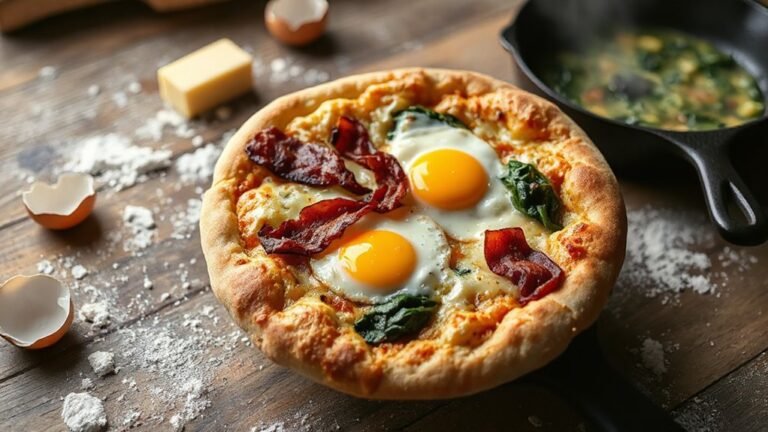
You’ve probably reached for mozzarella because it gives those milky ribbons and blistered, chewy edges, but other cheeses can add savory depth, smoke, or creamy pockets. You’ll learn when provolone or fontina outperforms low‑moisture mozzarella, when ricotta cools a slice, and how grated Parmesan lifts flavor with crystalline umami. Keep going—the right blend changes everything.
Why Mozzarella Reigns Supreme
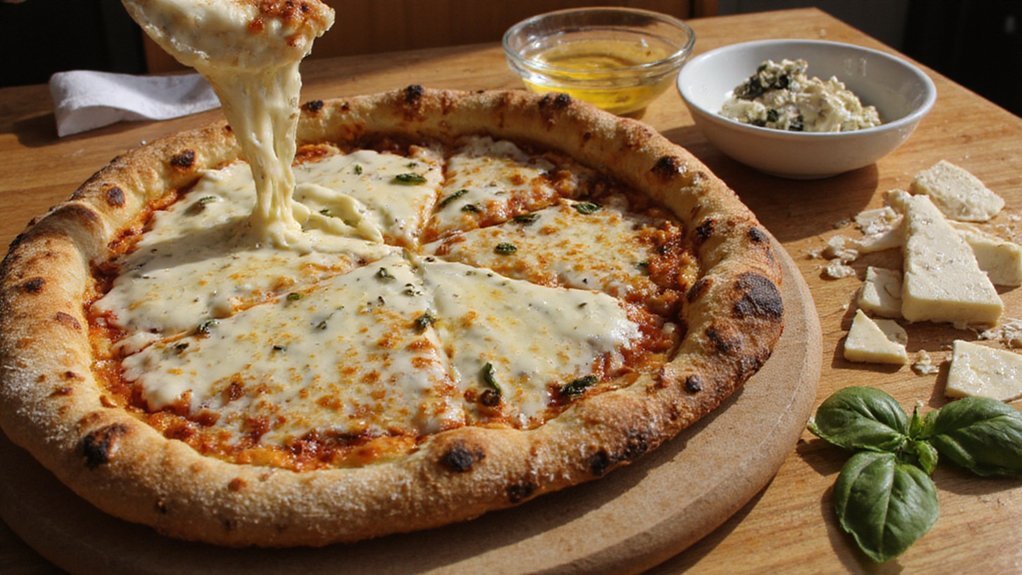
Because it melts into long, gleaming strands and browns into buttery beads, mozzarella gives pizza the texture and visual cue you expect from a great pie. You’ll notice its milky aroma, subtle lactic tang, and clean finish that lets sauce and crust shine. Fresh mozzarella offers pillowy softness and cloudlike pockets of moisture; low-moisture aged mozzarella yields firmer bite and reliable stretch. You can control blistering and oil release by adjusting moisture level and oven temperature, so the top crisps without collapsing. Its neutral flavor acts as a canvas for herbs, cured meats, and vegetables while its melting behavior guarantees even coverage and forgiving assembly. Trust mozzarella for predictable melt, mouthfeel, and the classic pizza silhouette diners crave and repeatable results in every oven.
Provolone: Sharpness and Stretch
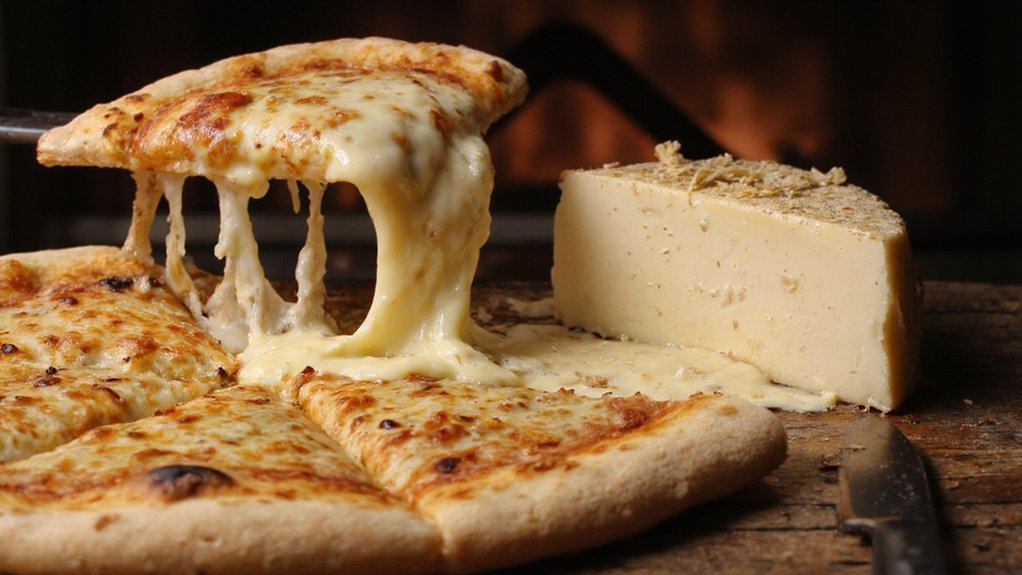
Balancing a tangy bite with supple pull, provolone adds a pronounced, savory presence that lifts a pizza without overpowering it. You’ll notice its golden, slightly oily sheen as it bubbles, delivering a clean, smoky tang that snaps on the tip of your tongue. When sliced thin or grated, provolone melts into glossy ribbons that stretch satisfyingly between crust and fork, offering renewed savory notes with each pull. Its firm texture tolerates longer baking, so you can push oven time for caramelized edges without losing clarity of flavor. Combine it with milder cheeses to introduce depth, or let it stand alone on a simple tomato pie for assertive, balanced heat and a finish that’s savory, rounded, and distinctly Italian. Expect savory umami and subtle smoke.
Fontina for Creamy, Even Melt

You’ll notice Fontina melts into a glossy, velvety blanket thanks to its moderate fat and moisture and a protein structure that loosens uniformly under heat. Its flavor is nutty, buttery and gently tangy, scoring a subtle balance that lifts tomato brightness or creamy sauces without stealing the show. Use it alone for a luxuriant, even melt on white pizzas or blend it with mozzarella and provolone, and pair it with mushrooms, prosciutto, fresh thyme or a drizzle of aged balsamic for contrast.
Why Fontina Melts Smoothly
When you warm Fontina, it loosens into a glossy, satin ribbon that stretches and blankets toppings without seizing or becoming rubbery. You feel its supple body as heat breaks weak protein bonds and releases trapped moisture; the cheese flows because Fontina’s moderate moisture and balanced fat let fat globules emulsify into a smooth matrix. Its short- to medium-aged curd has fewer insoluble casein aggregates, so proteins slide past each other rather than tightening. A gentle acidity keeps calcium-protein links from overbinding, while a uniform paste and fine eye formation promote consistent heat transfer. When you bake, thinly shredded or sliced Fontina melts evenly, creating a creamy, cohesive layer that upgrades texture and mouthfeel on every bite and delivers reliable, professional results consistently every time.
Flavor Profile and Balance
Because Fontina blends mild nuttiness, a warm buttery milkiness, and a clean, lactic tang, it tastes rich without masking other ingredients and melts into a silk that feels indulgent rather than cloying. You’ll notice its aroma: gentle hay, faint porcini notes, a touch of cream that lifts the whole pie. On your tongue it unfurls evenly, the fat coating surfaces so sauces cling and herbs pop. Texture-wise it maintains a fine, supple strand when pulled and a glossy sheen under heat, signaling even melt and stable stretch. Its salt is balanced—enough to brighten tomatoes and caramelized edges without overt salinity. Use Fontina when you want creamy restraint: it enhances texture and flavor clarity, not domination. You’ll appreciate its subtlety across simple and complex builds.
Best Uses and Pairings
How can you get the most from Fontina’s silky, even melt? Use it as your creamy anchor: shave or grate it thin so it collapses into glossy ribbons, coating dough with a nutty, buttery perfume. Pair Fontina with caramelized onions, roasted mushrooms and white prosciutto to amplify savory depth; add a sprinkle of thyme or black pepper for bright lift. On white pizzas, blend Fontina with a touch of young mozzarella for stretch and a whisper of tang from goat ricotta for contrast. For thin-crust or wood-fired pies, let Fontina brown gently at the edges so its sugars caramelize without drying. You’ll taste a lush, molten body that binds toppings and elevates balance with sophisticated restraint. Finish with flaky sea salt for brilliant finish.
Ricotta and Its Luscious Dollops
If you want a cool, creamy counterpoint to bubbling mozzarella, dot your pizza with spoonfuls of fresh ricotta that melt into velvet pockets of tang and cream. You’ll feel the contrast immediately: glossy white curds against blistered crust, a subtle lactic brightness that lifts tomato acidity without overpowering herbs. Spoon in small quenelles so each bite balances mozzarella chew and ricotta silk; larger dollops stay distinct, offering creamy islands. Lightly season ricotta with lemon zest, cracked pepper, or a drizzle of olive oil before placing it on the pie; that restrained seasoning amplifies its milky nuance. Use whole‑milk ricotta for richness or part‑skim for a cleaner finish. Finished properly, ricotta adds soft, cooling richness that refines every slice and complements fresh basil perfectly too.
Parmesan and Pecorino: Finishing Cheeses
You’ll notice a sharp, crystalline umami when a snow of grated Parmesan or Pecorino lands on hot pizza, slicing through sweetness with salty, nutty brightness. Grate coarsely for crunchy bursts or finely for even coverage, and sprinkle off the heat or in the last minute so the crystals keep their aroma. Use them sparingly with creamy mozzarella or tangy ricotta, or as a finishing contrast on prosciutto-and-arugula pies.
Sharp Umami-Rich Finish
When you grate a shower of aged Parmesan or Pecorino over a just-baked pie, their crystalline flecks melt into salty, nutty bursts that lift tomato sweetness and caramelized crust alike. You’ll notice a sharp umami-rich finish that rounds the cheese profile without overwhelming mozzarella’s creaminess. Parmesan brings granular, toasted almond notes and long savory persistence; Pecorino adds sheepy tang, peppery bite, and a bracing saline edge. Those aged enzymes and concentrated proteins give each bite depth, prompting savory echoes that linger on the palate. Use them sparingly for contrast: they sharpen herbaceous basil, punctuate roasted garlic, and cut through fatty toppings, turning a simple pizza into a composed, intensely flavored dish. Expect a rustic, aged aroma and a crystalline crunch that rewards attentive tasting.
Grating and Application Tips
Grating Parmesan or Pecorino over a hot pie just before serving releases toasted, nutty aromatics and produces those signature salty crystals that snap against soft mozzarella. You should grate fine for immediate melting and a delicate, even veil; use a microplane to fluff the cheese so it dissolves quickly into the sauce’s steam. For bursts of texture, coarsely grate or shave with a vegetable peeler so shards keep bite. Sprinkle sparingly—think fingertip pinches rather than handfuls—to avoid overpowering brightness. Aim for even coverage from center to edge, watching for hot spots where cheese will darken faster. Store whole wedges cold, wrapped, and grate fresh; pre-grated cheese loses volatile aromatics and can feel powdery. Finish with a quick crack of black pepper or lemon zest.
Pairing With Other Cheeses
How do you balance Parmesan or Pecorino against other cheeses so the finish sings rather than clashes? You shave or grate sparingly, aiming for bright saline shards that lift gooey mozzarella without dominating it. Sprinkle at the end so heat releases aromatic oils and crystalline crunch, not a heavy, grainy curtain. Match intensity: pair Pecorino Romano with robust aged cheddars or spicy provolone; let Parmigiano-Reggiano accent milder fresh mozz or burrata. Consider fat and salt—fat mellows, salt sharpens—so reduce added salt if you add finishing cheese. Taste as you go: a single flake can flip a bite from flat to incisive. Trust texture and timing; a precise dusting turns each slice into a layered, resonant finish. Store wedges properly to preserve those savory crystals.
Gouda and Smoked Varieties for Depth
A wedge of Gouda melts into a glossy, buttery pool, offering creamy stretch and a mild, nutty sweetness that you can taste between bites. When you sprinkle aged Gouda across a pie, it adds caramelized notes and a tighter, almost crystalline bite that contrasts softer cheeses. Smoked Gouda layers in a savory campfire perfume — maple, hickory or beech — that lingers on the palate and lifts charred crust and tomato acidity. Use it sparingly to deepen flavor without overwhelming toppings; shave thin ribbons to distribute smoke evenly. In blends, Gouda amplifies umami and creates a golden, slightly lacquered surface as it browns. Taste as you go; Gouda rewards restraint and precise balancing for memorable, smoky complexity. Let bite reveal layered warmth, roasted fat, and sweetness.
Fresh vs. Low-Moisture Cheeses: Texture and Performance
When you choose fresh versus low‑moisture cheeses, you feel the difference in moisture and meltability — fresh cheeses pool into creamy, talc‑soft ribbons while low‑moisture varieties melt into a denser, silkier sheet. You’ll notice stretch and bubble formation change too: low‑moisture cheeses throw long, elastic pulls and crisped, blistered bubbles, whereas fresh cheeses give softer, wetter blisters and a more pillowy pull. For browning and flavor development, low‑moisture cheeses caramelize and sing with nutty, roasted notes, while fresh cheeses stay pale and bright, offering lactic sweetness rather than deep Maillard complexity.
Moisture Vs Meltability
Although moisture is the single biggest factor that dictates how cheese behaves under heat, you’ll judge performance by what you see, smell, and taste: You want cheeses that melt into glossy pools or stay satiny and pillowy, depending on crust and topping moisture. Fresh cheeses are wet, fragrant, milky; they soften into creamy puddles and add lactic brightness. Low‑moisture cheeses are drier, saltier, and heat‑stable, giving you even browning and controlled oiling. Trust your senses: look for sheen, inhale toasted milk notes, taste for salt and acidity before baking. Table for quick reference:
| Cheese Type | Sensory Cue |
|---|---|
| Fresh (e.g., burrata) | Milky aroma, creamy melt |
| Low‑moisture (e.g., mozzarella) | Toasted aroma, firm melt |
| Aged (e.g., parmesan) | Nutty scent, sparse melt |
Use moisture to match texture perfectly.
Stretch and Bubble Formation
Watching molten cheese pull into glossy strings and blister into amber bubbles tells you everything about its makeup: fresh cheeses like burrata and fresh mozzarella give pillowy, fat-laden swells that collapse into creamy lakes with gentle, short pulls, while low‑moisture varieties tighten into long, elastic strands and form higher, drier blisters that snap and brown. You’ll judge performance by how the protein matrix stretches without breaking, how moisture migrates under heat to inflate pockets, and how surface tension controls bubble size. Use fresh cheese for soft, yielding texture and quick, decadent melts; choose low‑moisture for defined pull, sustained elasticity, and discrete islands of air. Blend to tune viscosity and bubble distribution for the oven and bite you want while maintaining structural integrity under heat.
Browning and Flavor Development
Searing and gentle bronzing produce two very different flavor signatures: fresh cheeses give you soft, milky sweetness, lactic tang, and barely browned creaminess, while low‑moisture cheeses build nutty, toasted, umami-rich crusts with deeper caramelized and roasted notes. When you choose fresh mozzarella, expect glossy, pillowy pools that melt into silky ribbons, offering delicate dairy perfume and a cool, moist mouthfeel that highlights tomato acidity. Pick low‑moisture mozzarella or aged blends and you’ll coax golden chips, blistered edges, and savory Maillard complexity: toasted lactose and amino acids yield caramel, hazelnut, and meaty undertones. Balance moisture and bake temperature to control browning: higher heat favors rapid color and crisp edges, lower heat preserves creaminess. Use this to match texture and flavor to your pizza intent precisely.
Best Cheese Blends for Classic Styles
When you build a classic pizza, pick cheeses that melt silkenly, brown attractively, and balance the sauce instead of overpowering it. You want a glossy, elastic melt, a gentle tang, and a toasted, nutty finish that lifts tomatoes without stealing center stage. Combine textures—stretchy base, creamy pockets, sharp ribbons—to create layered flavor and an inviting pull.
- Mozzarella (whole milk): smooth, milky stretch and mild sweetness.
- Provolone: deeper, oily browning and subtle smokiness.
- Parmesan or Pecorino Romano: granular salt, crystalline umami spark.
- Fontina or young Gouda: buttery melt, soft cream notes that glue toppings together.
Trust contrasts: controlled salt, moderate fat, and predictable melt for classic results. Use measured blends so every bite offers warm chew, bright acid, and savory finish.
Pairing Cheeses With Crusts and Ovens
Match your cheese to the crust and oven like a conductor pairing instruments: a high-moisture, whole-milk mozzarella will give glossy, elastic strands and sing with the blistered char of a 900°F wood-fired oven, while a low-moisture shredded blend holds up better on a long, 20–30 minute bake in a home oven or on a heavy pan crust without turning greasy. You’ll choose fresh, pillow-soft mozzarella and minimal toppings for thin, blistered Neapolitan crusts to preserve melt and balance. For thicker, chewier hand-tossed or pan crusts, favor firmer low-moisture mozzarella and a grating of aged Parmesan or provolone to add savory bite that browns slowly. On a convection bake or grill, reduce moisture and use a tighter shred to promote even melting and controlled browning.
Creative and Unusual Cheese Choices
Why stick to the usual when a pizza can sing with unexpected cheeses? You can enliven crust and toppings by choosing bold, textured cheeses that melt, bubble, or crumble in surprising ways. Consider smoky scamorza for caramelized edges and faint tang; pungent Taleggio for creamy, fruity depth; tangy aged gouda for crystalline crunch and butterscotch notes; chèvre for bright lemony spread that balances sweet tomato. These choices shift aroma, mouthfeel, and finish—scamorza’s char, Taleggio’s silk, gouda’s snap, chèvre’s clean acidity. Use sparingly or blend with mozzarella to temper melt and salt. Trust your palate, taste as you go, and let contrast—texture, fat, age—transform an ordinary pie into something vividly memorable. Try it tonight; enjoy the discovery.
- Scamorza
- Taleggio
- Aged gouda
- Chèvre
Conclusion
You’ll default to mozzarella for its pillowy, milky ribbons and blistered, glossy stretch, but you’ll also lean on provolone or fontina when you want savory depth and even melt, or dot ricotta for cool, creamy pockets. Finish slices with a scant grate of Parmesan or Pecorino for crystalline umami. Match blends to oven heat and crust thickness, and you’ll coax every bite into a balanced, caramelized, utterly irresistible slice that sings with savory precision always.