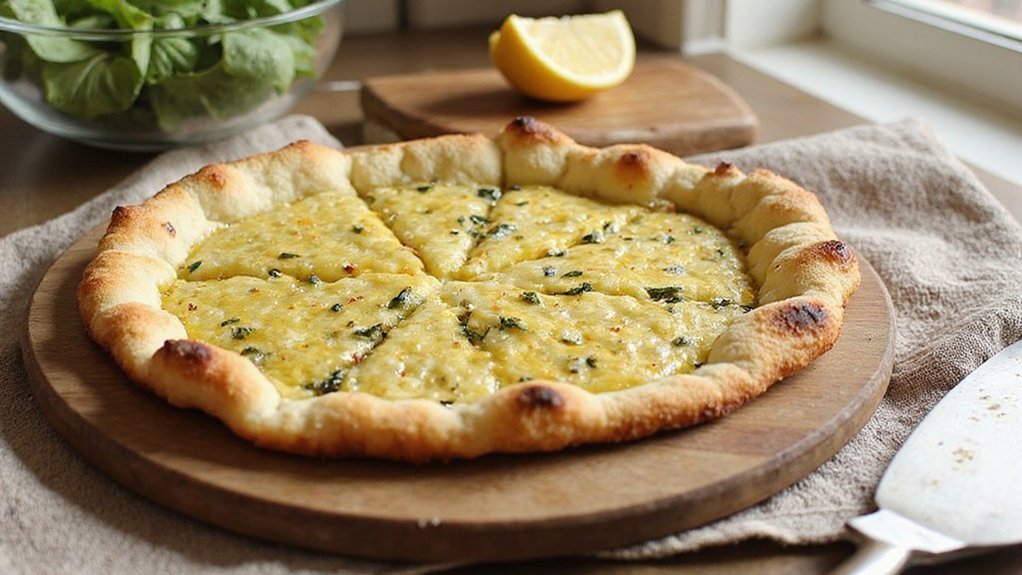

If you’re cutting carbs or managing glucose, a cauliflower pizza crust can give you familiar pizza with fewer digestible carbs and more fiber. You’ll squeeze out moisture, bind the riced cauliflower with egg and cheese, and bake hot for crispness. Follow practical steps and simple tips to avoid sogginess and choose keto-friendly toppings so you can make a reliable, tasty crust at home—keep going.
Why Choose a Cauliflower Pizza Crust
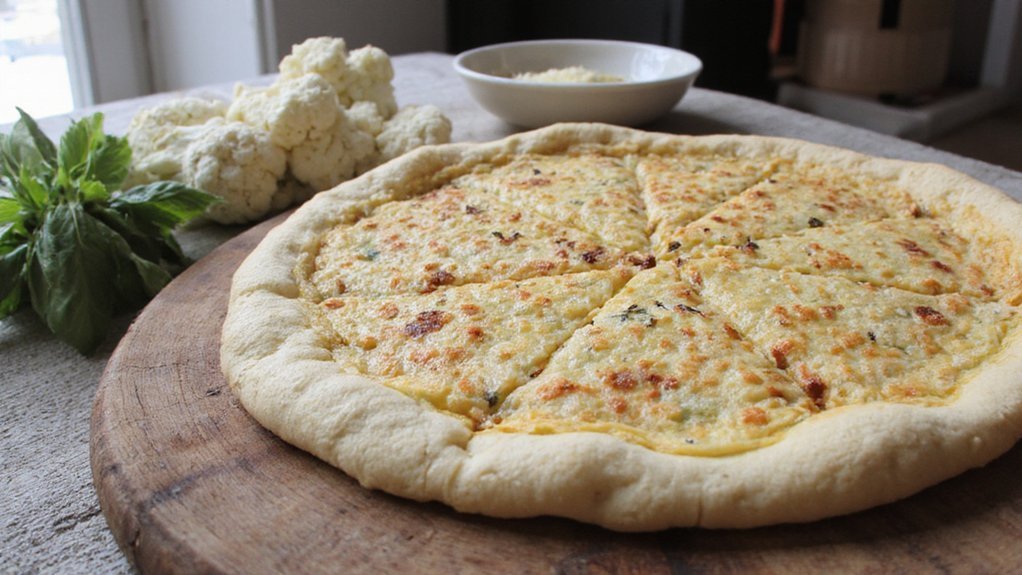
If you’re looking to cut carbs and boost vegetable intake without sacrificing a familiar pizza experience, cauliflower crust offers a practical alternative backed by nutrition data: it typically contains fewer digestible carbohydrates and more fiber and micronutrients than traditional wheat crust, which can help with blood-glucose control and satiety for people managing diabetes or weight. You’ll find it’s lower in total calories, often higher in vitamin C, K and folate and antioxidants too. Clinical and composition studies support its role in reduced postprandial glycemic responses compared with refined wheat. For keto or low-carb plans it’s adaptable, and you can portion it to fit goals. Texture differs; expect a tender, crumbly base. Use it if you want a vegetable-forward, nutrient-dense option that feels like pizza.
Ingredients You’ll Need
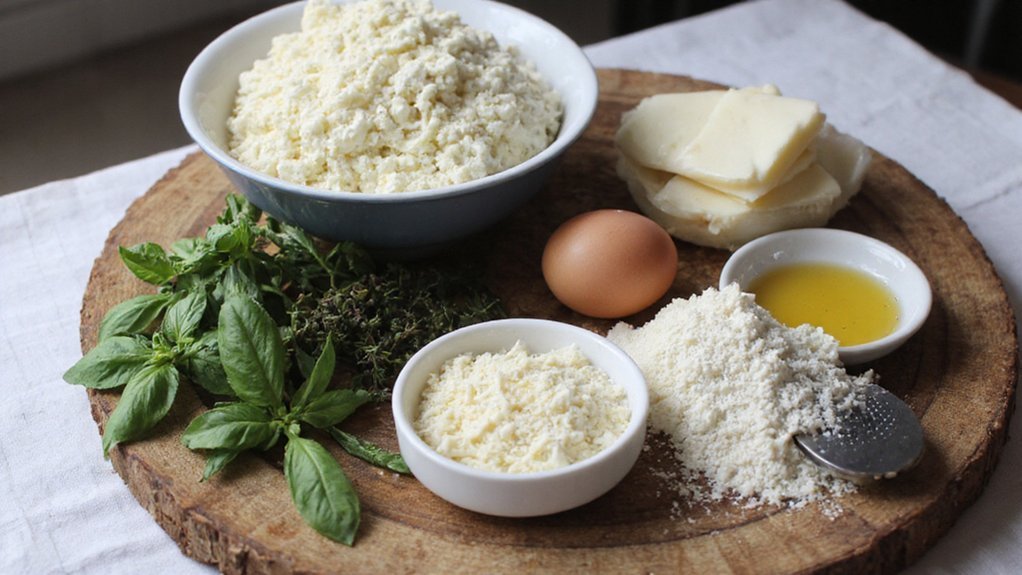
A few key ingredients give your cauliflower crust structure, flavor and better nutrition compared with a refined-wheat base. You’ll need riced cauliflower (fresh or frozen, well drained) as the vegetable fiber and low-carb starch replacement. Eggs act as the primary binder and provide protein. A blend of shredded mozzarella and finely grated Parmesan adds fat, melting quality and savory umami that improves texture. A small amount of almond or coconut flour can enhance binding for stricter keto needs; use sparingly. Season with salt, garlic powder, and dried oregano or basil for palatability. A teaspoon of olive oil boosts mouthfeel and browning. These items are evidence-supported choices that balance macros, satiety and practical handling for most home bakers. Adjust quantities to your dietary goals accordingly.
Tools and Equipment
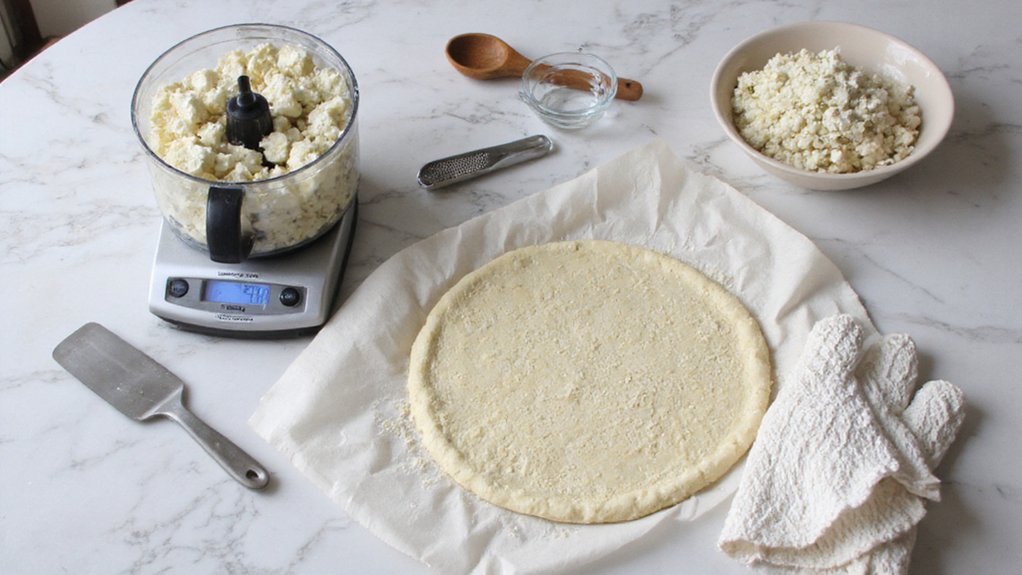
With the right tools you’ll save time and get a firmer, less soggy crust: use a food processor (or a fine box grater) to rice the cauliflower finely, a clean kitchen towel or cheesecloth to squeeze out moisture thoroughly, and a large mixing bowl and spatula to combine ingredients evenly.
- Rimmed baking sheet or pizza stone
- Parchment paper or silicone mat
- Digital oven thermometer and measuring spoons
Use tools to promote even heat, nonstick release, and accurate measurements. An instant-read thermometer helps you confirm internal temperature; a bench scraper and spatula let you shape the crust without tearing. These choices reduce variability and support repeatable, patient-centered outcomes, helping you serve a firmer, less soggy keto pizza every time and increase reproducibility between bakes regularly.
Preparing the Cauliflower
Starting by trimming the stem and cutting the cauliflower into even florets makes ricing and cooking consistent, so you’ll get a firmer crust. Wash florets, then pat dry to reduce surface water before ricing; excess moisture undermines texture and increases bake time. Rice using a food processor or box grater to uniform size for predictable cooking; smaller pieces steam faster. Steam or microwave the riced cauliflower just until tender—about 3–4 minutes—then cool briefly. Importantly, squeeze out moisture using a clean kitchen towel or fine mesh sieve until mostly dry; objective is minimal free water, which studies show improves browning and structural integrity. Measure your drained weight to match recipe ratios, and proceed when the cauliflower feels dry and slightly warm. Adjust quantity as needed.
Forming the Crust
Now that you’ve measured the drained cauliflower to match the recipe ratios, combine it with your binders—typically beaten egg(s), grated hard cheese, and a small amount of flour or starch—to create a tacky, cohesive mixture; these components provide protein and fat that improve browning and hold. Press the mix onto parchment-lined baking sheet or pizza pan, shaping a ¼–½ inch rim to mimic a crust edge, and smooth the top with a wet spatula for even thickness. Let the formed crust rest five minutes to let binders hydrate. Bake until edges are golden. Consider these adjustments based on texture and dietary needs:
- Increase cheese for firmer structure
- Add an egg white for extra protein
- Substitute almond flour for starch if gluten-free
Tricks to Prevent a Soggy Base
If you want a crisp, non-soggy base, focus on removing and controlling moisture at every step: drain and press the cooked cauliflower thoroughly (use a fine mesh cloth and squeeze until no more liquid comes out), avoid overseasoning with salt before pressing, and par-bake the formed crust on a preheated baking surface at high heat so steam exits before toppings go on. After pressing, cool the riced cauliflower briefly to let residual steam disperse; hot vegetables release more moisture. Weigh the mixture to guarantee consistent water-to-binder ratio; aim for a dense, cohesive dough rather than a wet mash. Use minimal wet binders—egg and cheese add structure. Let the par-baked crust rest briefly on a rack; this prevents condensation and preserves crispness and aids serving.
Baking and Topping Tips
You’ll bake cauliflower crust at a high temperature (425–450°F) on a preheated baking sheet or stone to dry and set it, and you’ll watch timing closely (about 12–18 minutes) to prevent burning. For toppings, use a thin layer of low‑moisture sauce and part‑skim or well‑drained cheeses to limit sogginess and promote even melting. Let the crust rest a few minutes after baking before slicing so juices redistribute and the base stays firm.
Oven Temp and Timing
When you bake a cauliflower crust, use a hot oven—425–450°F (220–230°C)—and preheat thoroughly so the crust starts crisping on contact; research and home tests show higher initial heat helps evaporate moisture faster and firms the crust. Bake the formed crust on a preheated sheet or stone for 12–15 minutes until edges are golden and surface feels dry. After pre-baking, add toppings sparingly and return to oven for 6–10 minutes. Monitor color and texture rather than strict minutes; ovens vary.
- Use a pizza stone or heavy sheet to maintain heat.
- Rotate halfway to promote even browning.
- Let crust rest 5 minutes before slicing to set structure.
These steps reduce sogginess and improve bite. Adjust time for thicker crusts or higher moisture content.
Sauce and Cheese Choices
How much sauce and which cheeses you pick will largely determine whether your cauliflower crust stays crisp or goes soggy. Use a thin layer of sauce—about 2 tablespoons for a 9–10-inch crust—to limit moisture. Choose low-moisture cheeses: part-skim mozzarella, aged Parmesan, or provolone melt well without releasing excess liquid. If you want fresh mozzarella, pat it dry and slice thinly. Consider pre-baking the crust until golden, then briefly broiling after topping to set cheese and evaporate residual moisture. For added flavor with minimal wetness, sprinkle nutritional yeast or grated Pecorino and add cured meats instead of watery vegetables. Monitor toppings’ moisture content and use paper towels to blot any wet ingredients before assembling. You’ll achieve crisper results by avoiding heavy, oil-rich sauces and toppings.
Storage and Reheating Instructions
Often it’s best to cool the cauliflower crust completely before storing to prevent sogginess. Once cooled, wrap it tightly or transfer to an airtight container and refrigerate for up to 4 days, or freeze for up to 2 months to preserve texture and safety. When you’re ready to reheat, thaw overnight in the fridge if frozen, then re-crisp in the oven for best results.
- Refrigerate wrapped or in an airtight container for up to 4 days.
- Freeze between parchment layers in a sealed bag for up to 2 months.
- Reheat on a baking sheet at 200°C (400°F) for 8–12 minutes to restore crispness.
Label containers with date, and don’t leave cooked crust at room temperature over two hours. Check for off-odors before eating always.
Flavor Variations and Topping Ideas
You can boost the crust’s flavor by mixing savory herb blends—think rosemary, oregano, and garlic powder—into the cauliflower base before baking. For toppings, try tested combos like mozzarella, basil and tomato for a classic Margherita or goat cheese, caramelized onion and arugula for a tangy alternative. These small adjustments let you tailor taste and nutrition to your preferences, and you’ll preserve crust texture by keeping additions measured and following proper baking times.
Savory Herb Blends
Herbs bring concentrated flavor to cauliflower crust, so you can cut back on salt and oil while still enjoying a satisfying pizza. Use dried oregano or basil for familiar Mediterranean notes, or fresh parsley and chives for brightness; both approaches reduce sodium needs and add antioxidants. Measure herbs, about one to two teaspoons dried or one to two tablespoons fresh per crust, to keep consistency across batches. Consider mixing herbs into riced cauliflower before squeezing moisture; that distributes taste evenly and supports structural integrity. For straightforward options, try blends that pair well with cheese and tomato base:
- Classic oregano, basil, garlic powder
- Herbes de Provence with thyme and rosemary
- Fresh parsley, chives, lemon zest
Adjust quantities to taste and document results for reliable outcomes.
Creative Topping Combos
How can you build toppings that highlight cauliflower crust’s mild flavor while keeping it crisp and nutritious? Choose ingredients that add moisture control, texture, and nutrients: low-moisture cheeses prevent sogginess; pre-roasted vegetables concentrate flavor; thinly sliced proteins like grilled chicken or prosciutto warm quickly. Use herbs and acidic finishes (lemon, balsamic) to brighten without extra carbs.
For balanced combos, pair a base of tomato sauce or olive oil with toppings that provide fat, protein, and fiber. Example combos: spinach, feta, roasted red pepper; pesto, smoked salmon, capers; mozzarella, cherry tomatoes, basil. Bake on a hot stone or sheet to preserve crispness. Adjust portions to fit your keto goals and dietary needs, and test one change at a time. Track responses to optimize tolerance regularly.
Conclusion
Choosing a cauliflower crust gives you a lower‑carb, nutrient‑rich option that still satisfies pizza cravings. If you squeeze the riced cauliflower thoroughly, bind with eggs and melting cheese, and par‑bake on a hot surface, you’ll avoid sogginess and get a crisp base. Top sparingly with low‑moisture cheeses and pre‑roasted vegetables. These practical steps are backed by texture and moisture control principles, so you’ll enjoy a reliable, customizable keto meal any night and save prep time.