You’ll make a 2-hour dough using 500 g strong bread flour, 325–330 g water (65–66%), 7 g salt, 2 g instant yeast, 10 g sugar and 15 g olive oil. Mix, autolyse 20 minutes, then add salt and oil, performing 3 quick stretch-and-folds over a 90–120 minute bulk ferment at 22–24°C. Divide into 250–300 g balls, rest 20–30 minutes, then shape and bake on a 300–315°C stone for a crisp crust—here’s how.
Ingredients and Measurements
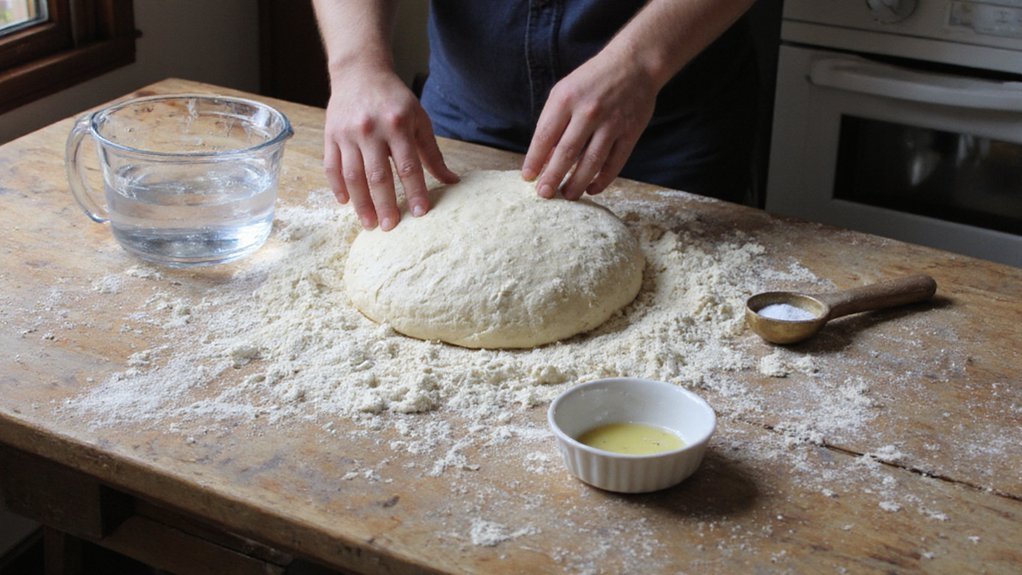
You’ll need 500 g (about 4 cups) strong bread flour, 325 g (65% hydration) lukewarm water (100–105°F / 38–40°C), 7 g (1 packet) instant dry yeast, 10 g (2 tsp) fine salt, 5 g (1 tsp) sugar, and 15 g (1 tbsp) extra-virgin olive oil. Measure flour by weight; tare your bowl, add flour, level if using cups. Dissolve yeast and sugar in water for 2 minutes, then pour into flour. Add salt to one side of the bowl, oil to the other to prevent direct yeast contact. Mix until a shaggy mass forms, then autolyse 20 minutes to hydrate. Perform four sets of stretch-and-fold at 20-minute intervals, then rest 20 minutes before dividing. Aim for smooth, slightly tacky dough. You’ll shape immediately after.
Equipment You’ll Need
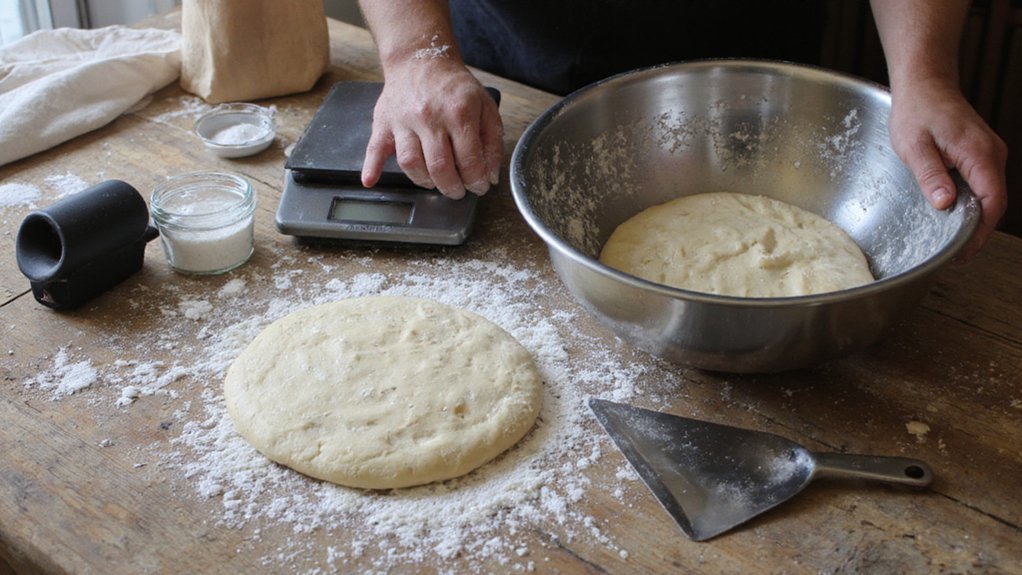
After shaping the dough, gather a small set of precise tools to handle, proof, and bake it: a digital scale (±1 g), a 4–6 L mixing bowl or dough box with lid, a 20–25 cm bench scraper, a flexible bowl scraper, and a damp kitchen towel or a sheet of cling film for short proofs. Add a thermometer probe (±0.5°C) to monitor water and dough temp; aim for 24–26°C final dough temperature. Use a 30–35 cm pizza peel (wood for transfer, metal for finishing) and a baking steel or stone 3–6 mm thick, preheated to 300–350°C equivalent in a home oven. Keep a stopwatch, fine-mist spray bottle, and oven mitts. Clean, dry surfaces and sharp scissors for scoring complete the kit. Weigh each portion.
Step-by-Step Dough Preparation
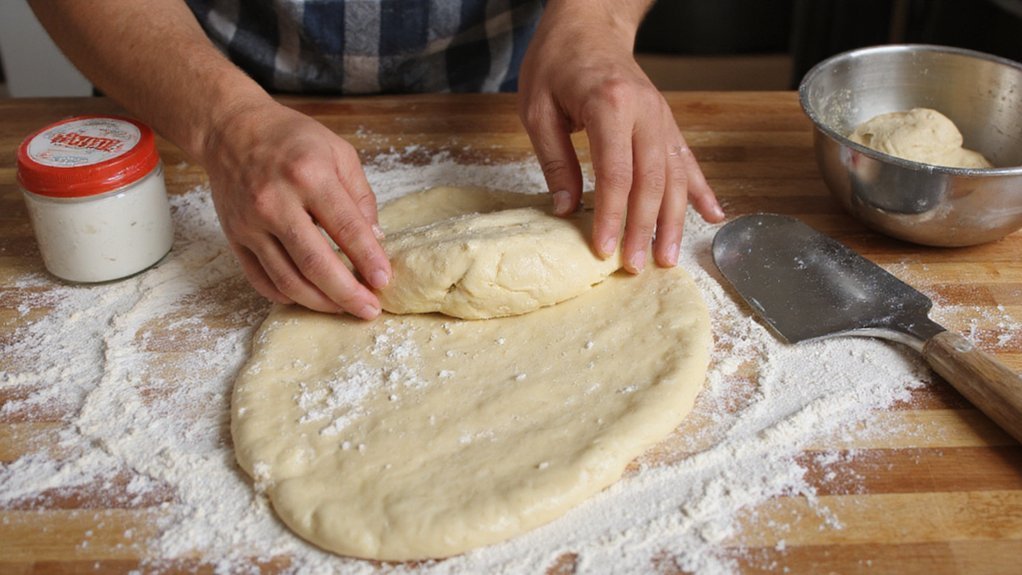
One batch: weigh 1,000 g strong bread flour, 620 g water (62% hydration), 20 g fine salt, and 3 g instant yeast (or 6 g fresh); aim for a final dough temperature (FDT) of 24–26°C. You combine flour and 580 g water in a bowl until no dry pockets remain; this is the autolyse. Cover and rest 20 minutes. Dissolve salt in 40 g water; sprinkle yeast over dissolved salt and stir. Add salt–yeast solution to autolysed dough and fold until incorporated. Transfer to a lightly floured bench for short manual consolidation (do not perform extended kneading here). Scale dough into desired portion sizes (e.g., 250–300 g). Round into tight balls, oil exterior lightly, place seam-side down in proof tray, and cover until ready.
Kneading, Proofing, and Troubleshooting
Kneading sparingly: perform only the short consolidation already done, then carry out 4–6 stretch-and-folds on the bench, spaced 20–30 minutes apart, during a 90–120 minute bulk ferment kept at an FDT/room temp of 24–26°C; each fold should take 15–20 seconds and develop visible structure without tearing. After bulk, rest dough 10 minutes, divide to specified weights (250–300 g per ball), and tighten seams with light pulls. For underdeveloped gluten, add two additional folds, 20 seconds each. If dough feels sticky, rest 10 minutes; avoid adding flour unless >10 g per ball needed. If dry or tight, increase hydration by 5–10 g per 250 g flour for next batch. Overproofed dough will collapse; shorten bulk by 15–30 minutes. Monitor temperature with probe and record times.
Shaping, Saucing, and Topping Ideas
You should stretch dough for a 12-inch (30 cm) pie using fingertips and 1–2 minutes of steady rotating motion, leaving a 1–1.5 cm rim. For sauce, spread 120 g crushed tomatoes seasoned with 1 tsp salt, 1 tsp oregano, and 1 tbsp olive oil to a 2–3 mm thickness. Top with 120–150 g shredded mozzarella plus 30–40 g additional toppings (e.g., prosciutto with arugula, sautéed mushrooms and onions), then bake on a preheated steel at 475°F (245°C) for 8–10 minutes.
Dough Shaping Methods
When stretching a 12-inch pizza, start with a 250–280 g dough ball rested 20–30 minutes, press from center to a 10–11-inch disk leaving a 1-inch rim; if tossing, rotate and stretch with knuckles for even thickness, or use a rolling pin for a uniform 3–4 mm center. You’ll shape consistently: degas gently, thumb-press the center, and build the cornicione. For thin crust, aim 3–4 mm; for thicker, 5–7 mm. Use semolina on peel to prevent sticking. Follow these quick technique cues:
- Light flouring: 5–10 g on work surface
- Degas: press center with fingertips for 15–20 seconds
- Rim formation: leave 1–1.5 cm unpressed
- Transfer: dust peel with 8–10 g semolina
- Edge finish: pinch with two fingers to seal
Bake immediately straightaway at 250–280°C for 6–8 minutes.
Sauce Options
How much sauce should you put on a 12-inch pie? Use 6–8 tablespoons (90–120 ml) of sauce for a thin, crisp crust; 10–12 tablespoons (150–180 ml) for a softer bite. Spread from center outward with the back of a spoon or ladle, leaving a 1/2-inch (12 mm) rim. Apply in a circular motion, keeping sauce thickness even—about 1/16–1/8 inch. For white sauces, heat to 120°F (49°C) and cool slightly before spreading so you don’t make the dough soggy. For oil-based or pesto sauces, use 4–6 tablespoons and concentrate toward the center to prevent burnt edges. For dollops (ricotta, crème fraîche), place 1/2–1 teaspoon, spaced 1–2 inches apart. Pat excess moisture from watery sauces before saucing. Adjust quantities for personal preference and dough hydration. Carefully.
Topping Combinations
Shape the stretched 12-inch disk with a 1/2-inch rim and dock lightly if you’re using heavy or watery toppings. Brush 1 tsp olive oil over rim quickly. For saucing, spread 3 tbsp sauce to 1/2 inch of rim with spoon; don’t pile. Add cheese: 4 oz shredded mozzarella leaving 1/4-inch bare at edge. Use toppings sparingly to avoid wet center. List:
- Classic: 3 tbsp tomato sauce, 4 oz mozzarella, 6–8 basil leaves.
- Margherita variant: 2 oz fresh mozzarella slices, 6–8 basil leaves, 1 tsp olive oil.
- Pepperoni: 18–20 thin slices, 4 oz mozzarella, sprinkle 1/4 tsp oregano.
- Veg: 1/2 cup sliced mushrooms, 1/4 cup bell pepper strips, 2 tbsp red onion.
- White: 2 tbsp olive oil, 2 cloves crushed garlic, 3 oz ricotta dollops.
Baking Temperatures, Timing, and Variations
Why preheat to 500–550°F (260–290°C)? You’ll want rapid oven spring and a crisp crust. Preheat for at least 45 minutes with a pizza stone or steel on the middle rack; if using a baking sheet, preheat 30 minutes. Bake 10–12 minutes at 500°F (260°C) for 10–12-inch thin crust; 12–15 minutes for 12–14-inch. At 550°F (290°C) reduce times by 1–3 minutes. Use an infrared thermometer to confirm surface temp: stone 500–700°F (260–370°C). Rotate pizza halfway. For pan or deep-dish, bake 18–22 minutes at 425°F (220°C). For charred Neapolitan-style, use a broiler or wood-fired 800–900°F (425–480°C) and bake 60–90 seconds. Rest 2–3 minutes before slicing. Adjust hydration and toppings to avoid sogginess; heavier toppings need longer lower heat or parbake crust. Use oven mitts and peel.
Conclusion
You’ll get a crisp, flavorful crust in about 2 hours by using 500 g strong bread flour, 325 g water (65% hydration), 3 g yeast, 10 g salt, 5 g sugar and 15 g olive oil. Mix and autolyse 10 minutes, then add salt and fold 4 times during a 90–120 minute bulk ferment at room temp. Divide into 250–300 g balls, rest 20–30 minutes, shape thin and bake on a 500–550°F stone until golden.