

You’ll want toppings that taste bold, photograph well, and reflect smarter sourcing. Think umami-rich mushrooms, cultured nut cheeses that stretch, charred peppers, quick-pickled kimchi, and citrusy finishing oils. This guide trims fad noise and shows how to stack flavors, textures, and seasonality so your pies sing—here’s how to build them for flavor and sustainability.
Why These Toppings Matter in 2025

Because taste trends have shifted faster than last decade, the toppings we highlight matter beyond mere flavor: they signal sustainability, health priorities, and culinary curiosity you’ll expect in 2025. You choose toppings that tell stories—regional producers, regenerative farms, and low-waste supply chains—so every bite aligns with values. You prioritize nutrient-dense picks: bitter greens, fermented veggies, omega-rich fish, and ancient grains on crusts, letting texture and function drive choice. Chefs are curating contrasts—smoky, bright, crunchy—to make pizzas feel modern and intentional. You’ll look for ingredients that amplify vegetable-forward plates, reduce protein excess, and celebrate seasonality. Being selective means your pizza’s not just tasty; it’s a statement about where food is headed and what you value. You’ll choose toppings that reflect ethics, flavor, and smart innovation.
Plant-Based Cheeses and Dairy Alternatives
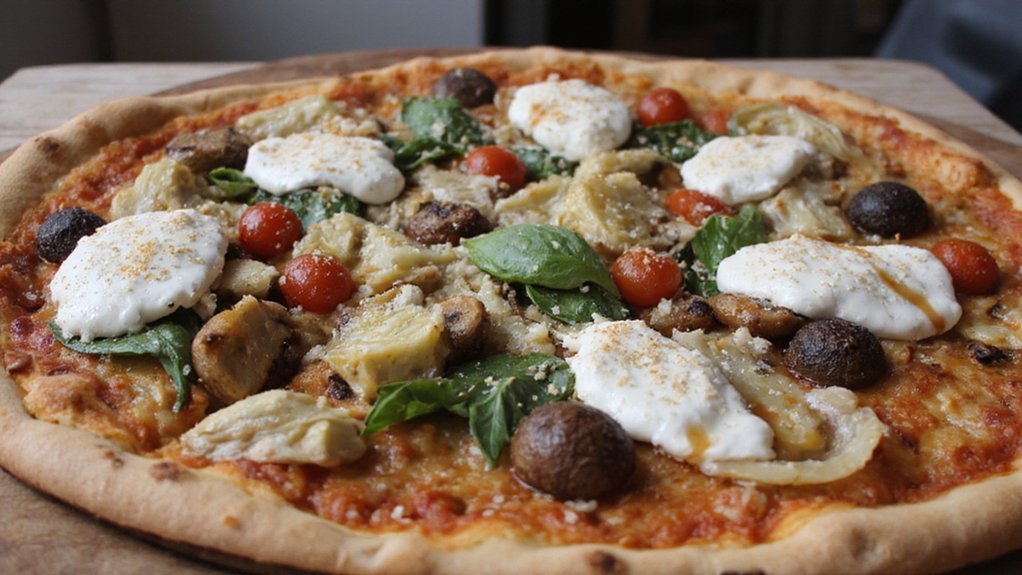
You expect plant-based cheeses to melt and stretch like dairy, and modern blends of cashew, coconut, and cultured nut bases deliver that satisfying pull. You’ll taste nuanced savory, tangy, and umami notes from fermentation and smartly chosen fats that recreate richness. Pay attention to texture—creaminess, bite, and mouthfeel determine whether a vegan slice truly satisfies.
Melting & Stretch
Balancing melt and stretch has become the defining test for plant-based cheeses, and manufacturers are finally answering with blends that actually behave like dairy on a hot pie. You demand reliable pull and oven resilience, not gimmicks.
- Targeted starch blends
- Tapioca elasticity tech
- Cultured nut bases with stabilizers
- Hybrid dairy-plant formulas
Read baking instructions, test low-heat melts, and favor brands proving consistent pull across pies. Recent R&D focuses on emulsification and heat-stable proteins; you should prioritize formulations that resist oil separation during blistering. Small producers now license functional ingredients from food tech startups, so emerging labels often lead performance tests. In short, pick tech-forward blends, watch oven practices, and expect pull and structure that convince even skeptical diners. Pizza success is measurable and repeat.
Flavor and Texture
Craftsmanship matters: modern plant-based cheeses dial in umami, acidity, and fat to deliver convincing creaminess and a clean finish. When you build toppings, choose bases that melt evenly—cashew blends, cultured coconut, and high-protein nut cheeses give satin body without oily separation. Look for formulations with fermented notes or miso to add depth; acidity from lemon or cultured tang cuts richness and brightens herbs and roasted veg. Texture-wise, shredded vegan mozz can stretch when paired with a small percentage of tapioca or konjac; dollops of ricotta-style almond cheese add pillow softness. You’ll balance bite and mouthfeel by alternating smooth spreads with crisped edges: broil briefly for blistered crunch, or finish with fresh drizzle (olive oil, chili oil) to amplify flavor layers. Trust artisanal labels confidently.
Fermented and Umami-Boosting Ingredients

While tradition favors tomato and mozzarella, fermented and umami-packed toppings are reshaping pizza menus. You’ll want ingredients that punch savory depth: miso-marinated mushrooms, aged cheeses, cured anchovies, and kimchi add complexity without clashing. Use them sparingly to balance fat and acidity, and finish with a bright herb to lift richness. Chefs and home cooks lean into controlled fermentation for predictable tang and aroma.
- Miso-glazed mushrooms for earthy, salty backbone
- Aged Comté or Parmigiano-Reggiano for crystalline umami
- Cured anchovies or bottarga for briny intensity
- Quick-pickled kimchi to add lactic tang and bite
These choices boost savoriness, improve mouthfeel, and keep pizzas modern and craveable. Pair them with neutral crusts and controlled heat to concentrate flavors without overpowering delicate toppings and textures.
Global Sauces and Spread Trends
You’ll see regional sauce innovations transform pizzas—from spicy Calabrian chilies and smoky North African harissa to tangy Japanese yuzu kosho—each adding signature heat, smoke, or acidity. You’ll also notice plant-based spreads like cashew ricotta, miso-tahini, and roasted tomato-pepper purées replacing cream and cheese bases to deliver layered umami and silkiness. These shifts put sauces front and center as the main driver of global topping creativity, giving you new textural and flavor frameworks to build on.
Regional Sauce Innovations
As global palates converge, chefs are replacing plain tomato with regionally driven spreads—spicy gochujang, smoky harissa, tangy tamarind-coconut, and herbaceous chimichurri—that recast pizza as a platform for bold, lineage-rich flavors. You’ll want sauces that anchor toppings and tell a story: Korean chili paste adds umami fire, North African harissa brings smoky heat, South Asian tamarind-coconut offers sweet-tart depth, and Argentine chimichurri injects herbaceous zip. Use them sparingly to balance dough and cheese, and pair textures deliberately. Innovative blends are pushing menus, not replacing tradition. Try these direction-setting options:
- Gochujang glaze with short-rib and scallions
- Harissa base under roasted vegetables
- Tamarind-coconut drizzle with grilled prawns
- Chimichurri finish on thin-crust steak
You’ll shape memorable pies by matching sauce intensity to toppings. You’ll taste each region’s soul.
Plant-Based Spread Rising
Because diners now expect bold, plant-forward flavors, chefs are swapping heavy sauces for silkier, nutrient-dense spreads—think cashew ricotta, smoky roasted-carrot hummus, miso-tahini, and charred-eggplant baba ghanoush—that layer creaminess without dairy weight. You’ll find these spreads amp up texture and umami while cutting calories. Use a thin smear as the base, then top with shaved seasonal veg, roasted mushrooms, or citrus pickles to balance richness. For pizza operators, batching miso-tahini or cashew blends saves labor, keeps consistency; adjust salt and acid to pop flavors. Regional riffs—add harissa to roasted-pepper spread or salsa verde to white bean purée—boost craveability. Guests notice house-made spreads: label them, train staff to finish pies with herbs and a bright drizzle, and you’ll turn curious eaters into repeat orders quickly.
Seasonal Produce That Elevates Every Pie
When seasonal produce hits its stride, you’ll notice how bright acidity, silky texture, or concentrated sweetness can push a pizza from good to iconic. You should lean into what’s fresh: tomatoes at peak for raw finishes, charred corn for sweet crunch, roasted peppers for smoky depth, and stone-fruit slices that caramelize on high heat. Use thin cuts, quick roasts, or post-bake additions to preserve nuance. Match herbs to produce—basil with tomatoes, tarragon with peas—and balance acidity with a drizzle of aged vinegar or lemon oil. Try:
- Heirloom tomatoes, sliced thin
- Charred summer corn + ricotta dollops
- Roasted peppers, skin blistered
- Sliced peaches or nectarines, lightly caramelized
These moves keep pies modern, seasonal, and unmistakably delicious. You’ll spot trends and flavor wins instantly every season.
Sustainable Proteins and Seafood Options
You can amplify umami and sustainability with plant-based seafood alternatives that mimic flaky texture and briny bite. Choose regenerative farmed meats—herb-grazed, nutrient-rich cuts—that add smoky, savory depth without the ecological cost. And when you want true ocean flavor, pick low-impact wild seafood like pole-caught tuna or scallops for bright, clean notes that pair brilliantly with lemon and herbs.
Plant-Based Seafood Alternatives
Reimagining seafood on pizza, plant-based alternatives bring briny, umami-rich notes without the sustainability guilt—think kelp-cured “smoked salmon,” seasoned hearts of palm “calamari,” and chickpea-based tuna that flakes and binds like the real thing. You’ll get ocean-like depth without fishy controversies, pairing with crème fraîche, dill, capers, or chili oil for contrast. These toppings are texturally savvy and Instagram-ready, delivering savory hits that hold up under heat. Try combinations that balance salt, acid, and fat.
- Kelp-cured “salmon” with lemon zest and pickled onion
- Chickpea “tuna” melt with capers and parsley
- Hearts of palm “calamari” tossed in garlic and paprika
- Seaweed flakes for finishing and extra umami
You’ll impress guests and satisfy curious eaters while keeping your menu modern, responsible, and boldly flavorful every single time.
Regenerative Farmed Meats
Although often framed as a farming practice first, regenerative farmed meats are fast becoming a chef’s tool for bolder, cleaner flavor—think grass-finished beef with deeper savory notes, heritage pork with firmer fat that crisps beautifully, and regenerative aquaculture oysters and salmon that taste of place while restoring water and soil health. You’ll want these proteins on pizzas that balance intensity and restraint: a few thin slices of grass-fed steak, quick-seared, amplify umami without greasy overload. Heritage pork shoulder, slow-roasted then shredded, gives caramelized edges and a clean mouthfeel. Regenerative mussels, clams, and farmed salmon lend saline brightness when paired with citrusy crema and bitter greens. Source transparently; chefs increasingly use traceable labels to tell a sustainability story that also elevates flavor and demand.
Low-Impact Wild Seafood
From regenerative meats you can swing naturally toward the ocean: low-impact wild seafood offers bold, saline notes and a textural contrast that lifts pizza without weighing it down. You’ll find delicate briny hits pair brilliantly with citrus, herbs, and smoky cheeses, giving slices a coastal edge that feels modern and responsible. Choose species harvested with minimal bycatch and habitat impact to keep toppings ethical and flavorful.
- Smoked mussels: tender, smoky, umami-rich
- Wild prawns: sweet, snappy, caramelize beautifully
- Canned sardines (sustainably caught): intense, oily, anchovy-adjacent
- Local clams: sweet, briny, steamy finish
Use sparingly, balance with acid and fat, and you’ll elevate every pie. Pair with charred lemon, fennel pollen, or preserved tomato to amplify savory brightness and nod to zero-waste flavors and win crowd-pleasing results.
Textures: Crunch, Smoke, and Crisp Strategies
Often you crave a bite that snaps, sighs with smoke, and finishes crisp; achieving that means thinking beyond cheese and sauce to textures that tell a story. You layer contrasts: blistered shishito or charred scallion for immediate pop, thinly shaved pepperoni crisped to lacy edges, and smoked mozzarella or torn burrata kissed with hickory for gentle savor. Finish with toasted pine nuts, panko fried shallots, or crushed multigrain crackers to add dry snap without sog. Use high heat to sear toppings quickly, then rest pizzas so uplifting airiness returns. Embrace acid—lemon zest or quick-pickled fennel—so crisp notes sing against smoke. These deliberate textural choices make each slice dynamic, modern, and utterly craveable. Balance bold char with subtle crunch for memorable, Instagram-ready, restaurant-quality bites everywhere.
Delivery-Friendly Toppings and Assembly Tips
That same attention to char and crunch informs how you build pies meant to travel: you pick ingredients and plate them so flavors survive heat, movement, and a short wait. You favor toppings that keep texture and avoid sog: quick-broiled cheeses, cured meats, roasted veg, and dollops added post-bake. Layer thoughtfully—sauce thinly, cheese to shield, crispy bits on top. Pack with a vision: slices staggered, vents open, and a tight box to limit steam.
- Use low-moisture mozzarella or finished burrata after delivery.
- Crisp prosciutto, pepperoni edges, and pre-roasted peppers hold up best.
- Skip watery greens; add arugula or basil at pickup.
- Light oil drizzle locks aroma without steam.
You’ll also charge slices lightly with acid or spice to brighten flavors as the pie cools.
Viral Combos and Social Media-Worthy Pies
How do you make a pizza scream “share me”? You lean into bold contrasts: sweet jam or honey with fiery sausage, creamy burrata against charred crust, bright citrus zest on smoked meats. Pick colors that pop—purple radicchio, emerald basil, ruby pickled onions—and textures that photograph well: glossy glazes, crisp edges, pillowy cheese. Don’t shy from show-stopping finishes—drizzles, edible flowers, flaky sea salt, microgreens—and think movement: a scattering, a spiral, a sunburst that invites a slice lift. Stay current: regional mashups, umami-rich components, and single-ingredient stars still trend. When you bring bold flavor and photogenic form together, your pie won’t just taste great—it’ll demand to be posted. Use bold lighting and a quick steam burst for that glossy finish in photos and tag flavor origins.
How to Build a Balanced, Modern Pizza Topping Stack
Building a modern topping stack means balancing five elements: texture, temperature, fat, acidity, and umami. You pick one dominant protein or cheese, layer contrasting textures, and finish with an acid or herb for brightness. Aim for temperature play—hot melted cheese, cool herbs or citrus zest—and a fat that carries flavor, like olive oil or bacon. Use umami anchors—miso, anchovy, aged cheese—sparingly. Follow this quick guide:
- Choose a savory anchor (cheese, cured meat)
- Add a crunchy element (nuts, fried onions)
- Include a bright note (lemon, pickled veg)
- Drizzle a finishing fat (extra-virgin olive oil, chili oil)
Taste as you go, adjust salt, and keep toppings proportionate so every bite stays balanced and modern. Trust your palate; trends serve as starting points.
Conclusion
You’ll want toppings that pop: plant-based cheeses that melt, miso-glazed mushrooms for umami, quick-pickled kimchi and harissa for heat, charred shishitos and blistered heirloom tomatoes for brightness, and crunchy toasted panko for contrast. Use cultured nut cheeses, kelp-cured seafood alternatives, aged Parm or bottarga accents, and lemon oil with microgreens to finish. Build with seasonality and delivery in mind, and you’ll serve bold, sustainable, camera-ready pies every time; they’ll taste as good as they look.
