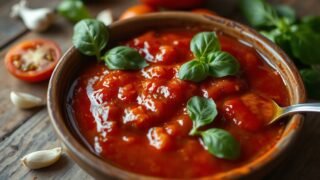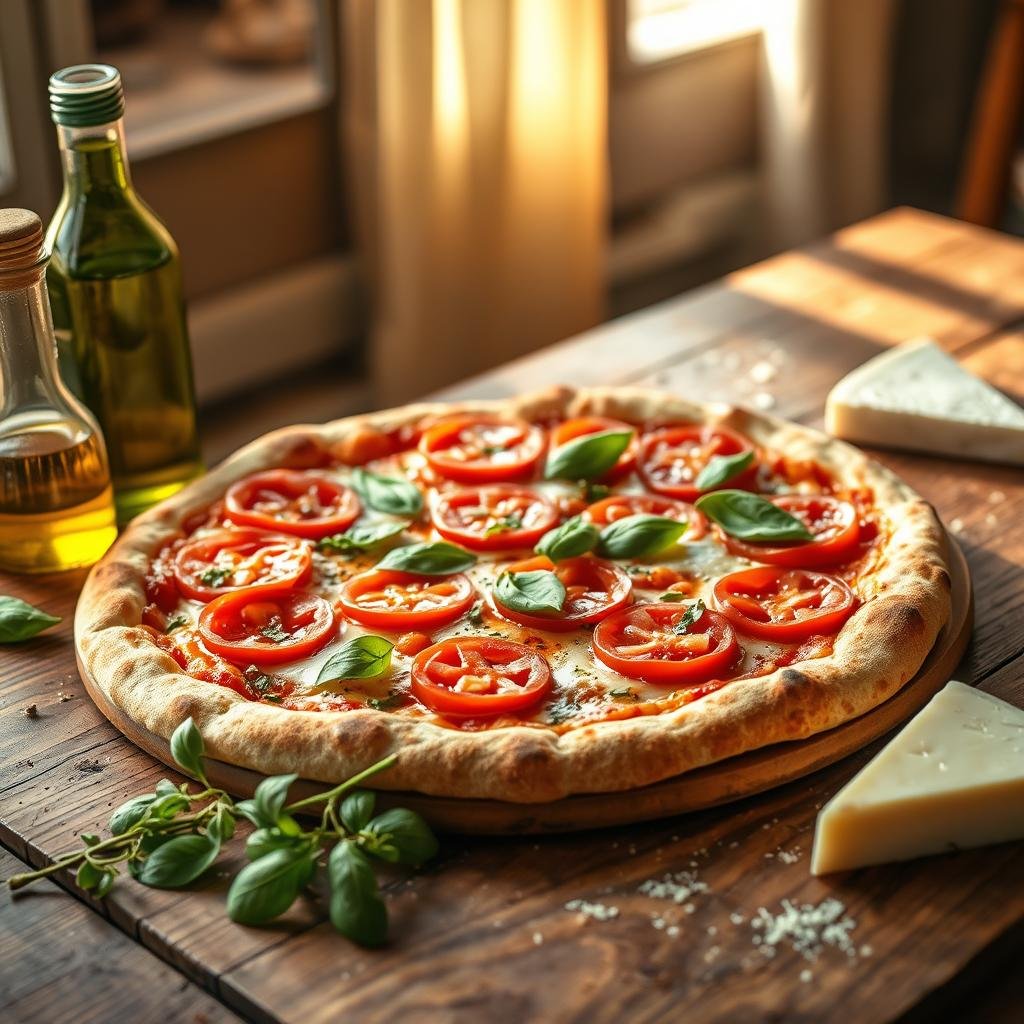

You’re here for a pizza that tastes like summer on a slice. This quick recipe shows how to build big flavor with few ingredients and minimal fuss. Use store-bought or homemade pizza dough, warm your oven or stone to the right heat, and you’ll get a blistered crust fast.
Start with ripe tomatoes, fresh basil leaves, high-quality mozzarella, and a sprinkle of grated parmesan. Preheat a pizza stone 20–30 minutes at 425°F for a golden bottom, or use a baking sheet if that suits your kitchen.
Quick tips: dust parchment with cornmeal to prevent sticking, bake about 10 minutes until cheese bubbles, then rest before slicing. Add basil after baking for a bright aroma and color that pops.
Key Takeaways
- Use quality ingredients to let each element shine.
- Preheat a stone 20–30 minutes at 425°F or choose a sheet for ease.
- Dust parchment with cornmeal for easy transfer and a crisp crust.
- Bake about 10 minutes until bubbly, then rest before slicing.
- Add basil after baking to keep leaves vibrant and aromatic.
Why you’ll crave this fresh, homemade pizza tonight
A Margherita-style pie wins you over by trusting top-notch basics: San Marzano tomatoes for a sweet, vibrant sauce, creamy mozzarella cheese, and aromatic leaves added after baking. These choices create bright, focused flavor without fuss.
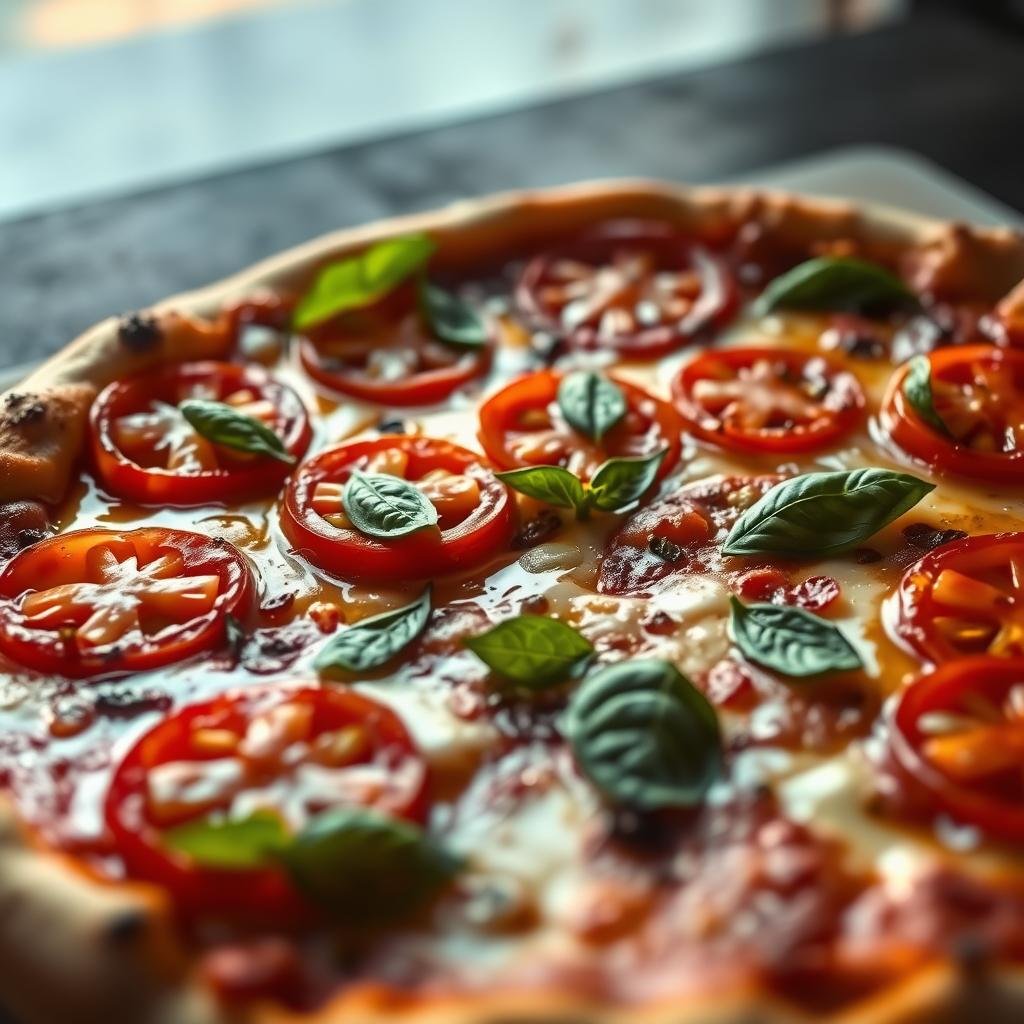
Simple ingredients, big Italian flavor: tomatoes, basil, and mozzarella
What you taste first is pure sweetness and acidity from ripe tomatoes that lift every bite. Thinly sliced Roma tomatoes keep the top from getting watery and let the cheese shine.
- You’ll get concentrated flavor because classic Italian items do the heavy lifting—juicy tomatoes, fragrant basil, and silky mozzarella cheese.
- You’ll enjoy a satisfying chew from rested dough with a crisp crust when baked hot and fast.
- You’ll love the pizzeria contrast: warm, stretchy cheese meeting cool, herbaceous leaves right before serving, making every slice feel alive.
Tomato Basil Pizza: Fresh and Simple — Ingredients & Tools
Assemble the essentials before you heat the oven. Gather one ball of pizza dough, a cup of sauce, about 1 cup fresh mozzarella, and 1/4 cup parmesan cheese. Add 15–20 fresh basil leaves, 1 cup halved cherry tomatoes or sliced roma tomatoes, and 1 tablespoon finely chopped garlic.
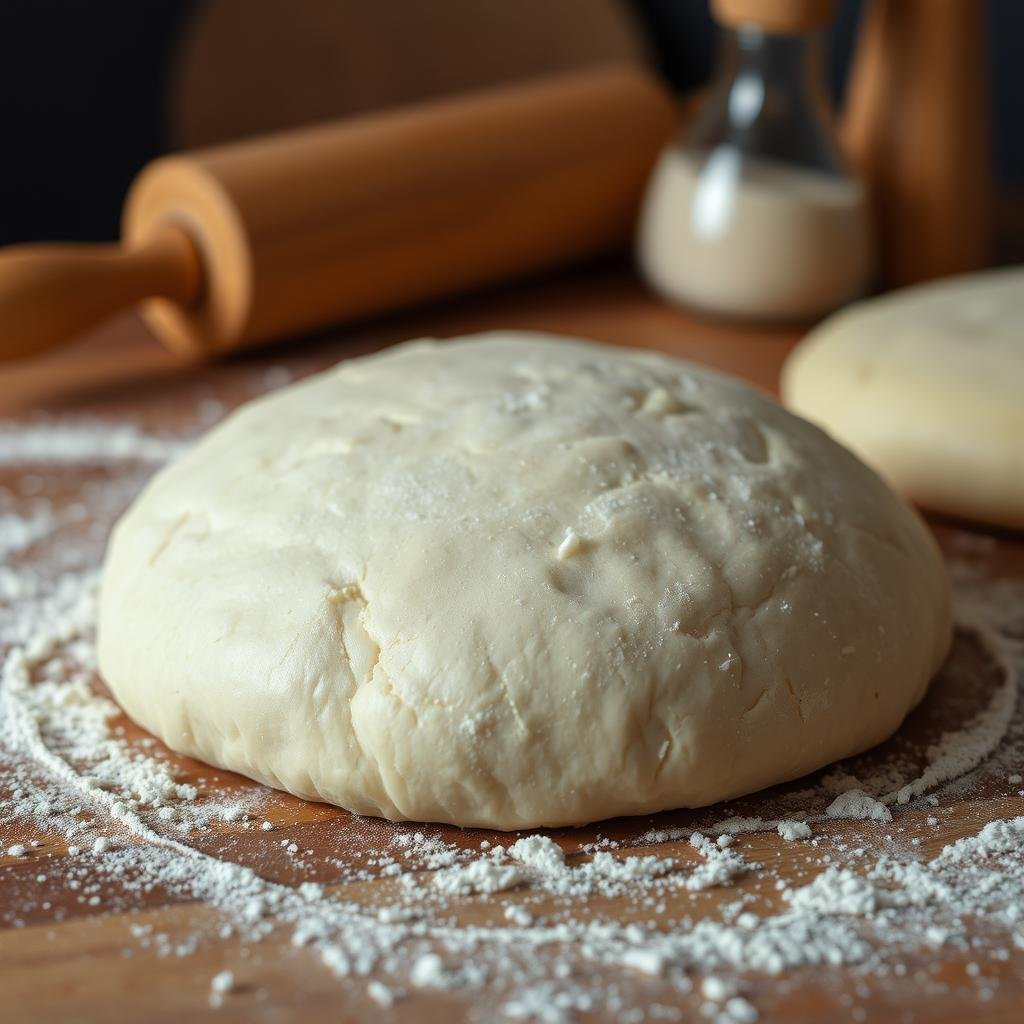
Core ingredients
Start with quality items for the best result. Use pliable pizza dough and fresh mozzarella for creamy melt. Sprinkle parmesan cheese for savory contrast and finish with fresh basil leaves after baking.
Tomatoes & aromatics
Choose roma tomatoes for firm texture or cherry tomatoes for juicy pops. Season lightly with garlic, a drizzle of olive oil, and a pinch of salt to let flavors breathe.
Equipment & smart swaps
Preheat a pizza stone 20–30 minutes for a blistered bottom. If you lack a stone, dust a baking sheet with cornmeal. Keep parchment paper on hand for easy transfers. For shortcuts, use store-bought dough or a jar of San Marzano tomato sauce; freeze extras in small containers.
| Item | Amount for 1 large | Purpose |
|---|---|---|
| pizza dough | 1 ball | Base |
| fresh mozzarella | 1 cup | Melty texture |
| parmesan cheese | 1/4 cup | Savory finish |
| cherry tomatoes / roma tomatoes | 1 cup | Bright topping |
| pizza stone / baking sheet / parchment paper | 1 each | Heat and transfer |
Step-by-step: make pizza with a crisp crust and melty cheese
Preheat the oven and pizza stone, then set up a parchment-lined station so assembly moves fast. Getting heat right is the single biggest factor in a crisp crust and bubbly top.
Preheat and prep
Set your oven to 425°F if you’ll use a heated stone. Let the stone warm for 20–30 minutes. For a baking sheet method, push the oven to 500°F and heat the sheet.
Lay a piece of parchment paper dusted with cornmeal on a peel or counter to keep dough from sticking.
Stretch, sauce, and top
Gently stretch the dough into a 12–14 inch round, keeping the rim slightly thicker for a strong crust. Spread about 1/2–1 cup San Marzano sauce in a thin layer so the crust stays crisp.
Add fresh mozzarella, a light sprinkle of parmesan, tomatoes, and finely chopped garlic. Season with a pinch of salt and pepper, then brush a little olive oil over the top for gloss and color.
Bake and finish
Slide the pie onto your hot stone or set the sheet on a rack. Bake minutes—about 10 on a hot stone, 10–12 on a preheated sheet—until the bottom is golden and the top bubbles.
Pull the pie when the edges are bronzed and the center has set. Rest a minute, then top with basil leaves and a drizzle of olive oil. Slice and serve immediately for the best texture.
“Preheating properly gives you a crust that crackles with each bite.”

Pro tips, variations, and timing to boost flavor
A few pro moves—how you heat, top, and time—turn an ordinary pie into something memorable.
Stone vs. baking sheet: pick the right tool for crust
Use a pizza stone when you want intense bottom heat and a blistered underside. Preheat the stone 20–30 minutes so the crust browns quickly and crisps without overbaking the top.
If you’re short on time, grab a baking sheet heated at 500°F. At that temperature the sheet gives a golden underside in about 10–12 minutes while keeping cheese nicely melted.
Pesto twist vs. fresh basil: depth without sogginess
Thin-slice roma tomatoes to reduce moisture and keep the top from getting soggy. Keep sauce light near the center where water pools.
For deeper herb flavor, try a pesto base—basil steeped in olive oil and nuts gives an oily, savory lift that penetrates the cheese. Note: commercial pesto often contains pine nuts or walnuts; if anyone has tree nut allergies, choose a nut-free pesto or finish with extra leaves after baking.
Layer cheese smartly: put fresh mozzarella first to anchor tomatoes, then a light sprinkle of parmesan for salty contrast without excess moisture. Finish with a drizzle of olive oil and a pinch of salt and pepper so the heat blooms aroma on top.
- Time management: prep toppings while the stone heats so dough spends less time waiting.
- Split test: use half pesto and half added herbs on one pie to compare flavors.
- Slicing: rest briefly, then cut with a sharp wheel to keep that crackling crust intact.
“Preheat properly and layer with intent—small steps make a big difference in texture and flavor.”
For a complete, easy walkthrough that pairs with these tips, see the best homemade pizza recipe.
Conclusion
Finish with confidence: preheat oven and stone early, stretch a 12–14 inch pizza dough, then top with San Marzano sauce, fresh mozzarella cheese, a scatter of parmesan cheese, sliced tomatoes, and a touch of garlic.
Slide the pie in to bake pizza hot and quick—watch for golden edges, bubbling cheese, and a crisp underside in about 10–12 minutes. Rest briefly, scatter basil leaves after baking, then slice for clean, even pieces that hold their shape.
Make pizza night repeatable by storing extra sauce up to one week chilled or three months frozen. This recipe keeps ingredients focused so each bite shows bright tomato, creamy mozzarella, and bright herb flavor every time.
FAQ
How do you get a crisp crust using a pizza stone or baking sheet?
Preheat your oven to 475–500°F and let the stone heat for at least 30 minutes. Lightly dust the peel or baking sheet with cornmeal or flour so the dough slides easily. If you use a sheet, place it in the oven while it preheats to mimic a stone. Bake until the edges are golden and the cheese bubbles, usually 8–12 minutes depending on thickness and oven.
What’s the best cheese combination for melty, flavorful results?
Use fresh mozzarella for creaminess and shredded low‑moisture mozzarella for stretch. Add a sprinkle of grated parmesan for savory depth. Pat the fresh mozzarella dry on paper towels to avoid soggy spots, and distribute cheese evenly for consistent melting.
Can you use store‑bought dough and how should you prepare it?
Yes. Let store dough come to room temperature for 30–60 minutes so it’s easier to stretch. Dust your work surface with flour, gently press and stretch the dough to avoid overworking it. For crispness, finish on a preheated stone or hot sheet pan.
Which tomatoes work best: Roma, cherry, or canned San Marzano?
Roma and cherry both work well. Roma give concentrated flavor for a saucy base; cherry adds bright bursts when sliced. For a cooked sauce, canned San Marzano offer rich, balanced acidity. Choose based on texture and convenience you prefer.
How do you prevent soggy toppings, especially from tomatoes and pesto?
Slice tomatoes thin and pat them dry to cut excess moisture. If using pesto, apply sparingly or mix with a little olive oil to loosen it. Bake on a hot surface so moisture evaporates quickly, and finish with fresh leaves after baking to preserve aroma.
What oven temperature and baking time give the best results?
Aim for 475–500°F for a balance of char and melt. Thin crusts usually need 7–10 minutes; thicker crusts take 10–14 minutes. Watch for bubbling cheese and browned edges as your cue to remove the pizza.
Should you use parchment paper or cornmeal on the peel or sheet?
Both work. Parchment helps transfer delicate pies and prevents sticking, while cornmeal gives a slight crunch and prevents adhesion. Use parchment when you’re worried about sliding; use cornmeal for a traditional texture on a peel.
How do you finish the pie for the best flavor and presentation?
After baking, let the pie rest 2–3 minutes to set the cheese. Drizzle a little high‑quality olive oil, sprinkle grated parmesan, add fresh leaves, and crack fresh pepper. Slice with a pizza wheel and serve while hot to showcase melty cheese and bright herbs.
Can you add garlic, red pepper flakes, or other toppings without overpowering the base?
Yes. Mince or thinly slice garlic and scatter sparingly so it roasts rather than burns. Use red pepper flakes as a finishing touch or sprinkle lightly before baking for gentle heat. Balance additional toppings so they complement the core flavors of cheese and herbs.
What tools are essential: peel, stone, sheet, or parchment?
A pizza stone (or steel) and a peel give pro results, but a rimless baking sheet works well too. Keep parchment on hand for easy transfer and cleanup. A good pizza cutter and a bench scraper help with slicing and dough handling.