
Detroit-style and Sicilian pizza look almost identical at first glance — both are thick, rectangular, and baked in a pan. But bite into each one and the differences are obvious. The crust feels different, the cheese is layered differently, and the whole flavor profile is distinct.
Here’s everything you need to know about what actually separates these two iconic pan pizzas.
The Quick Answer
Sicilian pizza originated in Sicily, Italy and came to America through Italian immigrants, particularly in New York. It has a thick, focaccia-like crust — light and airy inside with a crispy olive-oil-fried bottom. The sauce goes on top of the cheese.
Detroit-style pizza was invented in 1946 at Buddy’s Rendezvous in Detroit, Michigan. It has a similarly thick crust but with a denser, chewier crumb and caramelized cheese edges from the brick cheese that’s pressed all the way to the sides of the pan. The sauce goes on top — after the cheese.
Crust: Airy vs. Chewy
This is where the two styles differ most noticeably.
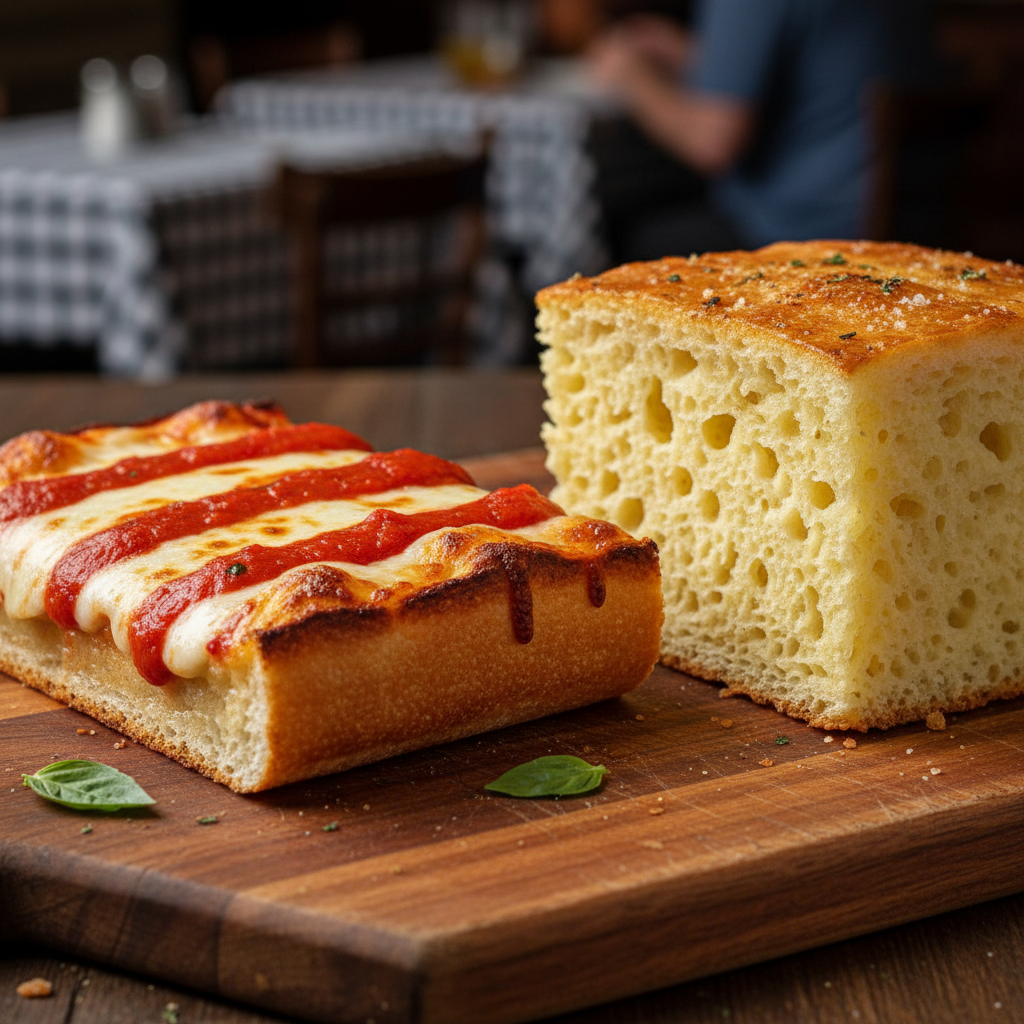
Sicilian crust is made with a high-hydration dough that’s given a long, slow proof — often 8–24 hours. This creates an open, bubbly crumb structure similar to focaccia bread. The inside is light and pillowy. When you pick up a slice, it almost has a bread-like bounce to it.
Detroit crust is also thick, but it’s denser and chewier. The dough is typically proofed directly in a well-oiled pan, and the shorter proof time produces a tighter crumb. The texture is more similar to a thick doughy bread roll than focaccia — substantial and satisfying in a completely different way.
Both have crispy, oil-fried bottoms — but Detroit’s tends to be even crispier because of the high-sided blue steel pans that concentrate heat around the dough.
Cheese: The Biggest Difference
If there’s one thing that truly defines Detroit-style pizza, it’s the cheese — specifically Wisconsin brick cheese. This mild, slightly tangy cheese melts beautifully and — crucially — caramelizes against the hot sides of the pan, creating those iconic lacey, crispy cheese edges that Detroit pizza is famous for.
Sicilian pizza traditionally uses mozzarella (fresh or low-moisture). The cheese is spread across the top of the dough before the sauce is added, which helps keep the crust from getting soggy. No caramelized edges — just even, melted mozzarella coverage.
Detroit: brick cheese pushed to the edges = crispy caramelized crust border.
Sicilian: mozzarella, no caramelized edges.
Sauce: Same Idea, Different Execution
Both styles put the sauce on top — but for different reasons and with different results.
On Sicilian pizza, a chunky, rustic tomato sauce is spread over the cheese in a thin layer. It’s often barely cooked — just crushed San Marzano tomatoes with olive oil and oregano — and it stays bright and fresh-tasting after baking.
On Detroit pizza, the sauce is dolloped in thick stripes or spots across the top of the cheese rather than spread evenly. This “racing stripe” sauce application is a Detroit signature. The sauce is usually a bit sweeter and more cooked-down than Sicilian sauce.
Shape and Size
Both are rectangular, but their proportions differ. Sicilian pizzas are typically baked in a 12×18-inch half sheet pan and cut into large square slices — 12 to 15 pieces per pie. Detroit pizzas are traditionally baked in smaller, deeper blue steel pans (10×14 inches is standard) and cut into fewer, thicker rectangular slices, usually 8 per pie.
Side-by-Side Comparison
| Sicilian Pizza | Detroit-Style Pizza | |
|---|---|---|
| Origin | Sicily, Italy / New York | Detroit, Michigan (1946) |
| Crust texture | Light, airy, focaccia-like | Dense, chewy, doughy |
| Cheese | Mozzarella | Wisconsin brick cheese |
| Cheese placement | Under the sauce | On top, pushed to the edges |
| Sauce | Chunky, rustic tomato | Sweet, cooked-down, in stripes |
| Pan | Oiled rectangular sheet pan | Deep blue steel pan |
| Signature feature | Crispy olive oil bottom | Caramelized cheese edges |
| Typical size | 12×18 inches | 10×14 inches |
Which One Should You Make at Home?
Make Sicilian if: You want a lighter, more bread-like pizza. You have a standard half sheet pan. You want to prep ahead — Sicilian dough benefits from a long overnight cold proof.
Make Detroit if: You want those incredible caramelized cheese edges. You can get your hands on Wisconsin brick cheese (or use a combination of mozzarella and muenster as a substitute). You want a denser, more indulgent slice.
Both styles are more forgiving than Neapolitan pizza — no wood-fired oven needed, no pizza peel required, and the thick crust is very tolerant of longer cooking times. If you’ve never made pan pizza at home, either of these is a perfect place to start.
The Verdict
Detroit and Sicilian pizza are both incredible in their own right — they just scratch different itches. Sicilian is the one you make when you want something that feels a little more like artisan bread-pizza. Detroit is the one you make when you want something maximally indulgent with those unforgettable crispy, cheesy edges. Honestly? Make both. They’re different enough that there’s no competition.