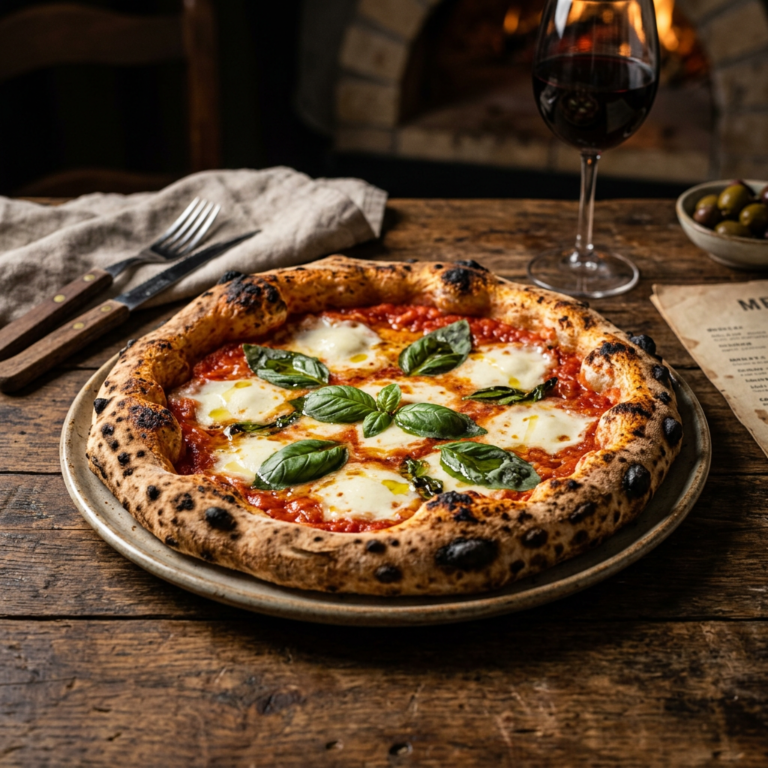

California-style pizza broke every rule when it emerged from Alice Waters’ Chez Panisse and Wolfgang Puck’s Spago in the 1980s. No red sauce. No pepperoni. Instead: goat cheese, smoked salmon, arugula, avocado, and whatever was fresh at the farmers market. It sounds odd — until you taste it. Then it makes complete sense.
What Is California-Style Pizza?
California pizza doesn’t have strict rules the way Neapolitan or Detroit does. The defining characteristics are: a thin, crispy crust, non-traditional toppings, fresh and seasonal ingredients, and a lighter, more health-conscious approach than East Coast styles. It’s the pizza style that treats the crust as a canvas rather than a food category.
The Crust: Thin and Crispy
California-style crust is similar to New York in thickness — thin and crispy — but often lighter and more cracker-like. It’s usually made with all-purpose or bread flour and rolled rather than hand-stretched, giving it a more uniform, even thickness. The goal is a crust that’s crispy enough to support fresh toppings without getting soggy.
Because the toppings are often delicate (fresh greens, raw vegetables, soft cheeses), the crust needs to be sturdy enough to hold everything together while being thin enough not to overpower the flavors on top.
The Toppings: Seasonal and Unexpected
This is where California pizza gets exciting. Some classic California combinations that work beautifully:
- Smoked salmon + crème fraîche + capers + red onion — no sauce, no heat, add everything after baking
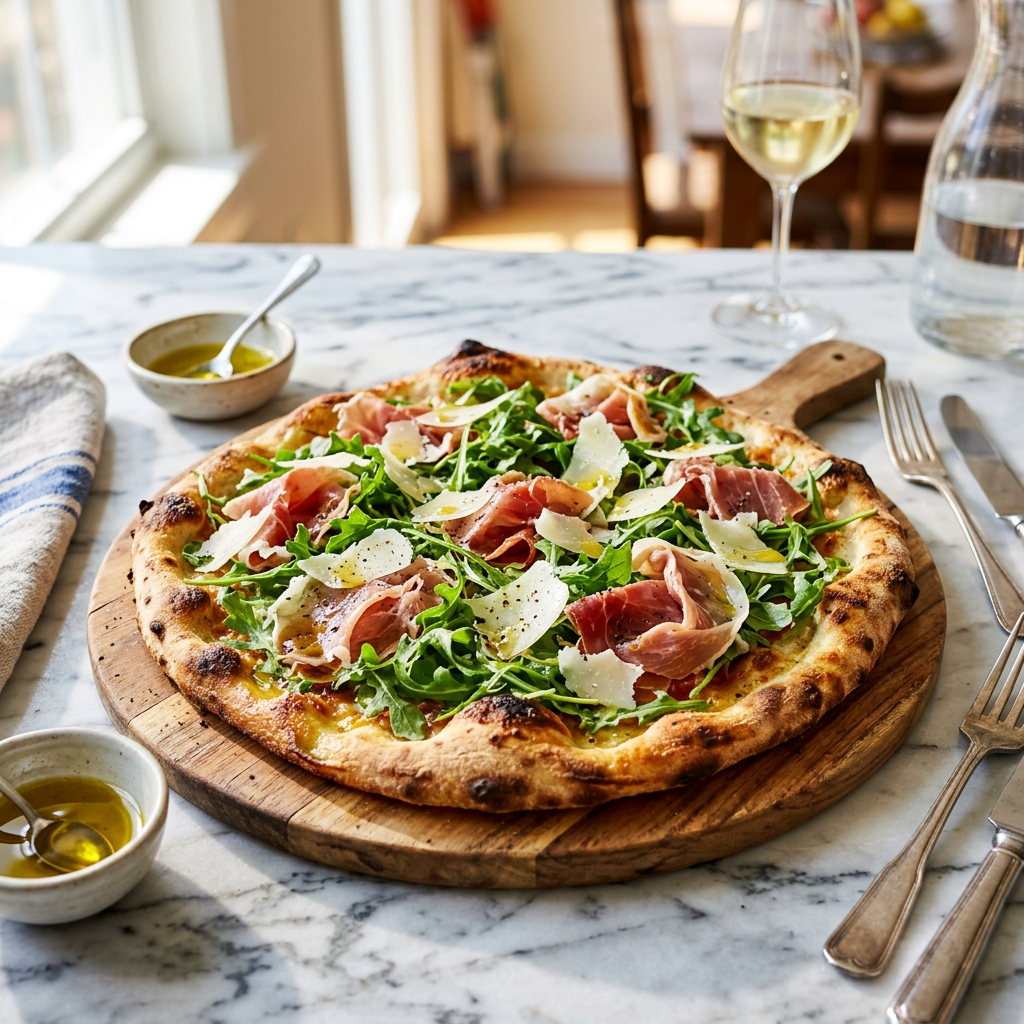
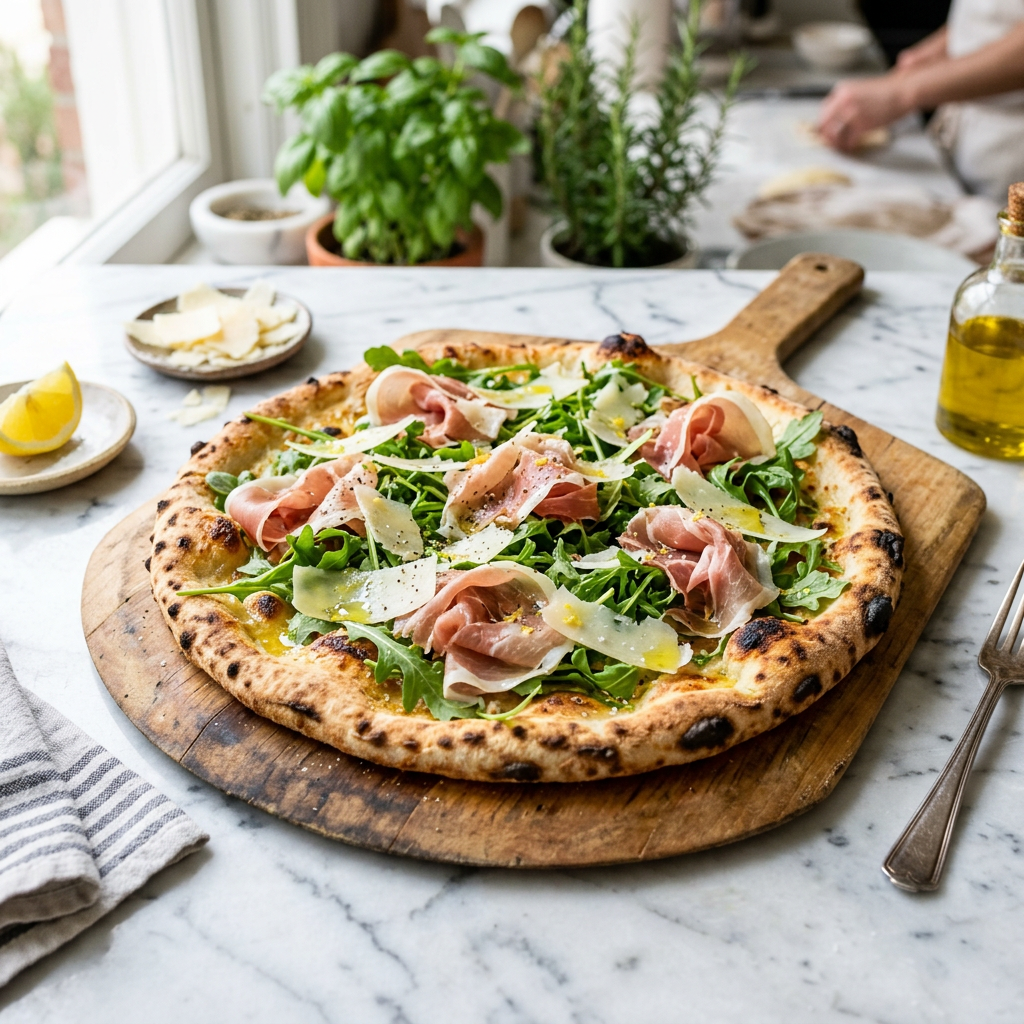
- Arugula + prosciutto + shaved parmesan + lemon olive oil — bake the crust, add toppings fresh
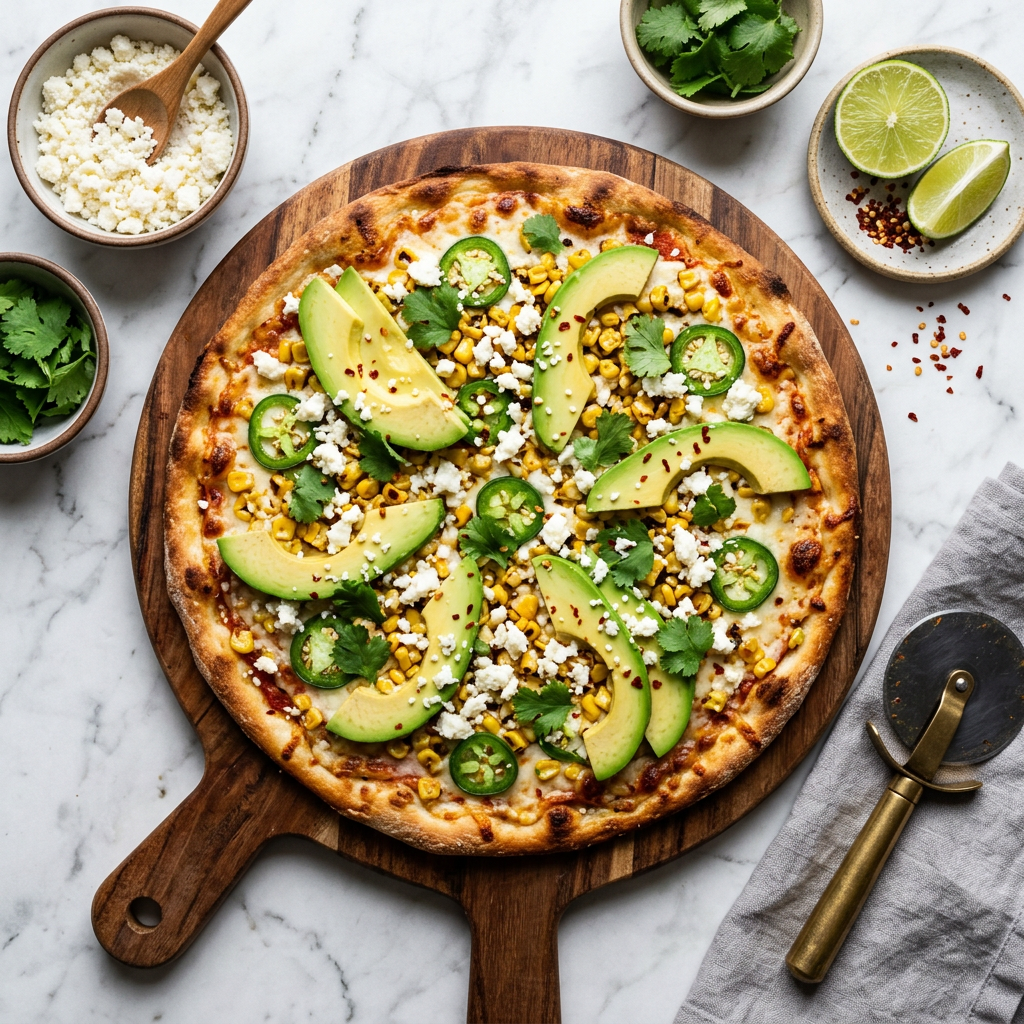
- Avocado + corn + cotija + jalapeño + lime — a California-Mexican fusion that’s incredible
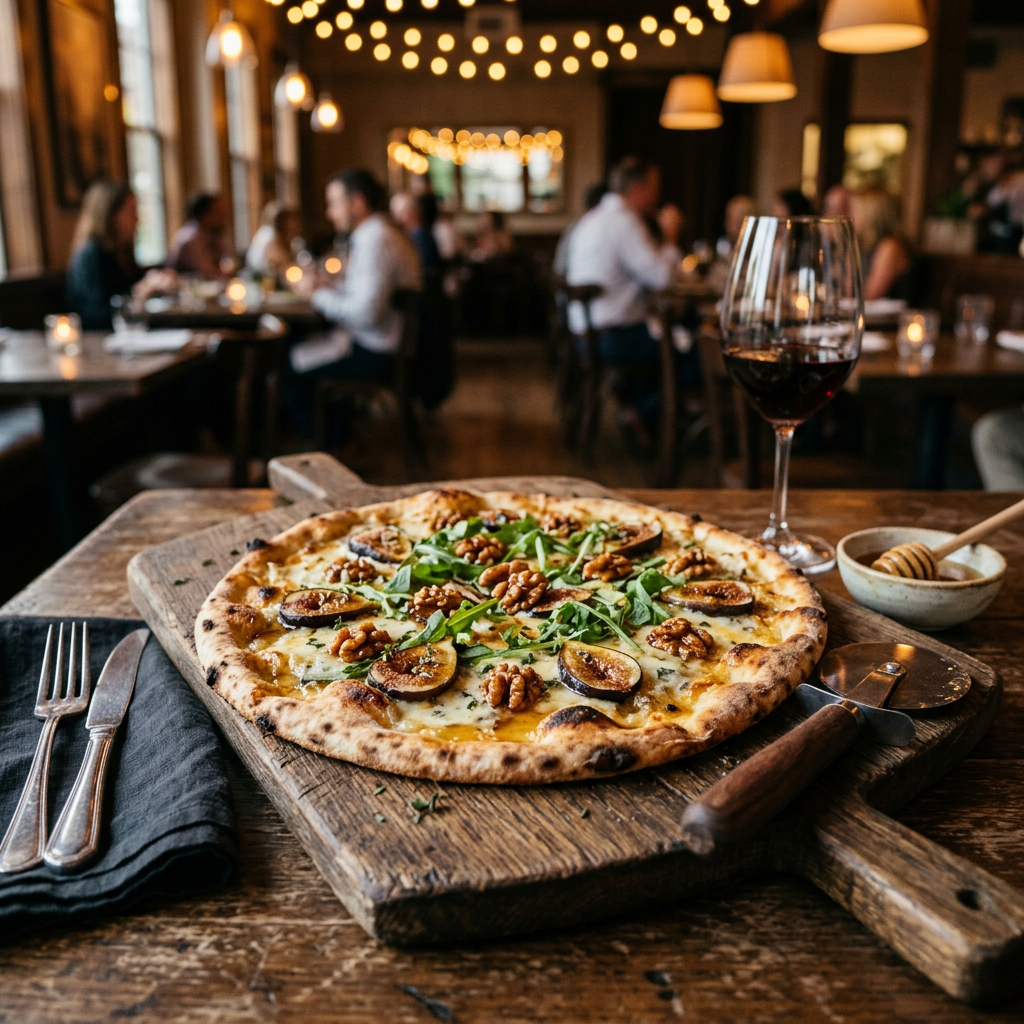
- Fig + gorgonzola + candied walnut + honey — sweet, salty, rich, and complex
The Sauce Situation
California pizza often skips traditional tomato sauce entirely. Common bases include: olive oil and garlic, pesto, white béchamel, crème fraîche, or simply nothing — just bare dough topped with cheese. When tomato sauce does appear, it’s usually a bright, fresh version rather than a cooked, heavy one.
The lighter base lets the toppings be the star. When you’re using quality fresh ingredients, you don’t need a heavy sauce competing for attention.
How to Build a California Pizza at Home
The approach is simple. Blind-bake your crust first (bake it plain for 5-6 minutes until it starts to crisp), then add your toppings and finish baking — or in many cases, add toppings entirely after baking. This keeps delicate ingredients like fresh herbs, greens, and raw vegetables vibrant and fresh rather than wilted and overcooked.
California pizza is the most creative and forgiving style to make at home. There are no wrong answers — just good ingredients, a hot oven, and whatever looks great at the market this week. Start with arugula and prosciutto, and you’ll never look back.