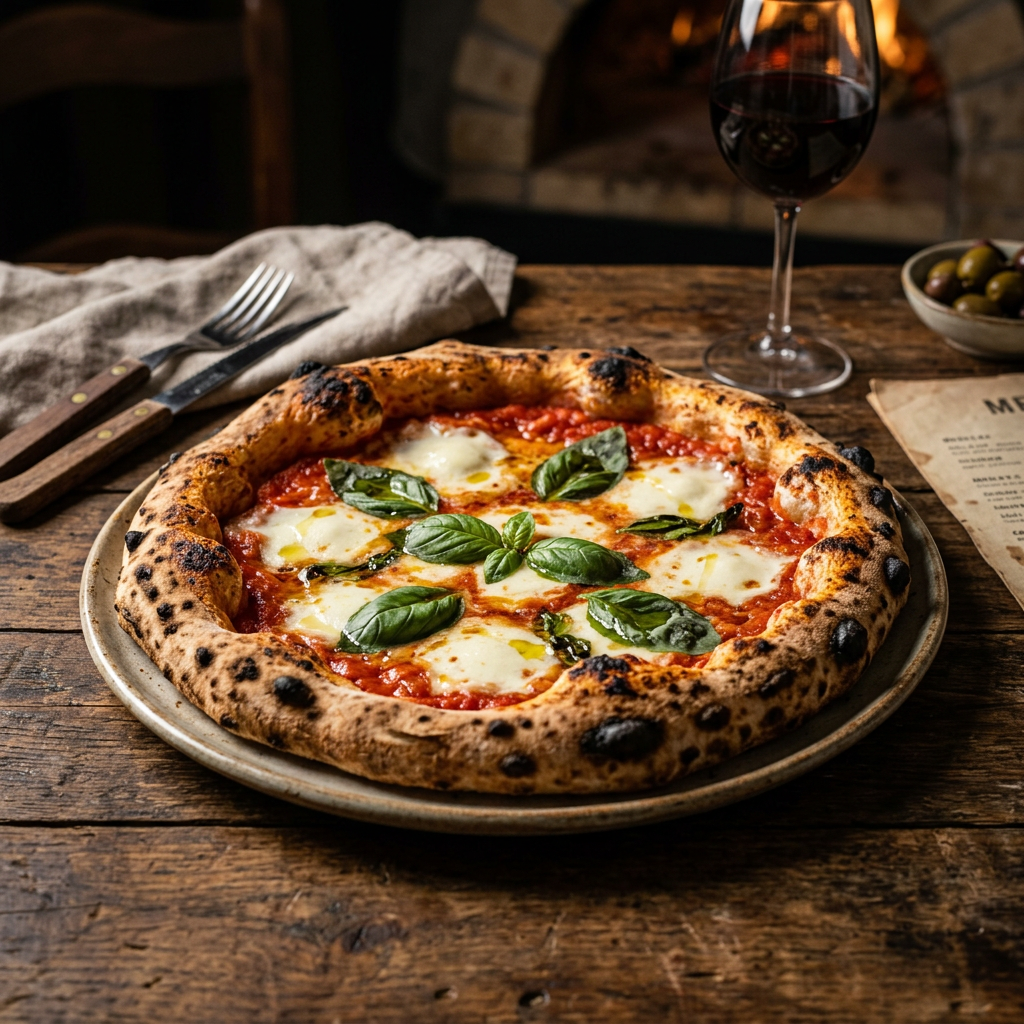

Neapolitan pizza is the original. Everything else — New York, Detroit, Chicago — descended from this thin, charred, slightly chewy masterpiece from Naples, Italy. Making a true Neapolitan at home is a challenge, but with the right flour, enough heat, and good timing, you can get remarkably close.
What Makes It Neapolitan?
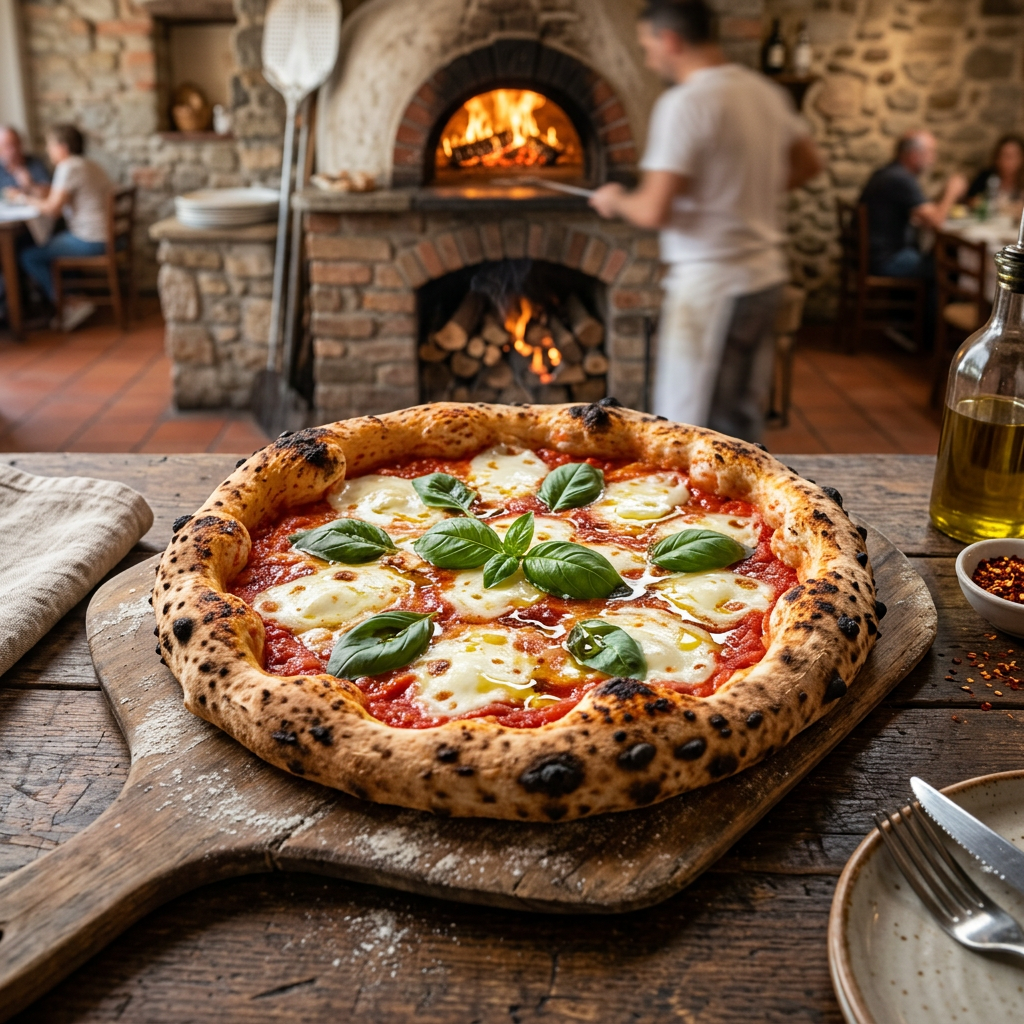
True Neapolitan pizza (certified by the Associazione Verace Pizza Napoletana) has strict rules: 00 flour, San Marzano tomatoes, fresh buffalo mozzarella, fresh basil, and olive oil. It’s baked in a wood-fired oven at 900°F for 60-90 seconds. The result is a pizza with a puffy, charred crust (called the cornicione), a wet, soft center, and minimal toppings.
The Flour: 00 Is Non-Negotiable
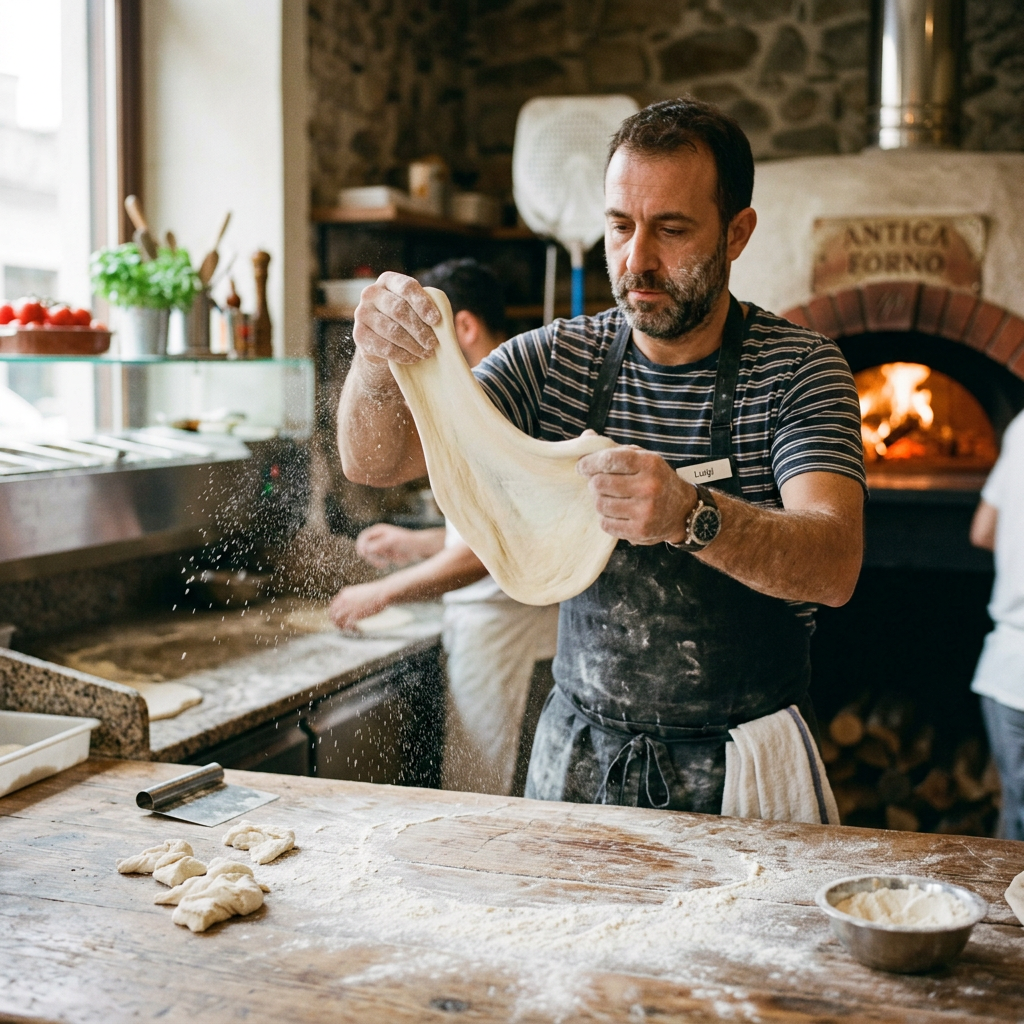
Italian 00 flour is finely milled and has a specific protein content that gives Neapolitan dough its characteristic silky texture and extensibility. It stretches without tearing, holds its shape, and creates that light, slightly chewy bite. All-purpose flour works in a pinch, but 00 flour (brands like Caputo are widely available) makes a noticeable difference.
The dough formula is simple: 00 flour, water, salt, and a tiny amount of yeast. The magic is in the long fermentation — 24 to 72 hours in the refrigerator. This slow cold ferment develops deep flavor and makes the dough incredibly extensible and easy to stretch by hand.
The Heat Problem (And the Solution)
This is where home cooks hit a wall. Neapolitan pizza needs 850-950°F to cook properly in 60-90 seconds. A standard home oven maxes out at 500-550°F, which means your pizza will take 6-8 minutes — long enough to dry out the toppings and lose that wet, tender center.
The best solutions: a dedicated pizza oven like the Ooni Koda 16 (reaches 950°F), a Baking Steel preheated for a full hour on your oven’s highest setting plus broiler, or the broiler method — bake on a screaming hot steel for 3 minutes, then switch to broil for 2 minutes to char the top. None of these are perfect, but the broiler/steel combo gets you surprisingly close.
The Toppings: Less Is More
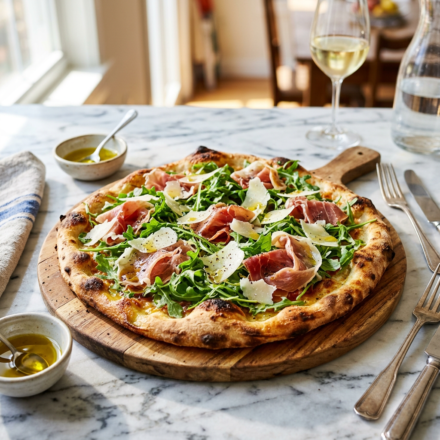
Neapolitan pizza is not a vehicle for toppings — it’s about the dough and the quality of each ingredient. A Margherita is the classic: crushed San Marzano tomatoes spread thin, torn fresh mozzarella (or fior di latte), a drizzle of olive oil, and fresh basil added after baking. That’s it. Don’t pile things on — the wet center of a Neapolitan is a feature, not a bug.
The Timing That Changes Everything
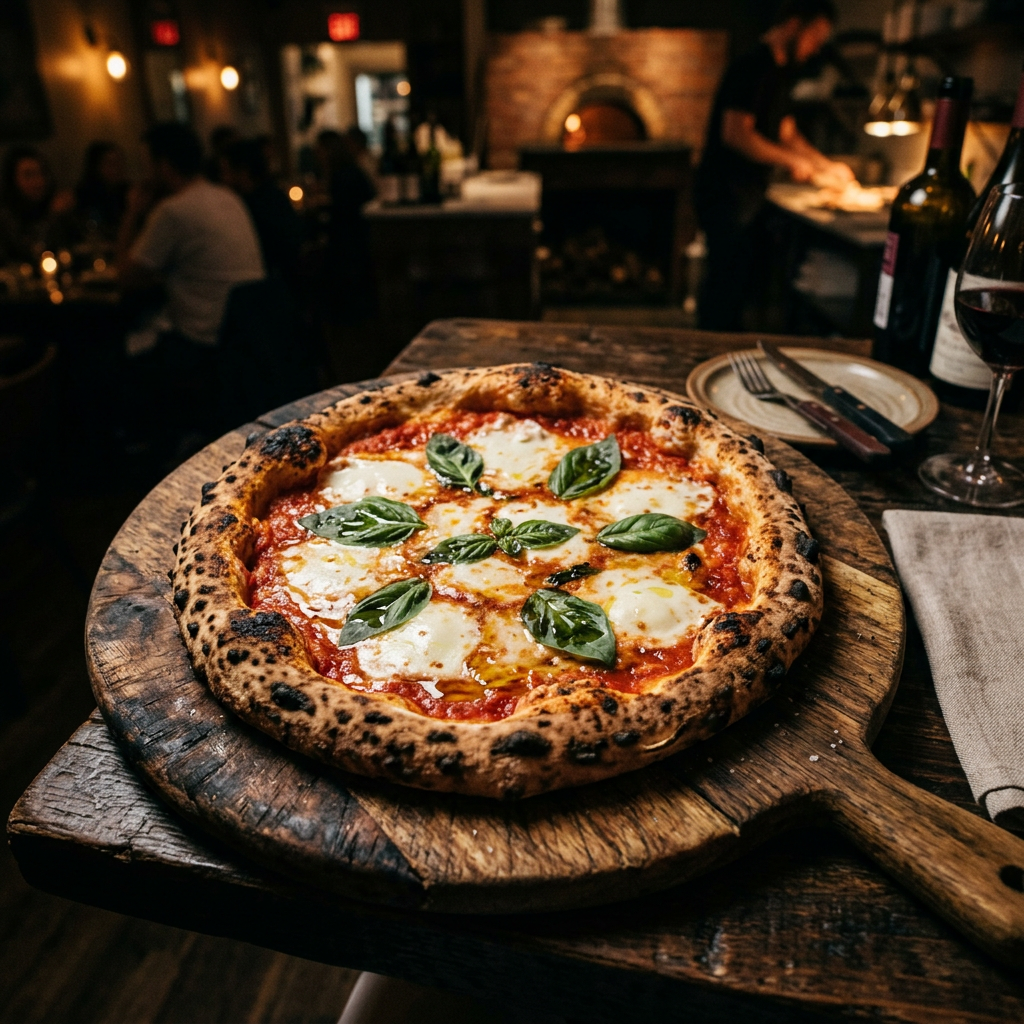
Here’s the secret most recipes skip: don’t add the fresh mozzarella before baking. Add it halfway through, or immediately after the pizza comes out of the oven. Fresh mozzarella has a very high water content — if it bakes the whole time, it releases liquid and makes the center soggy. Add it late and it stays creamy, milky, and perfect.
Neapolitan pizza at home is a skill you develop over several bakes. The first one won’t be perfect. By the third or fourth, you’ll be making something genuinely special.