To make authentic pizza dough, grab high-protein bread flour and some Italian 00 flour for that perfect chewy texture. Combine flour, water, yeast, and salt in a bowl, then knead for about 10 minutes. Let it rise in a greased bowl for 1-2 hours, then shape it to your liking. Keep an eye out for common mistakes, and don’t forget to experiment with creative uses for leftover dough. Stick around to discover more tips!
Key Takeaways
- Use high-protein bread flour and Italian 00 flour for a chewy, high-quality pizza dough.
- Incorporate instant or active dry yeast for efficient rising without extra steps.
- Knead the dough until smooth and elastic, then allow it to rise for 1-2 hours.
- Control hydration levels for a tender crust; avoid over or under-kneading.
- Explore creative uses for leftover dough, like focaccia or dessert pizzas, for fun variations.
The Essential Ingredients for Authentic Pizza Dough
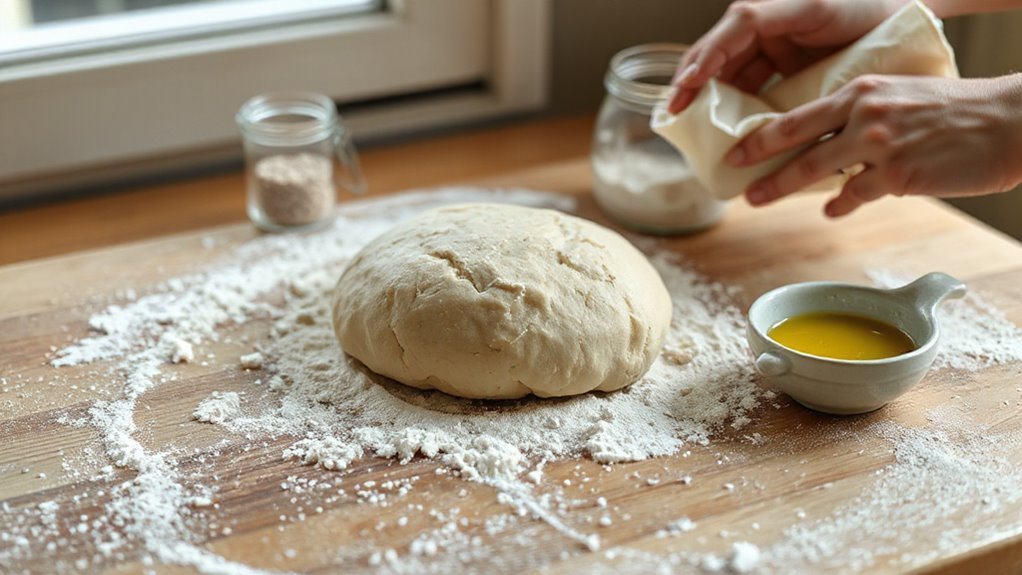
When you think about making authentic pizza dough, it all starts with the right ingredients. You can’t go wrong with flour types; using a high-protein flour, like bread flour, will give your crust that chewy texture you crave. But if you’re feeling adventurous, try mixing in some Italian 00 flour for that chef-level quality! Now, let’s talk yeast selection. You’ve got options: active dry yeast or instant yeast can both work wonders, but instant yeast is super convenient since you can mix it right into your dry ingredients. Remember, good dough needs a little love, and using quality ingredients sets the stage. So, grab your flour, choose your yeast, and you’re on your way to creating something delicious. Trust me, when you nail those basics, you’ll feel the freedom that comes with crafting your own gourmet pizza from scratch. Enjoy the process!
Step-By-Step Guide to Making Pizza Dough From Scratch
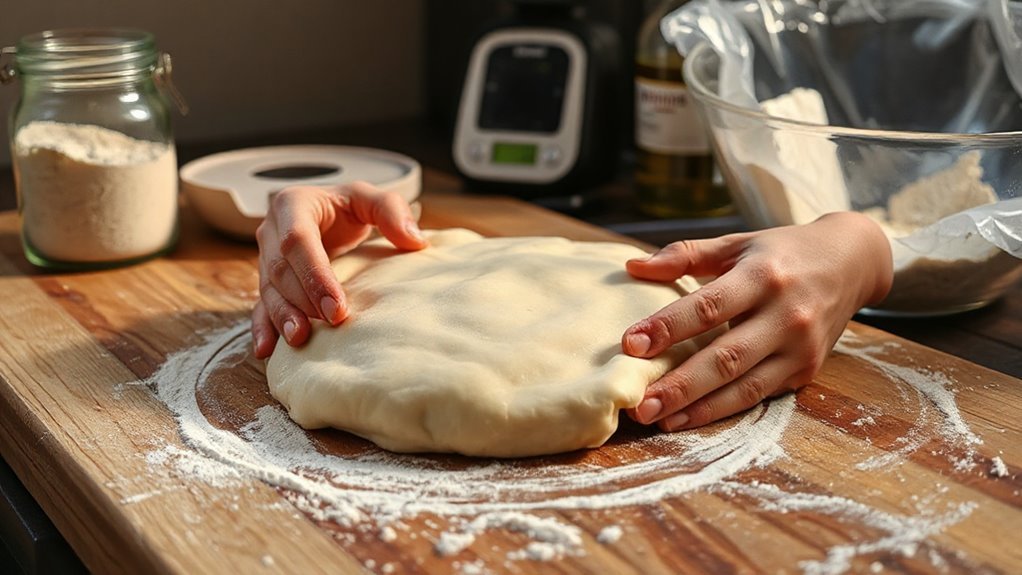
Now that you’ve got your ingredients sorted, it’s time to bring them together and create that mouthwatering pizza dough. Follow these simple steps to get your dough just right:
- Mix the ingredients: In a large bowl, combine your flour, water, yeast, and salt. Stir until everything’s blended.
- Knead the dough: Transfer the mixture to a floured surface and knead for about 10 minutes. You’re aiming for a smooth consistency.
- Dough fermentation: Pop the dough into a lightly greased bowl, cover it, and let it rise in a warm spot for 1-2 hours. This helps develop flavor and texture.
- Shape for crust thickness: Once it’s doubled in size, punch it down, shape it, and roll it out to your desired crust thickness.
Now you’re ready for toppings! Enjoy the freedom of creating your perfect pizza masterpiece.
Common Mistakes in Pizza Dough Making
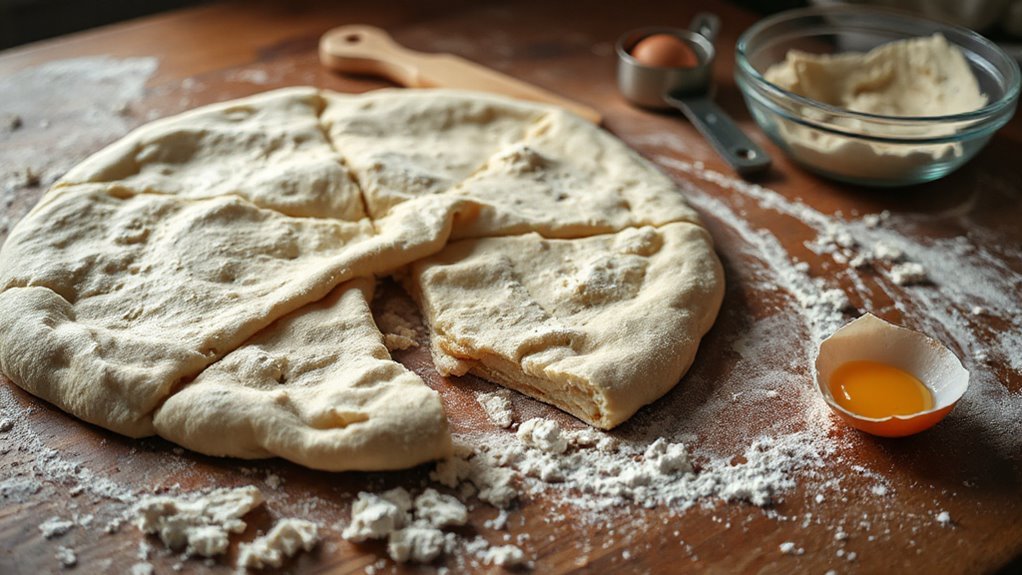
Even the best home chefs can trip up when making pizza dough, and a few common mistakes can really throw a wrench in your plans. One biggie is over kneading dough. It might seem tempting to give it extra love, but doing so can create a tough texture instead of that delightful chewiness you’re after. Remember, gentle kneading is your friend!
Another pitfall is incorrect proofing. When you don’t let the dough rise properly, you’ll miss out on the airy, bubbly crust that makes pizza magical. If it’s too short, your dough won’t develop enough flavor; too long, and it might collapse. Timing is everything!
Key Techniques for Achieving Perfect Pizza Dough Consistency
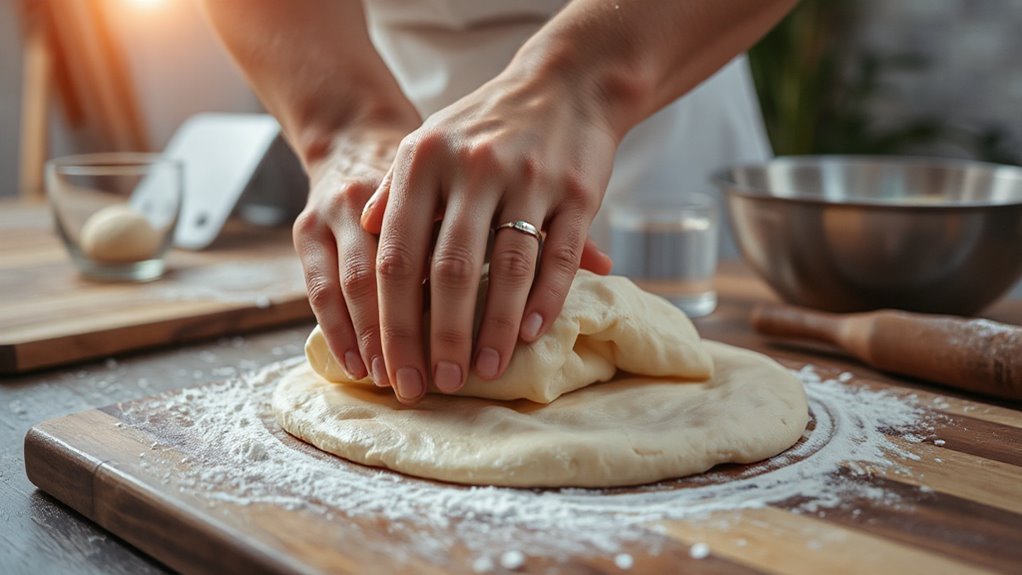
Making pizza dough can be a fun experience, but getting that perfect consistency can feel like a challenge—especially after facing those common slip-ups. With the right techniques under your belt, you can nail it! Here are some key tips to keep in mind:
Making pizza dough is a delightful adventure; mastering the right techniques will help you achieve that perfect consistency!
- Hydration Levels: Play around with water in your dough. A higher hydration level means a more tender crust.
- Kneading Techniques: Don’t overdo it! Knead until the dough is smooth and elastic—about 8-10 minutes is usually perfect.
- Resting Time: Let your dough rest after kneading. This helps relax the gluten, giving you that ideal stretchiness.
- Temperature: Keep an eye on the room temperature; it can affect your dough’s fermentation. If it’s too hot, it might rise too quickly.
Experiment with these techniques, and you’ll reveal the dough of your dreams! Enjoy the freedom of pizza-making!
Creative Ideas for Your Pizza Dough Beyond Traditional Pizza
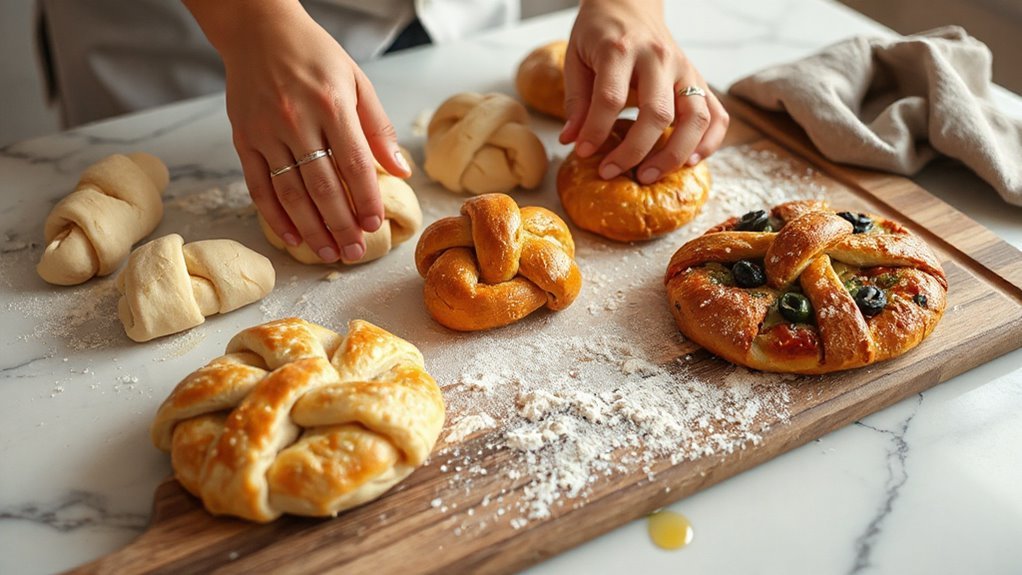
While pizza is a classic favorite, don’t let your dough be limited to just pies! You’ve got so many creative options to explore. Why not whip up some focaccia variations? Simply flatten the dough, drizzle with olive oil, sprinkle herbs, and bake it to golden perfection. It’s perfect for dipping or serving as a side!
Feeling a little adventurous? How about turning that dough into dessert pizzas? Roll it out, top it with sweet ingredients like Nutella, fruits, and a sprinkle of powdered sugar. Bake it until it’s all gooey and irresistible! You could even try cinnamon sugar twists by twisting leftover dough into ropes, baking them, and coating them with a buttery cinnamon topping.
The possibilities are endless! So, get playful with your pizza dough and let your creativity shine—it’s all about having fun in the kitchen!
Frequently Asked Questions
How Long Does Homemade Pizza Dough Last in the Fridge?
Homemade pizza dough typically lasts about 3 to 5 days in the fridge if stored properly. To keep it fresh, wrap it tightly in plastic wrap or place it in an airtight container. These dough storage tips can help you avoid any funky smells or texture changes. When you’re ready to use it, just let it come to room temperature before rolling it out. Enjoy that pizza freedom!
Can I Freeze Pizza Dough for Later Use?
Absolutely, you can freeze pizza dough for later use! Just imagine pulling out that neatly wrapped dough on a lazy Saturday, ready to create pizza magic. For best results, store it in an airtight container or plastic wrap. When you’re ready, use defrosting methods like placing it in the fridge overnight or leaving it at room temperature for a few hours. You’ll be all set for spontaneous pizza nights whenever you crave!
What’s the Best Flour Type for Pizza Dough?
The best flour type for pizza dough is definitely high-protein flour, like bread flour or even double zero flour. These give you that perfect chewy pizza texture you crave. If you want something a bit lighter, all-purpose flour works too, though your crust might be a tad softer. You’ve got options, so feel free to experiment and find what makes your homemade pizza truly your own. Enjoy the freedom to create!
Should I Let Pizza Dough Rise Overnight?
Absolutely, you should let your pizza dough rise overnight! It allows for extended dough fermentation, which improves the texture and flavor. You’ll wake up to a dough that’s light, airy, and bursting with taste. Just pop it in the fridge to keep it from over-proofing. Trust me, the extra time makes a world of difference. So, if you want that perfect crust, an overnight rise is definitely the way to go!
How Can I Tell When My Pizza Dough Is Ready?
To know when your pizza dough’s ready, you’ll want to feel its texture and watch how it rises. A gentle poke should result in a slow, thoughtful spring back. Embrace those kneading techniques; they’ll develop the gluten. As for dough fermentation, let it double in size and become puffy and airy. If it looks smooth and behaves like a fluffy cloud, you’re on the right track—time to express your pizza creativity!
Conclusion
Now that you’ve got the scoop on making authentic pizza dough, you’re ready to impress your friends at your next pizza night! Did you know that about 93% of Americans eat pizza at least once a month? With your newfound skills, you can be part of that tasty statistic! So, roll up your sleeves, get creative, and have fun experimenting with delicious toppings. Your homemade pizza is bound to be a hit—who can resist that fresh dough?