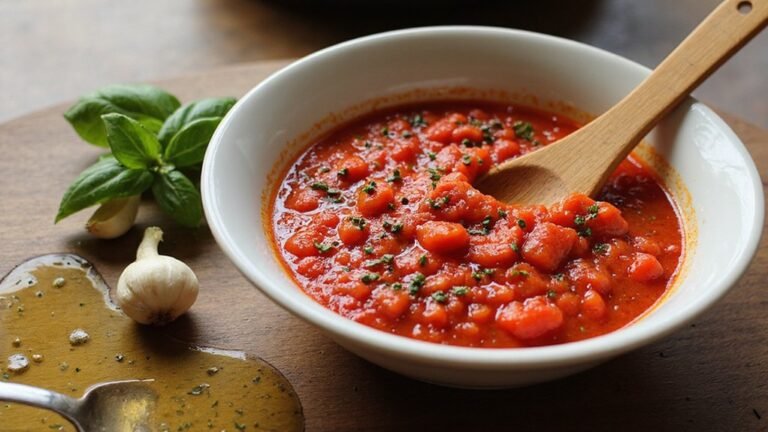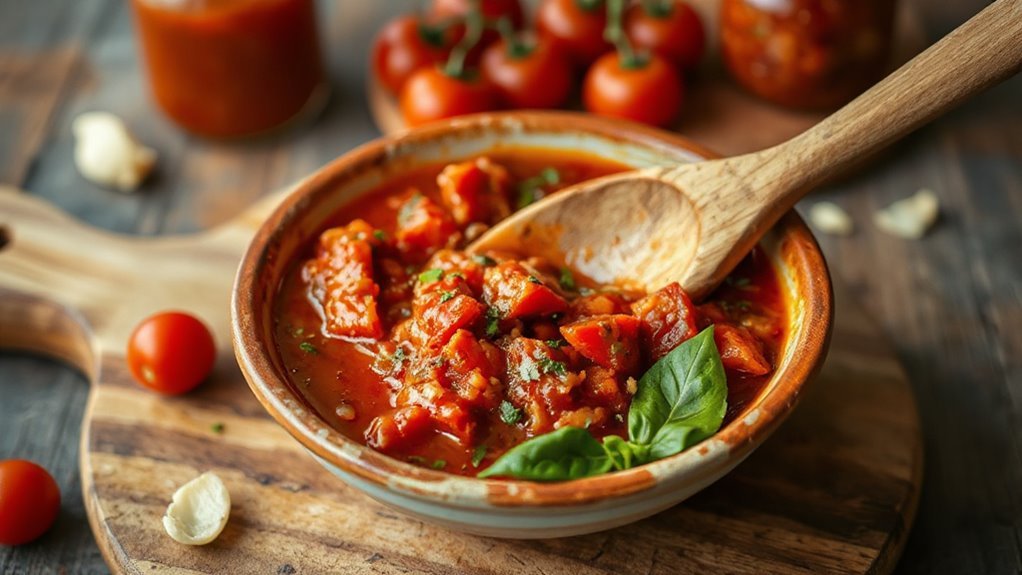

For an authentic pizza sauce, start with high-quality canned San Marzano tomatoes, and mix in minced garlic, olive oil, salt, and fresh herbs like basil and oregano. Experiment with the ratios to match your taste, and balance out the acidity with a pinch of sugar or a dash of balsamic vinegar. Allow the sauce to sit for the flavors to meld, and you’re ready to craft memorable pizzas. Stick around for more tips on customization and flavor pairings!
Key Takeaways
- Utilize high-quality canned San Marzano tomatoes as the base for a rich and authentic pizza sauce.
- Combine crushed tomatoes with fresh herbs like basil and oregano for a burst of flavor.
- Add minced garlic, salt, and olive oil to enhance depth and vibrancy in your sauce.
- Balance acidity with a touch of sugar or honey and brighten the flavor with balsamic vinegar.
- Let the sauce sit for flavors to meld before using it on your pizza for the best taste.
The Essence of Authentic Pizza Sauce
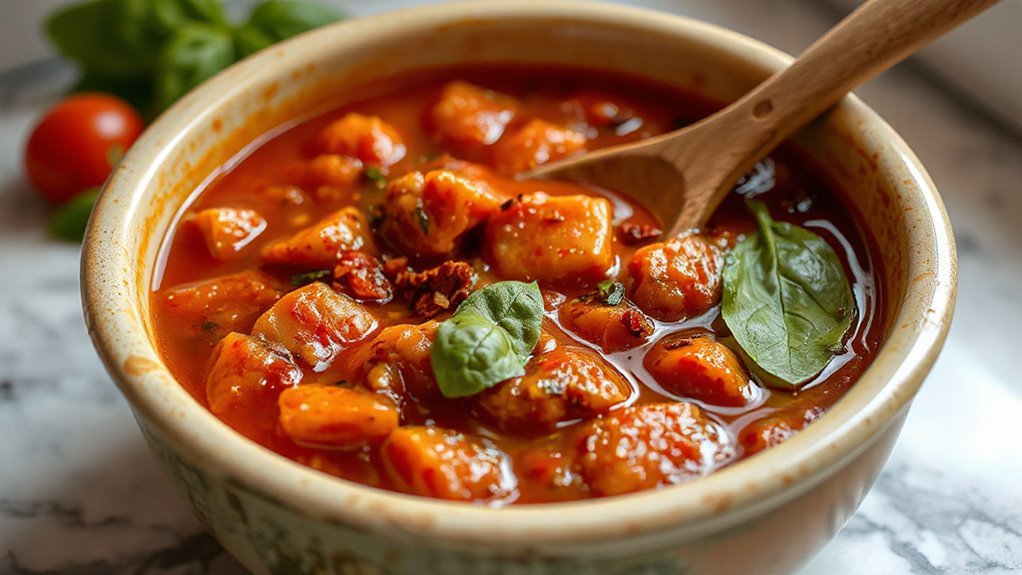
When you think about what makes a pizza truly delicious, the sauce is where it all begins. It’s not just any sauce; it’s the heart of every great pizza. The perfect sauce consistency is key—it shouldn’t be too runny or too thick. You want it to cling to your dough without drowning it. Also, consider the flavor profile. A tangy tomato base, spiced just right with garlic, onion, and maybe a hint of basil, can elevate your pizza to new heights.
Experiment with fresh ingredients for a burst of flavor that sings on your palate. Balancing sweetness and acidity will keep your taste buds happy all pie long. Trust your instincts and have fun with it! The right sauce can transform your homemade creation into a masterpiece, giving you the freedom to customize each bite. Just remember, a great pizza starts with a sauce you love.
Key Ingredients for Homemade Pizza Sauce
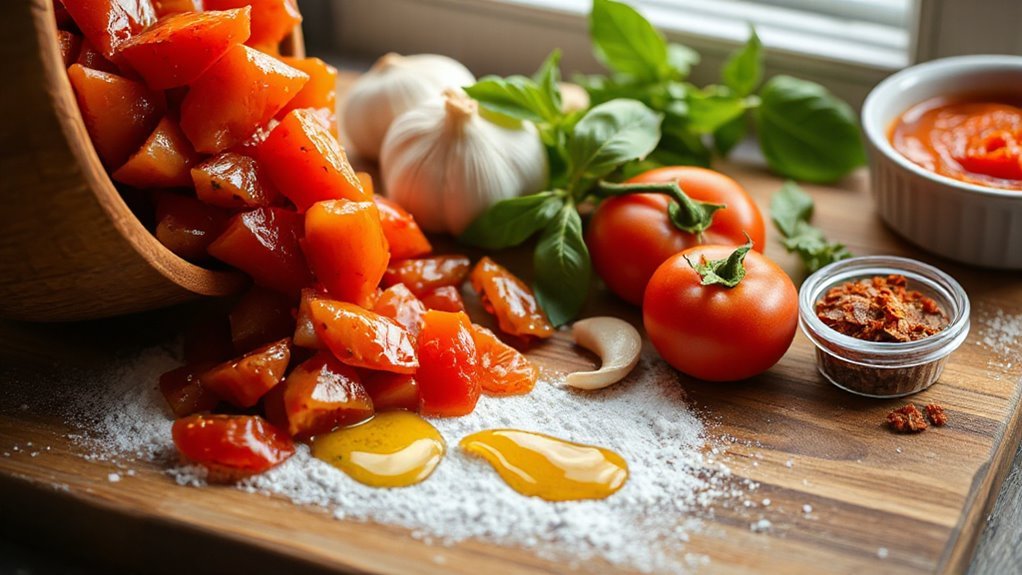
Creating the perfect homemade pizza sauce starts with a handful of key ingredients that pack a punch. First off, the star of your sauce is canned tomatoes. Opt for high-quality canned San Marzano tomatoes; they give you a rich, sweet base that’s hard to beat. Next, don’t skimp on the fresh herbs—basil and oregano are essential for that authentic flavor. You can even toss in a bit of thyme if you’re feeling adventurous!
Adding garlic brings depth, while a pinch of salt enhances all those vibrant flavors. If you like a bit of heat, a sprinkle of red pepper flakes can elevate your sauce beautifully. Remember, simplicity is key; let the fresh ingredients shine. With these components, you’ll create a sauce that complements your pizza perfectly and keeps the freedom of home cooking alive! So gather your ingredients and get ready to savor this delicious endeavor.
Step-by-Step Guide to Crafting Your Sauce
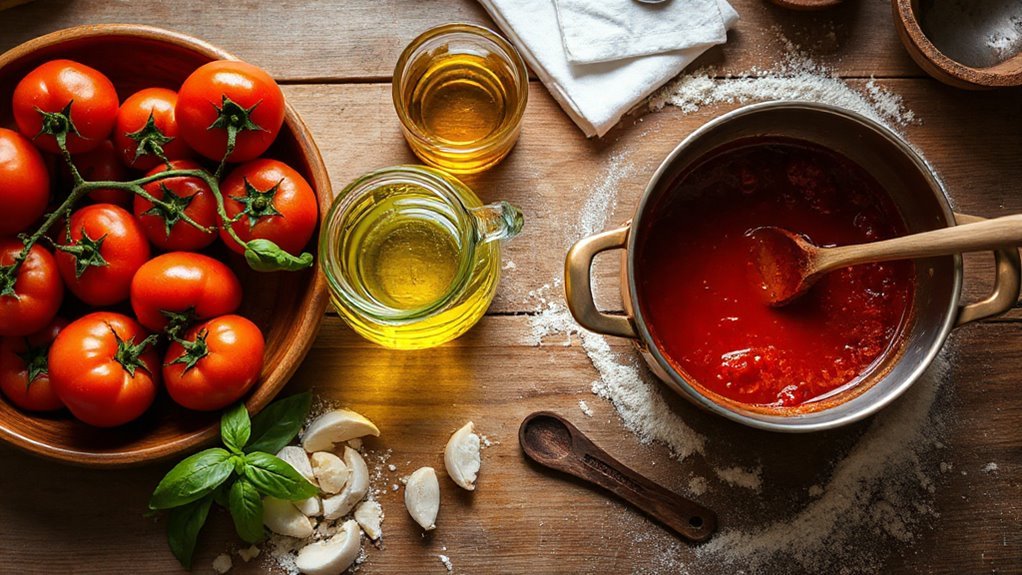
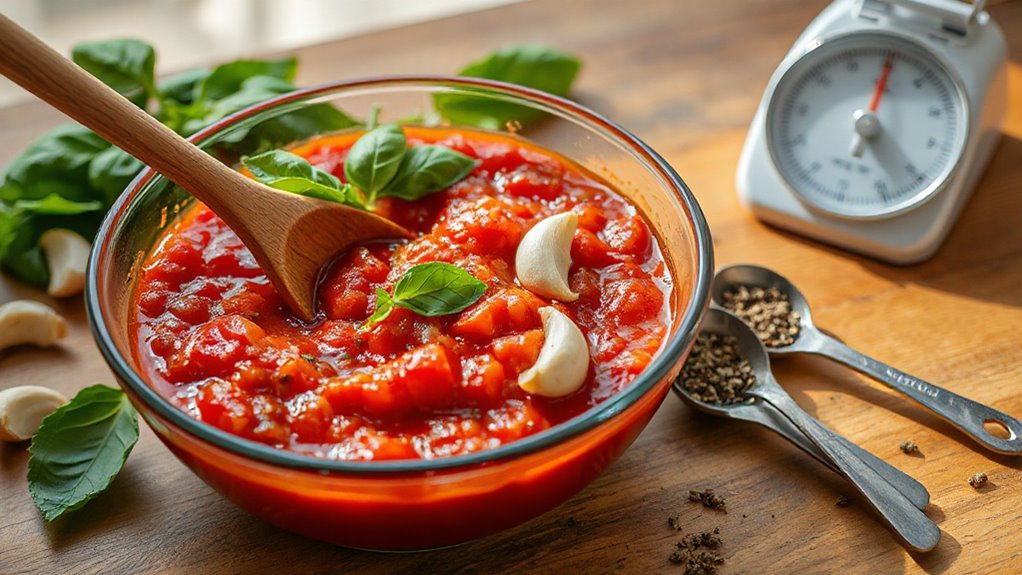
Before you plunge into your sauce-making adventure, gather all your ingredients and tools so you’re ready to roll. Start by tossing your crushed tomatoes into a large mixing bowl, then add minced garlic, salt, and a splash of olive oil. You’ll want to play around with ingredient ratios to find what suits your taste—maybe a pinch of sugar if you like it sweeter, or some dried oregano for that classic flavor.
Now, it’s all about mixing until you reach your desired sauce consistency. If it feels too thick, a little water can help loosen things up; if it’s too runny, consider adding more tomatoes or a touch of tomato paste. Remember, this sauce is your canvas—create something you love! Once it’s blended, let it sit for a bit to let those flavors meld, and get ready to slather it on your pizza dough. Enjoy the freedom of crafting a sauce that’s uniquely yours!
Flavor Balancing Tips
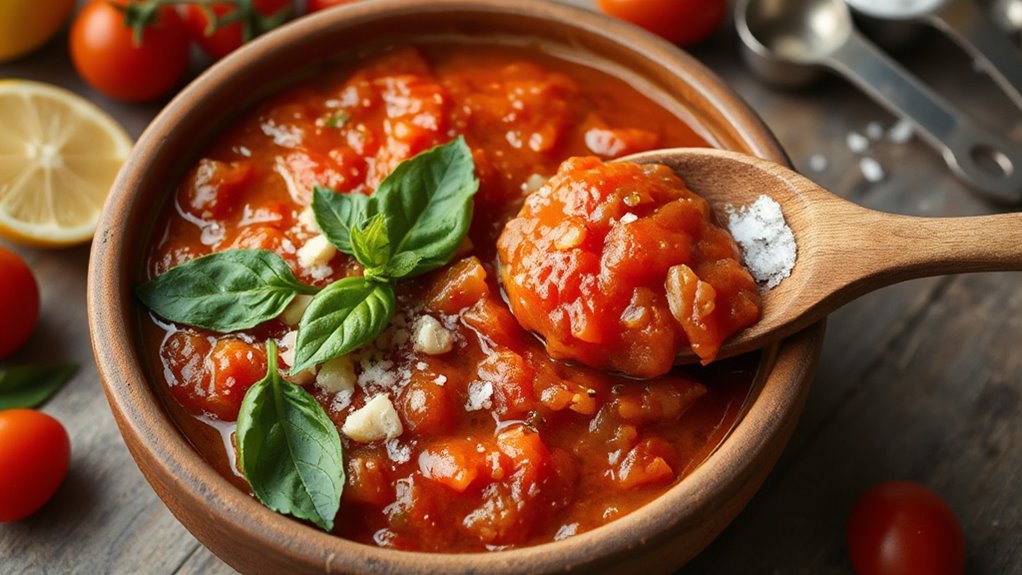
Getting the right balance of flavors in your pizza sauce can make all the difference in elevating your pie. Here are some straightforward tips to achieve that perfect flavor harmony:
- Sweetness Balance: Add a teaspoon of sugar or a pinch of honey to balance out the acidity in your tomatoes. This subtle sweetness can enhance the overall flavor.
- Acidity Adjustment: Use a splash of balsamic vinegar or a dash of lemon juice to brighten the sauce while keeping the acidity in check.
- Herb Coordination: Fresh herbs like basil and oregano should complement each other, so experiment with ratios to find your favorite combo.
- Salt Sensibility: Start with a little salt, then taste and adjust. It enhances the other flavors without overpowering them.
Top 5 Common Missteps in Homemade Pizza Sauce
When making homemade pizza sauce, it’s easy to make a few common missteps that could leave your sauce falling flat. First, don’t ignore sauce consistency; a watery sauce can ruin your pizza. Aim for a smooth, thick blend that clings to the dough. Second, watch your ingredient ratios. Too much garlic or oregano can overpower the tomatoes, so find that perfect balance. Third, don’t skip the fresh herbs! Dried herbs have their place, but fresh brings your sauce to life. Fourth, remember to simmer your sauce. Cooking it briefly enhances flavors and lets the ingredients mingle. Finally, don’t rush the process; let the sauce sit a bit to develop those bold flavors. By avoiding these pitfalls, you’ll elevate your pizza sauce from bland to brilliant, giving you the freedom to enjoy a truly authentic slice!
Keeping Your Sauce Fresh and Tasty
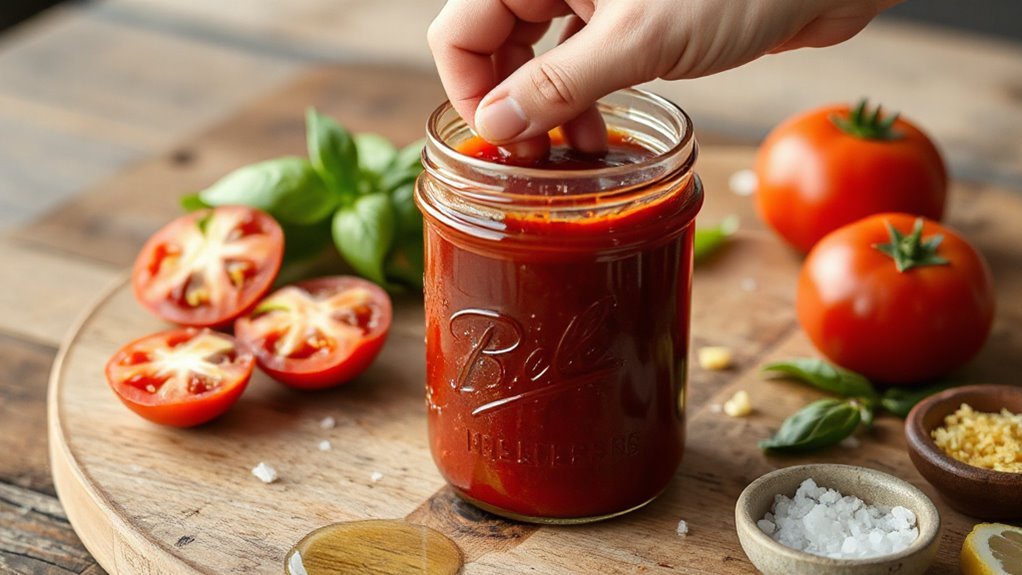
After perfecting your pizza sauce recipe and avoiding those common missteps, it’s important to think about how to keep it fresh and tasty for your next pizza night. Here are some sauce storage and freshness tips to bear in mind:
- Cool Before Storing: Let your sauce cool completely before transferring it to the fridge or freezer. This prevents condensation and keeps it fresher longer.
- Use Airtight Containers: Choose airtight containers for storing. Glass jars are great, but any good seal will do the trick to avoid spoilage.
- Batch it Up: Reflect on making larger batches and dividing them into smaller portions. This way, you’ll have just the right amount for last-minute pizzas!
- Label and Date: Always label your containers with the date. That way, you’re sure to use your delicious sauce while it’s still at its best. Enjoy your next pizza night!
How to Customize Your Classic Sauce
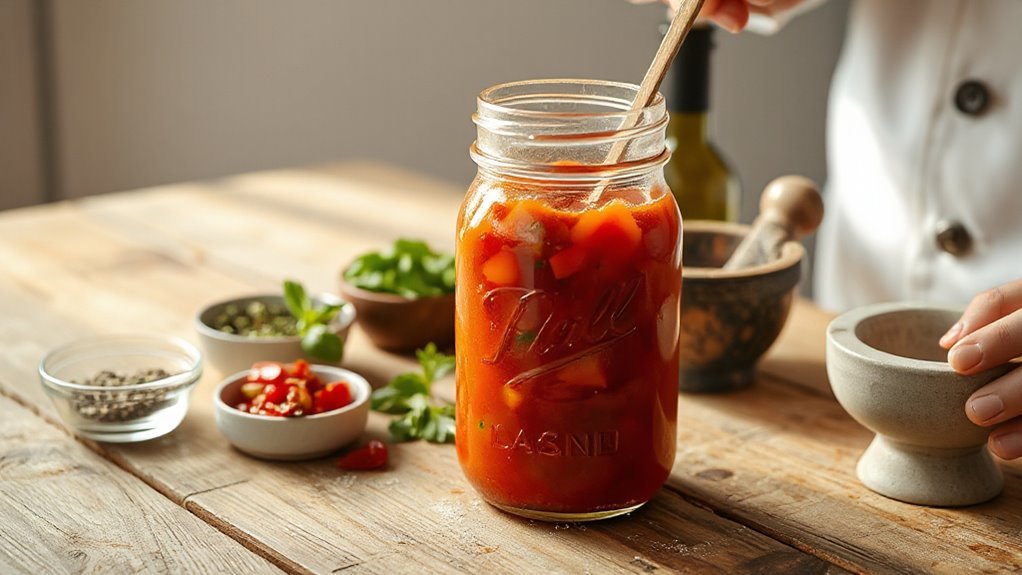
There’s something special about a classic pizza sauce, but many people don’t realize how easy it is to put your own spin on it. Start by experimenting with sauce textures; do you prefer a chunky sauce or a smooth one? You can blend canned tomatoes until you reach your desired consistency, or simply mash them with a fork for a heartier feel.
Ingredient substitutions can also elevate your sauce. Swap out traditional herbs for fresh basil or oregano, or add a pinch of red pepper flakes for some heat. Want to try something bold? A splash of balsamic vinegar or a hint of smoked paprika can transform the flavor profile completely.
Don’t hesitate to mix and match until you find the perfect blend that excites your taste buds. Remember, this is your sauce, so have fun customizing it to reflect your unique style!
What Else Do People Ask About Pizza Sauce?
You might be wondering which tomatoes make the best sauce and how to spice things up for extra flavor. Choosing the right ingredients can elevate your pizza game, and experimenting with spices can lead to delicious surprises. Let’s explore these common questions so you can whip up the perfect sauce!
Best Tomatoes For Sauce
When it comes to crafting the perfect pizza sauce, the choice of tomatoes is essential. You’ve got some fabulous options that can elevate your sauce to the next level. Let’s break it down:
- San Marzano tomatoes: These are the gold standard for pizza sauce, known for their sweet flavor and low acidity.
- Roma tomatoes: A reliable choice, Roma tomatoes have a thick flesh that makes for a rich sauce.
- Cherry tomatoes: If you want a burst of sweetness, cherry tomatoes can add a delightful twist to your sauce.
- Heirloom tomatoes: For those who love variety, heirloom tomatoes offer unique flavors that can make your sauce stand out.
Pick your favorite, and you’re on your way to pizza perfection!
Common Spice Variations
Once you’ve picked the perfect tomatoes for your pizza sauce, it’s time to think about spices that can elevate the flavor even more. Spice combinations can truly transform your sauce from standard to spectacular.
Here’s a quick reference table for some popular oregano variations and spice pairings:
| Oregano Variation | Common Pairing | Flavor Profile |
|---|---|---|
| Greek Oregano | Basil | Floral, earthy |
| Italian Oregano | Thyme | Slightly sweet |
| Mexican Oregano | Cumin | Citrus, bold |
Experiment with these to find the mix that speaks to your taste. With the right spice combo, you’ll create a pizza sauce that stands out and makes your pizza truly memorable! Enjoy the freedom of creating!
Pairing Your Sauce With Different Pizza Styles
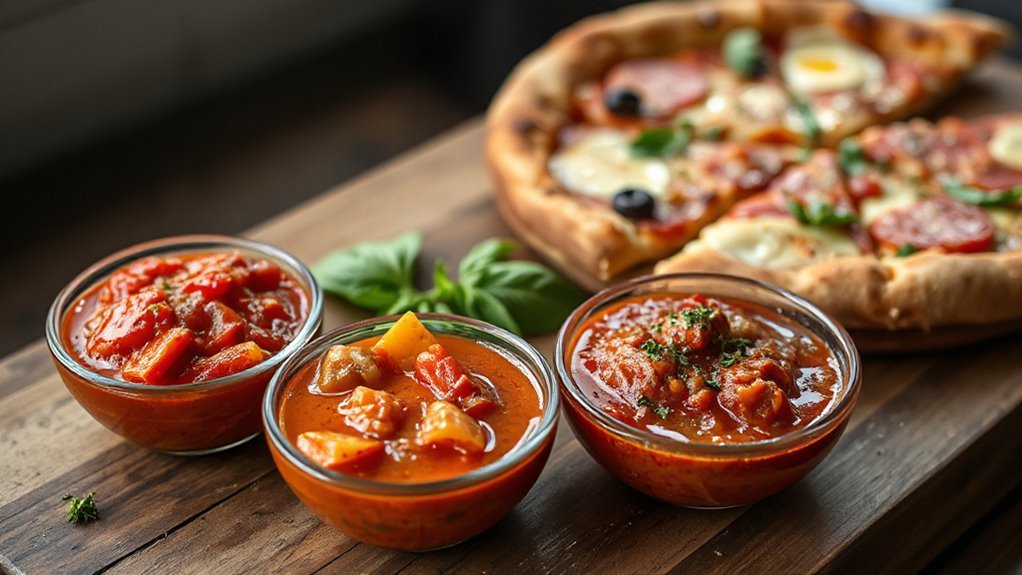
When you’re whipping up pizza, choosing the right sauce can make all the difference depending on the style. For Neapolitan pizza, a simple, fresh tomato sauce pairs perfectly, while a thicker, richer sauce is ideal for Chicago deep-dish. Let’s explore how to match your sauce to each style for the ultimate pizza experience!
Neapolitan Pizza Pairings
While you might think any sauce will work on a Neapolitan pizza, the right pairing can elevate your pie to a whole new level. Here are some delicious combinations to ponder:
- Margherita: Pair with fresh basil, mozzarella, and a light red like Chianti for a classic touch.
- Prosciutto and Arugula: The saltiness of prosciutto and peppery arugula match perfectly with a crisp Pinot Grigio.
- Four Cheese: Go for a creamy, decadent sauce and enjoy it with a robust Sauvignon Blanc to enhance those flavors.
- Mediterranean Style: Top with artichokes and olives, and sip on a lightly sparkling Prosecco for a reviving contrast.
These pairings not only complement your neapolitan toppings but also make for delightful wine pairings that make every bite memorable. Enjoy!
Chicago Deep-Dish Matches
Moving from the lighter, classic toppings of Neapolitan pizza, you’ll find that Chicago deep-dish offers a whole new canvas for flavor. Here, you can layer robust deep dish ingredients like sweet sausage, peppers, and mushrooms, all swimming in that rich, flavorful pizza sauce. The cooking techniques matter too—consider that long bake time, which allows the crust to develop that iconic buttery crunch while keeping the toppings warm and gooey. Experimenting with different combinations can yield exciting results; try combining spicy Italian sausage with your sauce for a kick! Embrace the freedom in customizing your deep-dish experience—there are no limits. Just remember, the key is balancing those hearty flavors with the sauce to create pizza perfection.
Frequently Asked Questions
Can I Use Store-Bought Tomatoes for My Sauce?
Absolutely, you can use store-bought tomatoes for your sauce! In fact, store-bought benefits like convenience and consistency make them a great choice. Canned alternatives often maintain their flavor, making it easier for you to whip up a tasty sauce without the fuss. Just look for high-quality options to get the best results. So, whether you’re in a rush or just want to simplify things, store-bought tomatoes won’t disappoint! Enjoy your cooking!
How Long Can I Store Pizza Sauce in the Fridge?
You can store pizza sauce in the fridge for about 5 to 7 days. Just make sure to check for any signs of spoilage before using it. To test the sauce’s expiration, look for any off smells or changes in color. If it doesn’t smell right or has developed mold, it’s best to toss it. Feel free to freeze it if you want to keep it longer; it can last for 3 months there!
Is It Necessary to Cook the Pizza Sauce?
No, it isn’t necessary to cook the pizza sauce. You can enjoy it raw, or you can choose to simmer it gently. Each method has its benefits: cooking deepens flavors, while fresh sauce keeps it vibrant and zesty. If you want a fresh burst of taste, go for the uncooked version. If you prefer robust richness, simmer it. Ultimately, it’s up to you and your pizza-making vibe!
Can I Freeze Pizza Sauce for Later Use?
Yes, you can absolutely freeze pizza sauce for later use! Just use proper freezing methods to guarantee it stays fresh. Divide the sauce into portions, then place them in airtight containers or freezer bags, squeezing out excess air. To prevent freezer burn, label them with the date. When you’re ready to use it, thaw overnight in the fridge. These simple storage tips will keep your sauce delicious and ready for your next pizza night!
What Type of Oil Works Best for Pizza Sauce?
For the best pizza sauce, you can’t go wrong with extra virgin olive oil. It adds a rich, fruity flavor that elevates your sauce. If you want to kick it up a notch, try infusing your olive oil with garlic before mixing it into your sauce. This garlic infusion brings a wonderful depth to the flavor, making your pizza irresistible. So, grab that olive oil and get cooking!
Conclusion
Now you’re equipped to whip up a delicious, authentic pizza sauce right in your kitchen! Did you know that according to a recent survey, 80% of people believe a great sauce can make or break a pizza? So, don’t underestimate the power of your homemade creation! Whether you’re crafting a classic Margherita or a veggie delight, the right sauce can elevate your pizza night. Enjoy experimenting, and remember, every great pizza starts with an even better sauce!