

If you’re looking to master the ultimate thin crust pizza, you’ve come to the right place! Start with essential ingredients like high-gluten flour and properly activated yeast. Craft your dough with a few simple steps and use clever rolling and stretching techniques to get that perfect thinness. Explore different cooking methods to achieve maximum crispiness, and don’t forget about creative topping combinations that will tantalize your taste buds. Keep going to uncover more pro tips and tricks!
Key Takeaways
- Master the thin crust dough using bread flour, warm water, and proper kneading techniques for a light, airy texture.
- Experiment with diverse sauces like marinara, pesto, and Alfredo to elevate flavors on your thin crust pizza.
- Utilize optimal cooking methods, such as stone baking or grilling, to achieve a crispy texture and delicious char.
- Pair gourmet toppings like fig and prosciutto or spicy roasted cauliflower for a balanced and flavorful pizza experience.
- Avoid common mistakes like using cold dough or overloading toppings to ensure a crispy crust and perfect bake.
Why Thin Crust Matters: Getting Started
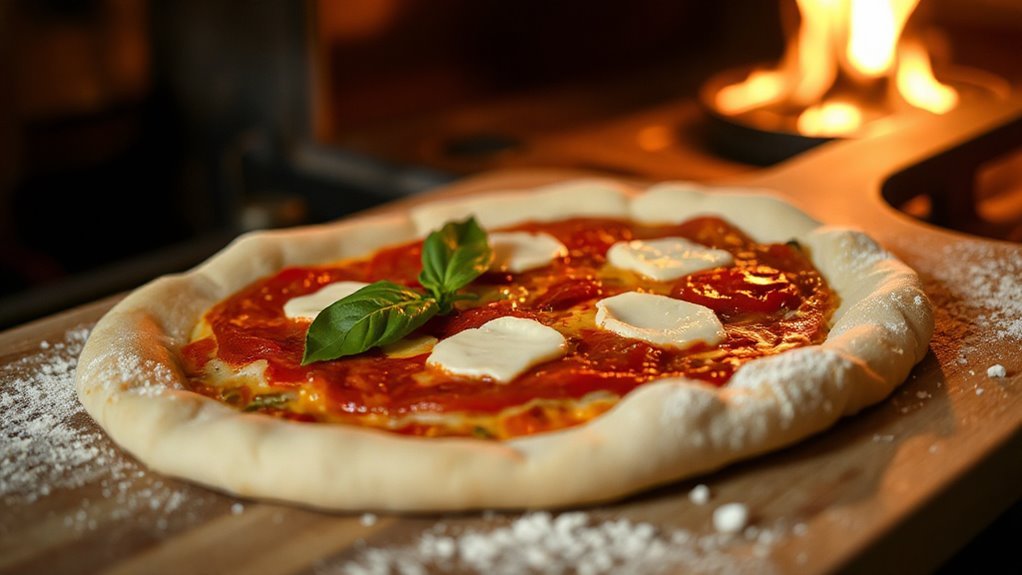
When you immerse yourself in the world of pizza, understanding why thin crust matters can really enhance your experience. Thin crust isn’t just a style; it’s a celebration of texture and flavor. When you bite into a properly crafted thin crust, you’ll feel that delightful crunch, allowing the toppings to shine without overwhelming your palate. It marries perfectly with various crust preferences, letting you explore regional pizza traditions from crispy Roman styles to Neapolitan classics.
Thin crust promotes freedom in flavor combinations too — from simple margherita to inventive gourmet toppings. You won’t be weighed down, so you can enjoy more slices without that heavy feeling. Plus, its subtle profile invites you to savor each bite, appreciating the craftsmanship behind your favorite pizza. Embracing thin crust can open up a whole new pizza world, transforming your mealtime into a satisfying adventure!
Essential Ingredients for a Flawless Dough
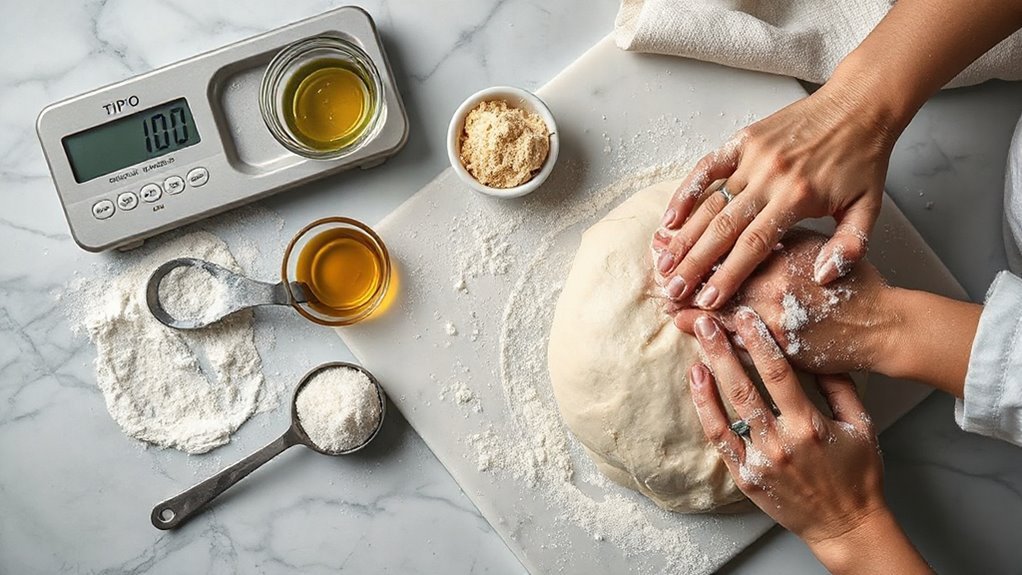
Creating the perfect thin crust starts with choosing the right flour, so let’s talk about your options. You’ll also want to master yeast activation techniques to get that dough rising just right, along with paying attention to water temperature. Trust me, these essentials can make or break your pizza game!
Flour Types Selection
Choosing the right flour is essential for crafting that perfect thin crust pizza you crave. While you might be tempted to reach for all-purpose flour because it’s versatile, bread flour truly shines here. Its higher protein content gives your crust that chewy texture that’s simply irresistible. With bread flour, you’ll achieve the ideal balance of crispness and flexibility, allowing for great toppings without the fear of sogginess. However, if you’re in a pinch, all-purpose flour can still work, just keep your expectations in check. Whatever flour you choose, remember to believe in your ability to create something delicious. The joy of pizza-making is in the freedom to experiment, so don’t hesitate to play around with different blends until you find your perfect dough!
Yeast Activation Techniques
To guarantee your thin crust pizza dough rises beautifully, activating the yeast properly is essential. You’ve got two main types to work with: instant yeast and active dry. Instant yeast’s your go-to for speed; just mix it directly into your flour. Active dry, however, needs a little love. You’ll want to proof it first—dissolve it in warm water with a pinch of sugar and let it foam for about 5-10 minutes. This step assures it’s alive and ready to rise! Once activated, incorporate it into your dough, and you’ll be well on your way to that light, airy crust you crave. Remember, the freedom of creativity in dough-making definitely starts with happy, activated yeast!
Water Temperature Importance
Water temperature plays a pivotal role in crafting the perfect thin crust pizza dough. When you mix warm water with your flour and yeast, you’re creating an environment for that yeast to thrive. The ideal water temperature for activating yeast ranges between 110°F and 115°F. If it’s too hot, you’ll kill the yeast; too cold, and it won’t do its job. This water temperature effects dough texture and rise, directly impacting your crust’s crispiness and chewiness. Aim for that sweet spot—optimal heat makes all the difference. By carefully monitoring your water temperature, you’ll guarantee your dough is light, airy, and delicious. Embrace the freedom of a perfect pizza night; it all starts with the right water temperature!
Crafting Thin Crust Dough: A Step-By-Step Guide
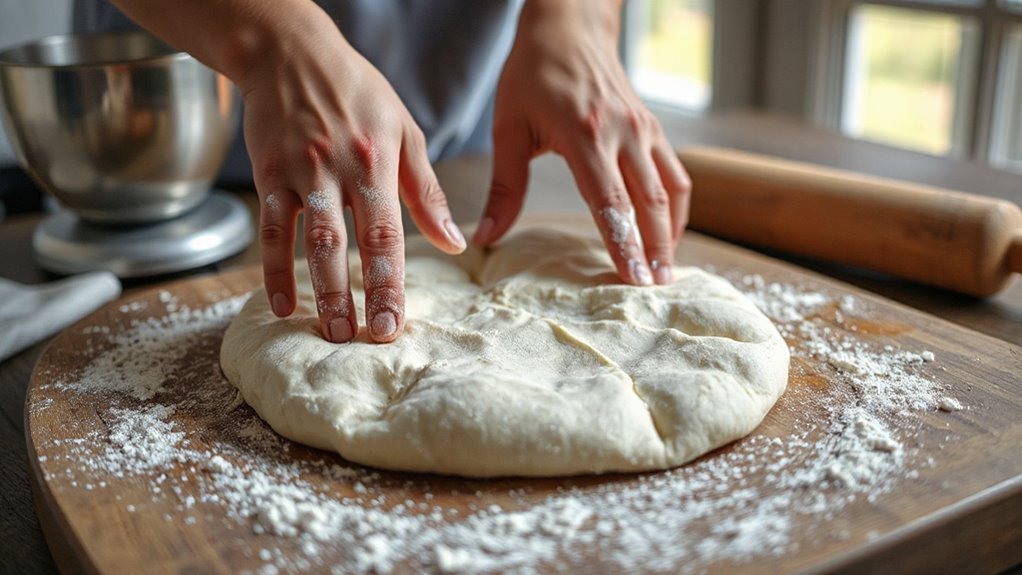
While creating the perfect thin crust dough might seem challenging at first, it’s actually a straightforward process that yields delicious results. Start by mixing your flour, salt, and yeast in a bowl. Gradually add water, ensuring it’s at the right temperature, and mix until combined. Now, it’s time to embrace those kneading techniques! On a floured surface, knead the dough for about 8-10 minutes until it’s smooth and elastic.
Next, place your dough in a lightly oiled bowl, cover it, and let it rest for the magic of dough fermentation. You’re looking for a rise of about an hour, which enhances flavor and texture. Once it’s puffed up, simply punch it down. You’re now ready to shape it into a crisp, thin crust! Trust this process, and soon enough, you’ll enjoy pizza that’s irresistibly thin and full of flavor. Happy baking!
Rolling and Stretching Techniques for Thin Crust Dough
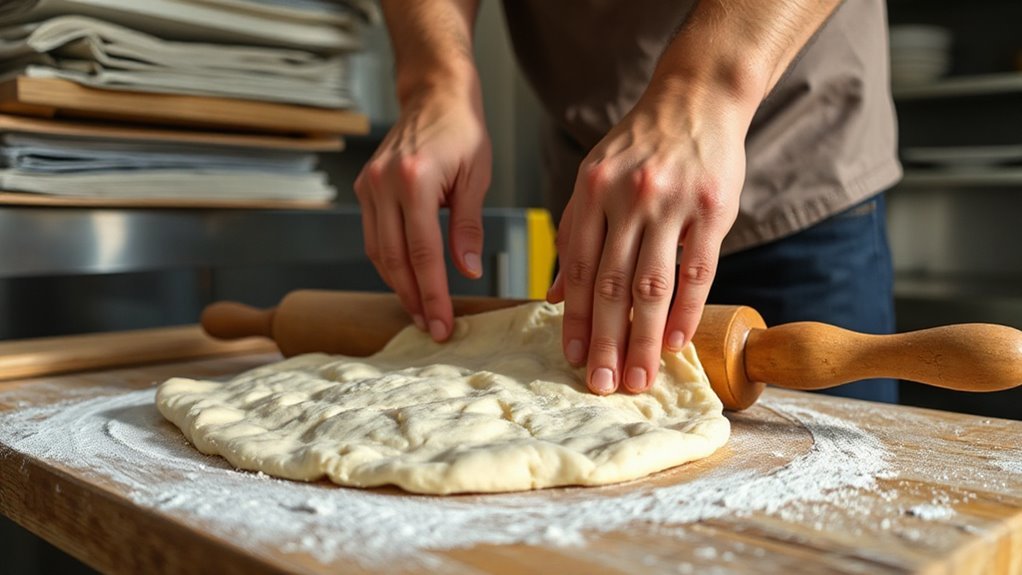
When it comes to thin crust pizza, mastering your rolling and stretching techniques is key to getting that perfect base. You’ll want to guarantee even thickness so every bite is deliciously crisp. Let’s explore some handy methods to help you roll out and stretch your dough like a pro!
Techniques for Rolling Dough
Mastering the techniques for rolling and stretching thin crust dough can elevate your pizza game to a whole new level. Start by lightly flouring your work surface to prevent sticking. If you’re looking for consistent dough thickness, use a rolling pin—but try a French style for better control. Begin in the center and roll outward, rotating your dough often. Keep your movements smooth and gentle; you want to maintain that delicate texture! If you’re feeling adventurous, use a pizza dough docker to create tiny holes, preventing bubbling while baking. And remember, it’s all about that personal touch—feel free to experiment until you find your groove. Enjoy the freedom of crafting your perfect pie!
Stretching Methods for Uniformity
To achieve a beautifully uniform thin crust, you’ll want to incorporate both rolling and stretching techniques that keep your dough even throughout. Start by gently pressing your dough into a flat disc, letting its dough elasticity work for you. As you stretch, use your fingers to gently pull from the center outward, rotating it to maintain uniform thickness. Avoid using too much force; you want your dough to relax, not tear. If it fights back, let it rest a few minutes before continuing. For the edges, pinch them slightly thicker to create a nice crust, but confirm the center remains thin. By mastering these methods, you’ll enjoy that perfect, evenly cooked thin crust every time—freedom in every bite!
Top Cooking Methods for Perfect Thin Crust Pizza

If you’ve ever dreamed of achieving that perfect thin crust pizza at home, knowing the right cooking methods can make all the difference. Try stone baking or using a pizza steel for that crispy texture; these methods truly elevate your pizza game. The grill method adds a smoky flavor, while the broiler technique works wonders in getting that delightful char on top. If you’re looking for convenience, frozen options baked at high temperatures can taste surprisingly good. Convection baking is also a fantastic choice, making the crust evenly crisp throughout. For a unique twist, consider skillet pizza on the stovetop or opt for an air fryer for a quick fix that doesn’t skimp on flavor. And let’s not forget about the traditional wood-fired method, which helps you reach that coveted high temperature baking for a truly authentic experience. Your thin crust ambitions are just a few methods away!
Awesome Sauces to Make Your Thin Crust Pop
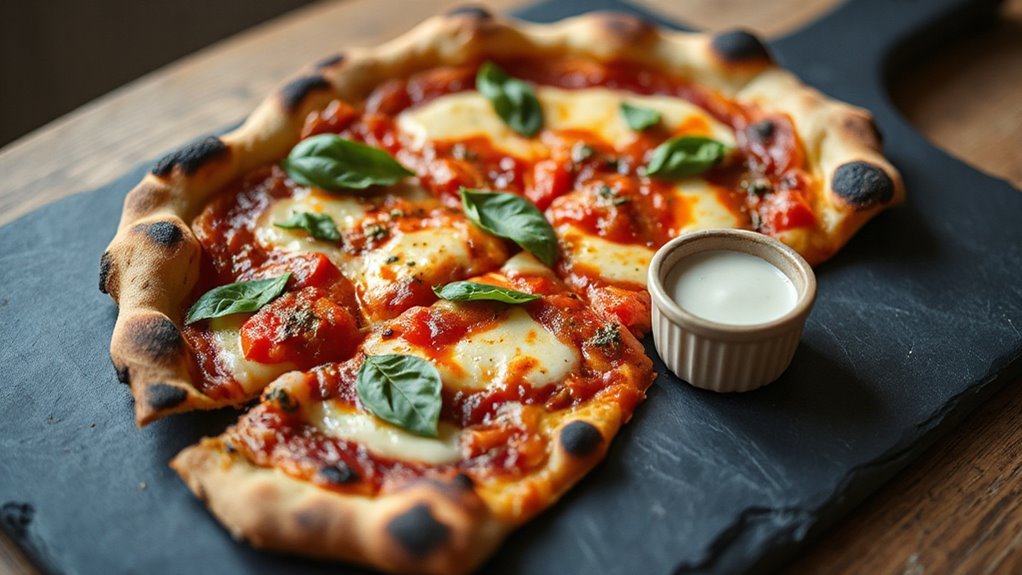
Ready to jazz up your thin crust pizza? Let’s explore some awesome sauces that’ll make each slice sing, from the classic marinara that never goes out of style to zesty pesto and a creamy Alfredo twist. These flavorful bases are sure to elevate your pizza game!
Classic Marinara Delight
When you crave that perfect balance of robust flavor and simplicity, the Classic Marinara Delight is your go-to sauce for thin crust pizza. This sauce isn’t just a modern creation; its marinara history traces back to Italy, where it delighted taste buds for generations. With just a few ingredients—canned tomatoes, garlic, olive oil, and fresh basil—you’ll have a fresh sauce that complements any classic toppings. Whether you’re loading up on mozzarella or sprinkling fresh arugula, marinara’s vibrant flavor shines through. Plus, it’s quick to whip up, giving you more time to enjoy your masterpiece. Immerse yourself in the world of marinara, and let your thin crust pizza experience soar!
Zesty Pesto Creation
While marinara brings a comforting classic to your thin crust pizza, Zesty Pesto Creation adds an unforgettable twist that’s bursting with flavor. This vibrant sauce can elevate your pizza game with various pesto variations, giving you the freedom to explore unique flavor pairings.
Think about trying:
- Basil and Walnut: A traditional blend that harmonizes perfectly with mozzarella.
- Sun-dried Tomato: Add a tangy kick that pairs beautifully with goat cheese.
- Spinach and Feta: For a fresh, creamy twist that complements grilled veggies.
- Roasted Red Pepper: A smoky richness that teams up wonderfully with chicken.
Get creative! Let your taste buds guide you, and watch your thin crust shine with zesty, vibrant flavors.
Creamy Alfredo Twist
Elevate your thin crust pizza with a creamy Alfredo twist that’s sure to impress. This rich sauce isn’t just for pasta—it’s a game changer for your pizza. Start by spreading a generous layer of Alfredo sauce as your base. Next, get creative with your alfredo toppings! Think sautéed spinach, grilled chicken, or even crispy bacon for that extra kick. You can also try creamy variations like garlic or parmesan-infused Alfredo for added depth. Once your toppings are in place, pop that pizza in the oven and let the magic happen. The result? A delightful blend of flavors that will have everyone coming back for more. So, plunge in and embrace the freedom to experiment with your favorite creamy concoctions!
Top 10 Topping Combinations for Ultimate Flavor

Pizza lovers, rejoice! When it comes to thin crust pizzas, it’s all about the toppings that elevate your experience. Let’s explore some gourmet ingredient pairings and seasonal topping inspirations that will make your pizzas unforgettable.
Here are four fabulous combinations to ignite your taste buds:
- Fig and Prosciutto: A sweet and savory masterpiece.
- Spicy Roasted Cauliflower and Buffalo Sauce: For that perfect kick.
- Goat Cheese and Caramelized Onions: Creamy and sweet perfection.
- Fresh Arugula and Lemon Zest: A revitalizing finish to rich flavors.
These combinations allow you to experiment and embrace culinary freedom. So, don’t hesitate to mix and match these toppings with your own favorites! Whether you’re inspired by the season or seeking that gourmet touch, your thin crust pizza is bound to be an ultimate hit. Happy topping!
Tips for Baking Your Pizza Like a Pro
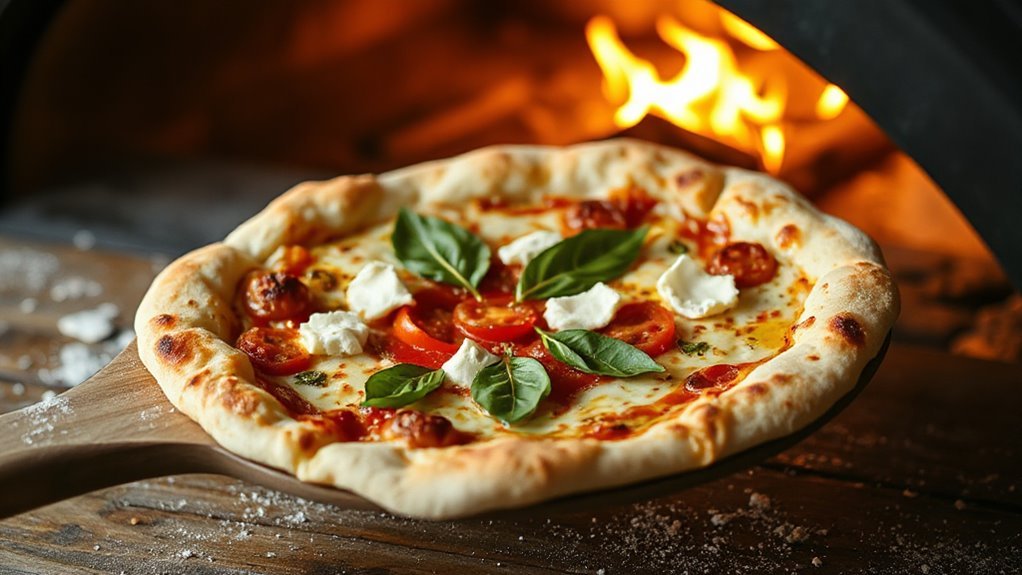
Mastering the art of baking thin crust pizza can turn an ordinary meal into an extraordinary experience. To achieve that perfect pie, you’ll need the right baking tools. A pizza stone is a game changer; it absorbs heat evenly, giving you a crisp crust. Preheat your oven to the highest setting, usually around 475°F to 500°F. This high temperature mimics a traditional pizza oven, ensuring a satisfying crunch.
When assembling your pizza, avoid overloading it with toppings, as this can sog up your crust. Keep it light and let flavors shine! Slide your masterpiece onto the preheated stone and bake it for 8-12 minutes, keeping an eye on it. Every oven is different, so adjust your oven settings if necessary. You want that beautiful golden crust, not a charred disaster. With practice, you’ll feel like a pro and be ready to impress your friends and family with every pizza night!
Top Mistakes to Avoid for Thin Crust Success

When it comes to thin crust pizza, skipping a few key steps can lead to some epic fails. You want that perfect crunch, but common pitfalls can sabotage your efforts. Here are some dough mistakes to avoid:
- Using cold dough: Always let your dough come to room temperature before stretching—it makes it easier to work with.
- Rolling too thin: While thin crust is the goal, going too thin can lead to breakage. Aim for a balance!
- Overloading with toppings: Thin crust can’t handle too much weight. Keep it light and let your crust shine.
- Neglecting the oven temperature: Make sure your oven is hot enough to achieve that crispy crust. Preheat it like you mean it!
Topping Variations to Personalize Your Thin Crust Pizza

After you’ve nailed the dough and avoided those common pitfalls, you can truly start having fun with your thin crust pizza. Get creative with topping variations that suit your taste buds! Feel free to mix and match gourmet toppings with seasonal ingredients; it’s all about personal preference. Here’s a quick guide to inspire your next masterpiece:
| Gourmet Toppings | Seasonal Ingredients | Unique Combos |
|---|---|---|
| Prosciutto | Fresh basil | Fig & Goat Cheese |
| Arugula | Heirloom tomatoes | Pear & Blue Cheese |
| Truffle oil | Zucchini | Pesto & Chicken |
| Artichokes | Asparagus | Spicy Sausage & Cherries |
| Feta cheese | Sweet corn | Smoked Salmon & Dill |
Experiment with these combinations or come up with your own. The key’s to enjoy the process and savor every bite!
Frequently Asked Questions
How Long Can I Store Thin Crust Pizza Dough?
You can store thin crust pizza dough in the refrigerator for about 3 to 5 days, but if you want to maximize its freshness, freezing it’s your best bet. Wrap it tightly in plastic wrap and then place it in an airtight container; it’ll stay good for up to three months. When you’re ready to bake, just let it thaw in the fridge overnight for a delicious pizza experience whenever you want!
Can I Freeze My Thin Crust Pizza?
Sure, you can freeze your thin crust pizza! Just use proper freezing techniques: wrap each pizza tightly in plastic wrap and then place it in an airtight freezer bag. When you’re ready to enjoy it, use thawing methods like leaving it in the fridge overnight or letting it sit at room temperature for about an hour. This way, you’ll keep that delicious crispiness intact and savor every bite just like fresh!
What Is the Best Flour for Thin Crust?
For the best thin crust, you’ll want high-protein flour—think bread flour or even a blend of all-purpose and whole wheat. Imagine rolling out that dough, it stretches perfectly, creating that crisp bite you crave. While using cake flour might tempt you, it’s too soft for this mission. So grab that best pizza flour, and you’ll enjoy a deliciously crunchy base that holds up against your favorite toppings, giving you freedom in every slice!
Can I Make Gluten-Free Thin Crust Pizza?
Absolutely, you can make gluten-free thin crust pizza! There are plenty of gluten-free options available. Look for gluten-free flours like almond, chickpea, or a pre-made gluten-free flour blend. You can also try crust alternatives like cauliflower crust or chickpea flatbreads for a tasty twist. Just mix your chosen flour with water and seasonings, roll it out thin, and bake it up for a delicious pizza night without the gluten!
How Do I Reheat Leftover Thin Crust Pizza?
To reheat your leftover thin crust pizza, try a few easy techniques. For that crispy bottom, pop it in a skillet on medium heat for about 5 minutes. You can also use the oven; preheat it to 375°F and bake for 8-10 minutes. For juicy toppings, cover it with foil to keep the moisture in. Remember, experimenting with different reheating methods can bring your pizza back to life—enjoy every bite!
Conclusion
Now that you’ve got the scoop on creating sensational thin crust pizza, it’s time to release your culinary creativity! Perfect your process, pair vibrant toppings, and play with techniques to make each pizza night a delicious delight. Remember, practice makes perfect, so don’t shy away from experimenting. With your newfound knowledge, you’ll soon be the neighborhood’s pizza hero, crafting crispy creations that everyone craves. Get ready to bake up a storm—your ultimate thin crust adventure awaits!