Sicilian-style pizza’s unique thick, chewy crust makes it stand out. You’ll need a blend of mozzarella and caciocavallo cheeses, well-hydrated pizza dough, and crushed San Marzano tomatoes for an authentic taste. Start with a simple sauce by sautéing garlic and adding some fresh herbs. Bake it in a well-oiled pan for a crispy edge. Want tips on perfecting toppings and baking temperatures? Stick around, and you’ll discover even more secrets to Sicilian pizza perfection!
Key Takeaways
- Use a well-hydrated pizza dough that rises for at least 2 hours for optimal texture and flavor development.
- Incorporate crushed San Marzano tomatoes mixed with sautéed garlic, fresh basil, and oregano for a vibrant, aromatic sauce.
- Bake in a preheated oven at 475°F (245°C) for 20-25 minutes, rotating halfway for uniform cooking.
- Ensure the dough is shaped to about ½-inch thickness to achieve the ideal balance of chewiness and crunch.
- Top with a blend of mozzarella and caciocavallo cheeses for an authentic Sicilian flavor.
What Makes Sicilian-Style Pizza Unique?

Sicilian-style pizza stands out from the crowd with its thick, rectangular crust and a delightful chewy texture. What sets it apart are the unique cooking techniques that bring bold flavors to life. You’ll find that baking in a well-oiled pan creates that signature crispy edge while keeping the center soft and airy. It’s all about letting that dough rise beautifully, giving it time to develop flavor.
What’s more, regional variations make every Sicilian pizza a little adventure. You can explore different toppings and flavor combinations inspired by the local ingredients of Sicily. Whether it’s anchovies, olives, or fresh herbs, each iteration showcases the rich culinary heritage of the island. So, embrace the creativity! Getting hands-on with this style of pizza not only liberates your tastebuds but connects you with the heart of Italian cooking, inviting you to add your personal twist.
Essential Ingredients for Authentic Sicilian Pizza Making

To create authentic Sicilian pizza, you’ll need a handful of essential ingredients that form the backbone of this delicious dish. Let’s dive right into what you should stock up on:
To whip up authentic Sicilian pizza, gather essential ingredients that create a delightful culinary experience.
- Sicilian cheese – Opt for a blend of mozzarella and a tangy cheese like caciocavallo for that rich flavor.
- Pizza dough – A thick, airy crust is key; make sure it’s well-hydrated for that perfect texture.
- Tomato sauce – Use crushed San Marzano tomatoes for a sweet, vibrant sauce that enhances the pizza’s appeal.
- Essential herbs – Fresh oregano and basil are a must! They bring that home-cooked Italian feel straight to your kitchen.
These ingredients will take your Sicilian pizza to the next level, ensuring that every bite is a heavenly experience. So go ahead, embrace your culinary freedom and start cooking!
Step-by-Step Guide to Making Sicilian Pizza Dough

Creating the perfect pizza dough is easier than you might think, especially when you follow a few simple steps. First, mix your flour, water, yeast, and salt in a bowl. Stir until it forms a shaggy dough. Next, it’s all about dough kneading—get in there for about 8-10 minutes until it’s smooth and elastic. This is key for that delightful texture.
Now, let your dough rest and rise. Transfer it to a greased bowl, cover it, and let it ferment for at least 2 hours, or until it doubles in size. This dough fermentation stage enhances flavor and lightness.
Once your dough has risen, gently punch it down to release air bubbles. Shape it into your preferred size for the Sicilian pan, and let it rest for another 30 minutes before adding toppings. Enjoy the process—it’s part of the freedom of making your own pizza!
How to Make the Perfect Pizza Sauce for Sicilian Pizza
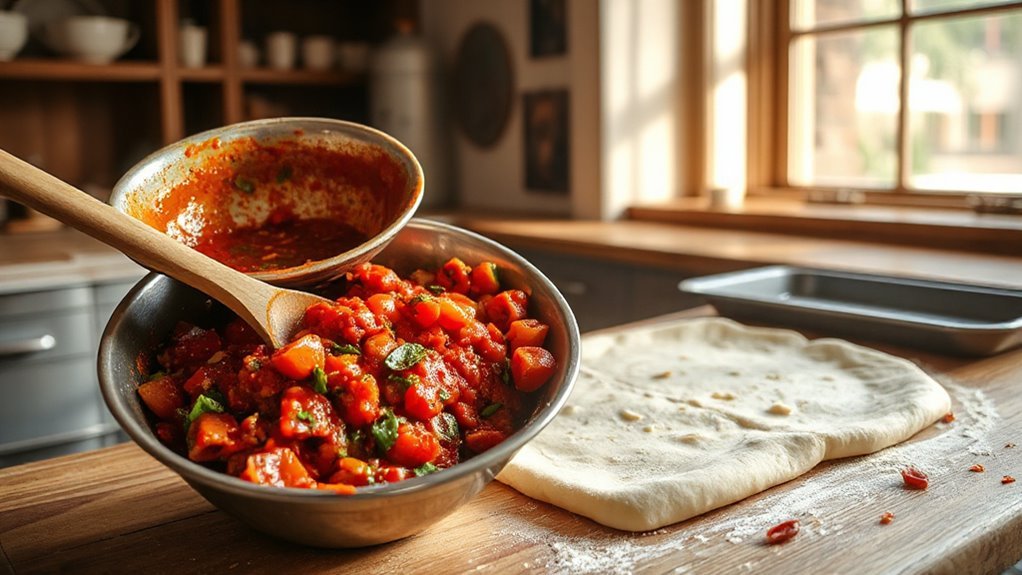
Now that your dough is ready and rested, it’s time to whip up the perfect sauce to complement that delicious base. A great Sicilian pizza sauce isn’t just about tomatoes; it’s about rich flavors that come together beautifully. Here’s how to nail it:
Ready your dough for the perfect Sicilian pizza sauce, where rich flavors and quality ingredients make all the difference.
- Choose Quality Tomatoes: Go for San Marzano or any good-quality canned tomatoes.
- Make a Garlic Infusion: Sauté minced garlic in olive oil until fragrant, but don’t let it burn!
- Add Fresh Herbs: Toss in chopped basil, oregano, and maybe a pinch of thyme for that aromatic touch.
- Season to Taste: Salt, pepper, and a pinch of sugar can balance acidity.
Combine everything, let it simmer for a bit, and you’ve got a sauce that will elevate your Sicilian pizza to new heights. Enjoy the freedom to personalize it to your liking!
Why Does Your Pizza Need the Right Toppings?

Toppings can make or break your Sicilian pizza, so choosing wisely is key. You want a perfect balance of flavors, textures, and that satisfying crunch to really elevate your pie. Plus, using fresh, quality ingredients guarantees every bite is delicious and memorable!
Balance Of Flavors
The right balance of flavors can make or break your Sicilian style pizza experience. Achieving that perfect herb balance is essential to create flavor harmony. You don’t want one topping to overpower the others. Here’s how to get it just right:
- Choose a Base Sauce: Start with a rich tomato sauce that ties everything together.
- Add Cheese: Layer mozzarella and a sprinkle of Parmesan for creaminess.
- Select Toppings: Opt for a mix of savory meats and fresh veggies that complement each other.
- Season Wisely: Use herbs like basil and oregano to elevate the taste without overwhelming it.
Get these elements right, and you’ll elevate your pizza game to delicious heights. Enjoy the freedom to experiment!
Texture And Crunch
While you might focus on flavors, achieving the right texture and crunch in your Sicilian style pizza is equally important. A crispy crust is a must—it not only adds a satisfying bite but also serves as the perfect foundation for your toppings. If you’re aiming for that ideal airy texture, don’t skimp on the dough’s rising time; give it the freedom to expand and create those delightful air pockets. This combination guarantees each slice offers both firmness and a melt-in-your-mouth experience. Plus, when you take a bite and hear that crunch, you know you’ve nailed it! Choosing toppings that complement this texture will elevate your pizza game. So, let your pizza be a celebration of both taste and texture!
Freshness And Quality Ingredients
To truly elevate your Sicilian style pizza, using fresh and high-quality ingredients makes all the difference. You might be wondering why it’s so important. Here’s the scoop:
- Fresh Herbs: They add vibrant flavor, taking your pizza from ordinary to extraordinary.
- Artisan Cheeses: The creamy textures and rich tastes of artisan cheeses transform every bite into a heavenly experience.
- Fresh Veggies: Crisp, colorful toppings enhance texture and freshness, making your pizza visually appealing and delicious.
- Quality Sauce: A rich, homemade sauce using ripe tomatoes guarantees a deep, satisfying taste.
When you choose the right toppings, you’re not just making pizza—you’re crafting a moment of freedom and joy with every slice. So go ahead, indulge in the good stuff!
How to Bake Your Sicilian Pizza Just Right

Getting the perfect bake for your Sicilian pizza is key to achieving that delicious, crispy crust everyone loves. Start by preheating your oven to a high temperature, around 475°F (245°C). This helps create the ideal environment for that golden-brown crust.
Consider using a pizza stone if you have one; it mimics the brick ovens of Italy and enhances heat distribution. As you place your pizza in, be aware of those baking techniques—like using a pizza peel for smooth transfers.
Try baking for about 20-25 minutes. Keep an eye on it after 15 minutes; every oven has its quirks, and you want that crust to stand out. You might also switch to broil for the last couple of minutes to achieve that bubbly cheese finish.
Experiment with oven settings until you find what works best for your style. Happy baking!
Common Mistakes in Sicilian Pizza Making

When you’re making Sicilian pizza, it’s easy to overlook a few key details that can really impact the final product. You might find that the wrong dough thickness, incorrect topping placement, or improper baking temperature can make a big difference in your pizza’s success. Let’s chat about these common mistakes so you can perfect your Sicilian creation!
Wrong Dough Thickness
Many home cooks underestimate the importance of dough thickness when crafting a Sicilian pizza. Getting it right can make all the difference in achieving that perfect crust. Here are a few tips to reflect on:
- Aim for ½-inch thickness – Too thick, and you’ll miss out on the delightful crunch; too thin, and it won’t hold toppings well.
- Consider dough elasticity – A well-fermented dough will have the right stretch, allowing it to rise nicely during baking.
- Don’t rush fermentation – Give your dough enough time to develop flavor and strength; it helps with the ultimate texture.
- Experiment – Every oven’s different; adjust your thickness based on how your pizza turns out after baking.
Master these concepts, and you’ll be well on your way to pizza perfection!
Incorrect Topping Placement
Although topping your Sicilian pizza might seem straightforward, incorrect placement can lead to a soggy crust or uneven flavor. You want to achieve perfect topping distribution to guarantee each slice delights your taste buds. If you layer toppings too thickly in one area, it can weigh down the dough, creating an unpleasant, soggy mess. Instead, spread ingredients evenly across the surface. Try to keep delicate toppings, like fresh herbs or soft cheeses, towards the end of baking or just before serving—they’re meant to shine without being overcooked. Remember, balance is key! So, embrace your creative freedom, but keep an eye on your layering technique to avoid those common pitfalls. Happy baking!
Improper Baking Temperature
Getting the baking temperature just right is essential for a perfect Sicilian pizza. If you don’t, you’ll end up with a pie that’s either burnt or doughy. Understanding baking science and temperature effects can make all the difference. Here’s what you need to remember:
- Preheat your oven to at least 475°F (245°C) for crispy crust.
- Use a baking stone or steel to retain heat and distribute it evenly.
- Rotate your pizza halfway through baking for uniform cooking.
- Keep an eye on your pizza—baking times can vary based on thickness.
Serving Suggestions: Pairing Your Pizza With the Best Sides

Wondering how to elevate your Sicilian style pizza experience? Let’s talk about the perfect sides to enhance your meal. When you bite into that deliciously thick crust, consider pairing it with a fresh arugula salad sprinkled with lemon dressing. The peppery greens add a zesty contrast that complements the richness of your pizza.
If you’re feeling adventurous, serve up some roasted vegetables or a charcuterie board filled with Italian meats and cheeses. These sides pairing not only bring out the flavors of your pizza but also create a vibrant dining experience.
Don’t forget about dipping sauces! A side of marinara or garlic aioli can add that extra zing you didn’t know you needed. So grab your favorite beverages, set the table, and enjoy your Sicilian style pizza with these perfect sides. You’ll elevate your meal into a delightful feast that friends and family won’t forget!
Frequently Asked Questions
Can I Use Gluten-Free Flour for Sicilian Pizza Dough?
Yes, you can use gluten-free flour for Sicilian pizza dough! Just keep in mind that gluten-free substitutes can behave differently, affecting your pizza crust’s texture. To get that nice, chewy consistency, consider blending gluten-free flour with ingredients like xanthan gum or psyllium husk. Experiment a bit to find the perfect mix, and before you know it, you’ll be enjoying a delicious gluten-free Sicilian pizza that everyone can savor!
How Long Can I Store Leftover Sicilian Pizza?
You can store leftover Sicilian pizza for about 3 to 4 days in the fridge. Use airtight containers or wrap it tightly in foil to keep it fresh. When you’re ready to enjoy it again, preheat your oven to 375°F (190°C) and pop it in for about 10 minutes. This’ll help crisp up the crust while keeping it delicious. Freezing it can extend storage time to about 2 months, just thaw before reheating!
Is It Possible to Freeze Sicilian Pizza?
Yes, you can freeze Sicilian pizza! Just use some effective freezing techniques to keep that delicious pizza texture intact. First, wrap individual slices in plastic wrap or foil, then place them in an airtight container or freezer bag. When you’re ready to enjoy, simply reheat it in the oven – it’ll taste almost fresh! You’ll love the freedom of having a tasty slice whenever you crave it, without worrying about it going bad!
What Is the Best Type of Cheese for Sicilian Pizza?
For the best Sicilian pizza, you can’t go wrong with mozzarella varieties, especially whole milk or fresh mozzarella. They melt beautifully, giving your pizza that perfect stretchy texture. If you’re looking for cheese alternatives, consider provolone or even fontina for a bit of a twist. These options add depth without overpowering the classic flavors. So, whether you stick to tradition or get creative, you’re bound to enjoy a delicious slice!
Can I Add Fruits as Toppings on Sicilian Pizza?
Absolutely, you can add fruits as toppings on Sicilian pizza! While it might seem unconventional, fruit combinations like figs with prosciutto or pineapple with ham bring a unique twist. Don’t shy away from experimenting with toppings; fresh basil pairs wonderfully with strawberries! Just keep the balance in mind—too much sweetness can overpower your sauce. So, release your creativity and enjoy crafting your own delicious, fruity Sicilian pizza masterpiece!
Conclusion
So, whether you’re a pizza novice or a seasoned pro, making Sicilian-style pizza can be a game changer. Imagine this: a crispy crust that’s thick and airy, topped with rich sauce and gooey cheese, then enhanced with your favorite toppings. It’s a delightful blend of textures and flavors that’ll surely impress your friends and family. With a bit of practice and the right ingredients, you’ll be crafting delicious slices that rival those from your favorite pizzeria in no time!